
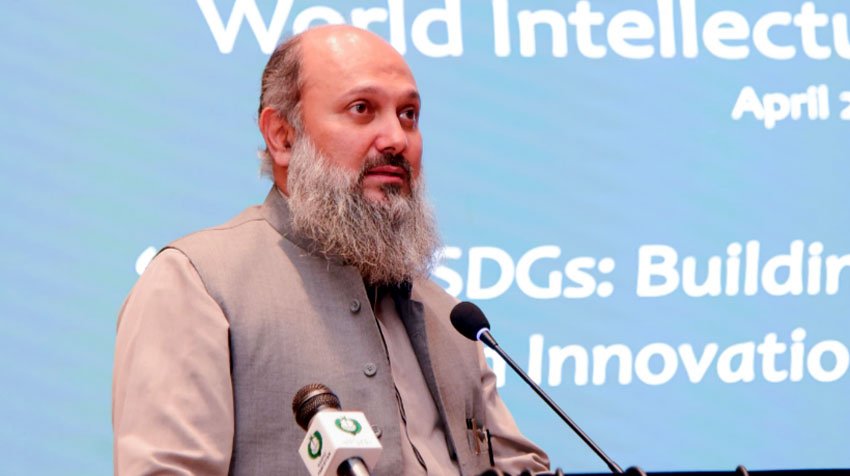
Engineering-Led Industrial Transformation is no longer a theoretical ambition it is fast becoming a national imperative. Speaking at the prestigious National University of Technology (NUTECH), Federal Minister for Commerce Jam Kamal Khan laid out a compelling roadmap for Pakistan’s technological and industrial future.
Addressing students, faculty, policymakers, and industry leaders in Islamabad, the Minister warned that the world is entering an era where artificial intelligence, automation, and advanced engineering will determine global economic leadership. Pakistan, he stressed, cannot afford to remain on the sidelines.
Why Engineering-Led Industrial Transformation Is Critical for Pakistan
In his keynote, Jam Kamal Khan described the ongoing global shift as “unprecedented.” Artificial intelligence, data analytics, quantum computing, robotics, and digital platforms are redefining productivity and competitiveness.
“Technology is no longer optional; it is foundational,” he stated.
The Minister highlighted how a single smartphone today provides access to global knowledge and advanced AI tools transforming governance, business, and research. Countries investing aggressively in engineering talent and research are accelerating ahead in global trade, manufacturing, and digital services.
For Pakistan, Engineering-Led Industrial Transformation means:
• Aligning universities with industrial needs
• Expanding advanced technical training
• Investing in research and development
• Modernizing manufacturing and agriculture
• Upgrading digital infrastructure
Without these reforms, Pakistan risks losing competitiveness in a rapidly evolving global market.
Engineering-Led Industrial Transformation and Global Competition
The Minister drew comparisons with nations that scaled technical education and engineering capacity to drive export-led growth. Technology-based manufacturing economies have surged ahead by prioritizing:
• Semiconductor development
• Energy-efficient industrial systems
• Data centers and cloud infrastructure
• High-skilled engineering workforces
He pointed out that the global economy’s future will depend heavily on energy optimization, automation, and digital connectivity. Countries that invest early in these sectors gain long-term strategic advantages.
Pakistan, he emphasized, must follow a similar path not by imitation, but by strategic adaptation.
Untapped Potential: Minerals, Data, and Engineering Talent
One of the most striking elements of the address was the focus on Pakistan’s mineral resources. Jam Kamal Khan referenced the country’s reserves of copper and rare earth elements essential components in electronics, renewable energy technologies, and semiconductors.
However, resources alone are not enough.
Engineering-Led Industrial Transformation requires:
• Modern extraction technologies
• Value-added processing facilities
• Skilled engineers and geologists
• Policy reforms to attract responsible investment
If properly leveraged, Pakistan’s mineral wealth could play a pivotal role in its industrial modernization.
Reform Cannot Wait: A Call for Policy Evolution
The Commerce Minister compared delayed economic reform to postponing medical treatment the longer the delay, the higher the cost.
He stressed that governance frameworks must evolve alongside technological progress. Industrial modernization, agricultural digitization, startup incubation, and AI-driven policymaking are no longer optional reforms; they are urgent necessities.
Senator Nauman Wazir echoed this sentiment, emphasizing innovation-driven growth and policy consistency as key pillars of sustainable development.
A Direct Message to Students: Prepare for Emerging Fields
In one of the most engaging parts of the event, Jam Kamal Khan addressed students directly. He encouraged them to look beyond traditional career paths and explore emerging sectors such as:
• Artificial Intelligence
• Robotics
• Industrial Automation
• Data Science
• E-commerce Technologies
• Advanced Engineering Systems
Universities, he urged, must prioritize practical training, startup incubation platforms, and research collaborations with industry.
“If government, universities, industry, and youth move in one direction,” he said, “Pakistan can achieve technological and industrial advancement within a short span of time.”
The Bigger Picture: Engineering-Led Industrial Transformation as National Strategy
The event at NUTECH was more than a ceremonial gathering it reflected a broader policy narrative emerging in Pakistan. Engineering-Led Industrial Transformation is being positioned as a strategic pathway to economic resilience, export competitiveness, and technological sovereignty.
The question now is not whether transformation is necessary. It is whether Pakistan can move fast enough to seize the opportunity.
With AI reshaping global markets and industrial competitiveness increasingly defined by technical capacity, the future belongs to nations that build engineers, innovators, and reformers today.
Pakistan’s next chapter may very well depend on it.