
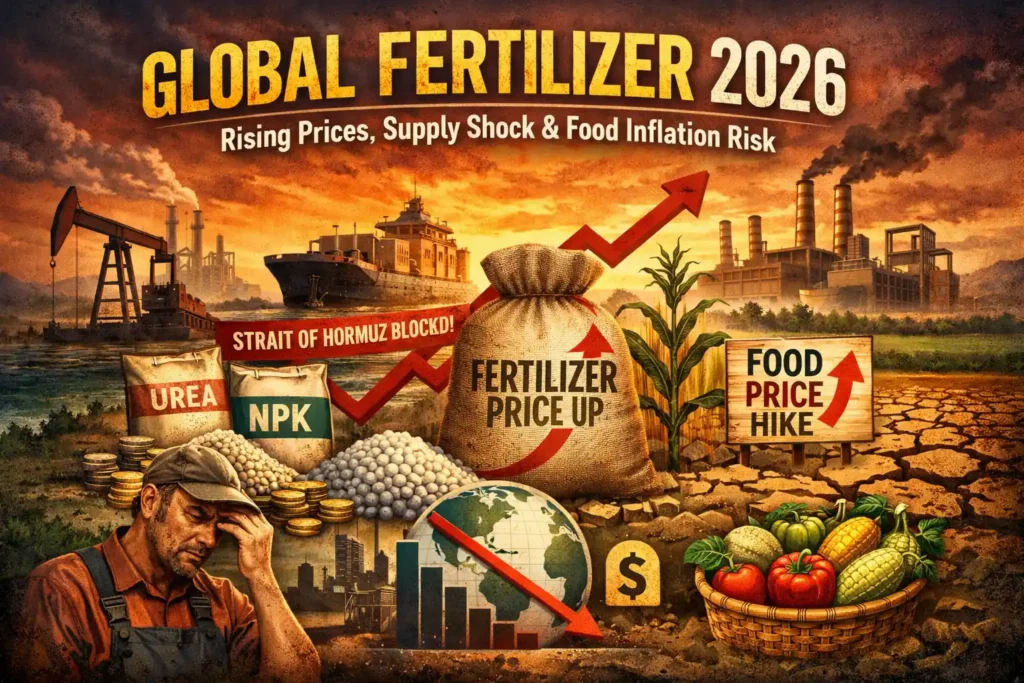
Pakistan’s agriculture sector is emerging as the next pressure point in the ongoing global energy crisis, with rising diesel costs and fertiliser supply disruptions threatening to push food inflation higher in the coming months, according to The Policy Research Institute of Market Economy (PRIME).
Read More: https://theboardroompk.com/pll-receives-four-lng-bids-amid-power-demand-surge/
The shock originates from the disruption of global energy and fertiliser supply chains following the 2026 Iran war, which has significantly curtailed flows through the Strait of Hormuz—a route that handles a major share of oil, gas and fertiliser trade.
At the domestic level, the impact is being transmitted through two key channels: fuel and fertiliser.
High-speed diesel (HSD), which powers tractors, tube wells and freight transport, has seen sharp price volatility amid global oil supply constraints. This is critical because diesel underpins nearly every stage of Pakistan’s food supply chain—from land preparation and harvesting to transportation of crops to markets.
Simultaneously, fertiliser production is facing stress due to gas shortages. LNG supplies—already constrained due to disrupted shipments—are forcing authorities to consider diverting gas away from fertiliser plants toward power generation to avoid electricity shortages.
This creates a structural trade-off: energy security versus food security.
Globally, the fertiliser market is also tightening.
The Hormuz disruption has affected urea supply chains, with analysts warning that higher input costs could translate into reduced fertiliser availability and elevated prices.
For Pakistan, the timing is particularly sensitive.
The agriculture sector is entering critical cropping cycles, where fertiliser availability and fuel affordability directly influence yields. Any disruption at this stage can reduce output and trigger downstream price pressures.
The inflationary transmission mechanism is already well understood: higher diesel costs raise transportation and logistics expenses, while fertiliser shortages increase production costs—both ultimately passed on to consumers in the form of higher food prices.
Adding to the risk is Pakistan’s structural reliance on imported inputs. Fertiliser production depends heavily on gas, while the broader agricultural supply chain is closely linked to fuel prices, leaving the sector exposed to external shocks.
Economists warn that if the energy disruption persists, Pakistan could face a second-round inflationary wave driven not by demand, but by supply-side constraints in food production.
The emerging risk is clear: what began as an energy crisis is rapidly morphing into a food inflation challenge.