
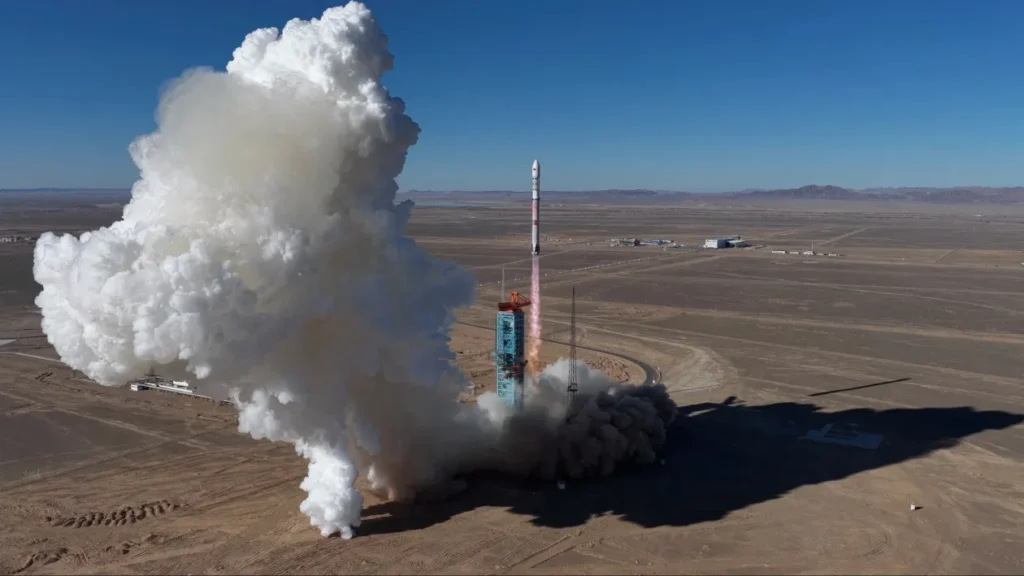
China’s commercial space sector is accelerating rapidly, driven by ambitions to rival U.S. dominance in reusable launch technology. On December 26, 2025, the Shanghai Stock Exchange announced new guidelines creating a “fast lane” for initial public offerings on the tech-focused STAR market specifically for companies developing reusable commercial rockets. These rules exempt firms from traditional profitability and minimum revenue requirements, a significant relaxation building on June 2025 measures that already eased listings for pre-profit innovative companies. Instead, eligibility hinges on achieving key technological milestones, such as one successful orbital launch incorporating reusable rocket technology. This shift prioritizes innovation over immediate financial performance, recognizing the capital-intensive nature of rocket development.
Details of the Relaxed Regulations The guidelines, effective immediately, do not require successful booster recovery—only the use of reusable technology to place a payload in orbit. This lowers the bar for qualification, benefiting firms in early stages of reusability testing. Companies involved in national missions or major state projects receive priority support, aligning private efforts with Beijing’s strategic goals. The move addresses funding challenges in an industry where R&D costs soar into billions, enabling easier access to domestic capital markets.
Implications for China’s Space Ambitions The policy underscores China’s push to close the gap with SpaceX, whose Falcon 9 holds a near-monopoly on operational reusable orbital launches. Private firms like LandSpace recently conducted China’s first full reusable rocket test with the Zhuque-3 in early December 2025, successfully orbiting a satellite despite failing to recover the booster. Other players, including Galactic Energy, i-Space, Orienspace, Space Pioneer, and Deep Blue Aerospace, are advancing similar medium-lift reusable systems. By facilitating IPOs, Beijing aims to fuel megaconstellation projects like Guowang and Qianfan, requiring tens of thousands of satellites. This could accelerate commercialization, reduce launch costs, and enhance national security by diminishing reliance on foreign providers, potentially reshaping the global space economy in the coming years.