Pakistan

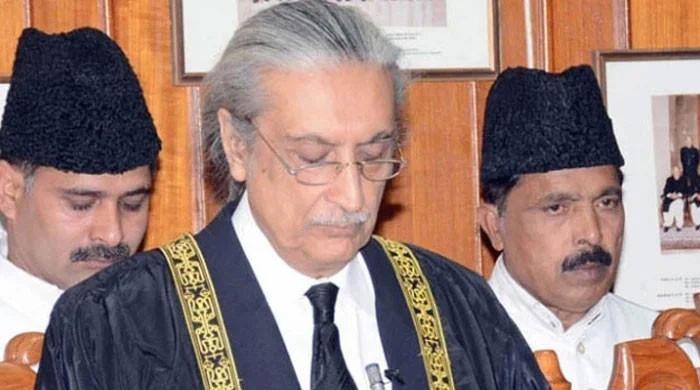
Justice Mansoor Ali Shah and Justice Athar Minallah
Pakistan

Two Senior Supreme Court Judges Step Down in Protest Against 27th Constitutional Amendment

Justice Mansoor Ali Shah and Justice Athar Minallah Two senior judges of the Supreme Court of Pakistan — Justice Mansoor Ali Shah and Justice Athar Minallah — have tendered their resignations in protest against the recently passed 27th Constitutional Amendment, which they say undermines judicial independence, Aaj News reported. According to the report, both judges have formally submitted their resignation letters to the President of Pakistan and vacated their chambers at the Supreme Court. Justice Mansoor Ali Shah’s 13-page resignation letter outlines his objections in detail, calling the 27th Amendment a “serious blow to the Constitution of Pakistan” that places the judiciary “under the control of the executive.” He wrote that the change “strikes at the very heart of constitutional democracy” and expressed concern that “justice has become increasingly out of reach for ordinary citizens.” “I have served this institution with dignity and integrity. I step down as Senior Judge of the Supreme Court of Pakistan with a clear conscience and without regrets,” Justice Shah stated in his letter. Justice Athar Minallah’s seven-page resignation echoed similar sentiments, stating that “the Constitution I had sworn to protect no longer stands intact.” Sources said both judges had written to Chief Justice Yahya Afridi prior to submitting their resignations. The twin resignations mark a watershed moment in Pakistan’s judicial history, intensifying the ongoing debate over constitutional reforms and the autonomy of the judiciary.
Pakistan's 27th Amendment Set for Senate Nod Today: Judicial Overhaul Looms
Pakistan

Pakistan’s 27th Amendment Set for Senate Nod Today: Judicial Overhaul Looms

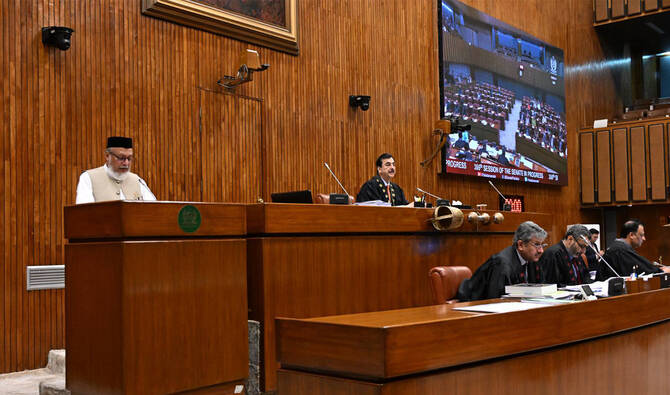
Islamabad: The revised text of the 27th Constitutional Amendment, embedding sweeping judicial reforms, faces a crucial Senate vote today, just a day after securing National Assembly approval amid fierce opposition uproar. A Senate session has been convened at Parliament House, with Law Minister Azam Nazeer Tarar slated to table the bill, sources told Aaj News. An afternoon federal cabinet huddle will greenlight ancillary law tweaks to align with the changes.Government maneuvers ensure smooth passage: PTI dissidents Saifullah Abro and JUI-F’s Ahmad Khan remain voting-eligible, their resignations unprocessed and no Article 63 disqualifications filed. Yesterday’s NA triumph—234 votes surpassing the 224 two-thirds threshold—unfolded chaotically, with opposition ripping bill copies, besieging the speaker’s podium, and boycotting. JUI-F opposed, but the coalition’s tally prevailed despite the drama.At its core, the amendment injects eight clauses, notably revamping Article 6 Clause 2 to bar courts from validating “high treason” acts, incorporating the nascent Federal Constitutional Court (FCC) alongside high and Supreme Courts. It enshrines Chief Justice Yahya Afridi’s tenure uninterrupted, dubbing him CJP until retirement; thereafter, the senior-most judge from Supreme Court or FCC assumes the mantle. Tarar debunked abolition fears: “The CJP office endures; Justice Afridi retains Supreme Judicial Council and Judicial Commission leadership.”

IMF’s Executive Board to discuss $1.2 Billion Tranche for Pakistan on December 8
Pakistan

IMF’s Executive Board to discuss $1.2 Billion Tranche for Pakistan on December 8

Islamabad: The International Monetary Fund (IMF) has placed Pakistan on the agenda of its Executive Board meeting scheduled for December 8, paving the way for the final approval of a crucial $1.2 billion tranche under its ongoing bailout programs. This disbursement includes $1 billion from the Extended Fund Facility (EFF) following its second review and approximately $200 million from the Resilience and Sustainability Facility (RSF) in its first review.The move comes after a staff-level agreement (SLA) was reached last month in Washington DC between IMF officials and Pakistani authorities. The SLA, signed post the EFF’s second economic review, underscores Pakistan’s progress in fiscal reforms, revenue mobilization, and structural adjustments amid persistent inflation and external vulnerabilities.Upon board approval – often a procedural formality after SLA clearance – the funds will elevate total disbursements under the EFF and RSF to about $3.3 billion. This infusion is vital for stabilizing Pakistan’s foreign reserves, currently hovering around $9 billion, and supporting balance-of-payments needs.Finance Minister Muhammad Aurangzeb, speaking at the 9th Edition of The Future Summit titled ‘Course Correction: Redefining The Direction’ last month, had anticipated the approval in “early December.” He emphasized the government’s commitment to tough reforms, including energy sector tariffs and tax base expansion, to meet IMF benchmarks.However, the impending decision has ignited debate in Islamabad. Critics, including opposition lawmakers, argue that stringent IMF conditions exacerbate public hardships, while proponents hail it as a step toward long-term macroeconomic stability. Economists project the tranche could ease pressure on the rupee and curb borrowing costs, fostering investor confidence in South Asia’s sixth-largest economy.As the board convenes, all eyes are on whether any last-minute hurdles emerge, though optimism prevails given the SLA’s robustness. Pakistan’s successful navigation of this review could unlock further international financing, signaling resilience in its reform trajectory.

Ex-CJP Khawaja Files SC Petition Against 27th Amendment, Warns of Judicial Eclipse
Pakistan

Ex-CJP Khawaja Files SC Petition Against 27th Amendment, Warns of Judicial Eclipse

Islamabad Former Chief Justice of Pakistan Jawwad S. Khawaja has petitioned the Supreme Court to strike down the proposed 27th Constitutional Amendment, decrying it as a mortal threat to judicial independence and the separation of powers doctrine. Filed under Article 184(3) through counsel Khawaja Ahmed Hosain, the plea urges suspension of any provisions curbing the apex court’s jurisdiction or shifting it to alternative forums, amid parliamentary pushes to enact the bill.Khawaja, in a stark admonition, argues the tweaks erode the hard-won consensus of the 1973 Constitution, setting a “haunting precedent” that undermines the social contract and invites historical repetition. “A nation whose foundational document is fundamentally controversial cannot prosper,” the petition states, invoking the Rule of Law: “Do we want to be governed by Laws or Men?” It contends Parliament lacks authority to diminish SC powers, rendering such changes “patently unconstitutional” and akin to abolishing the court itself.The move resonates amid judicial disquiet, with sitting judges and retirees urging CJ Yahya Afridi to convene a full court, yet no such meeting has materialized. Ex-Additional AG Tariq Mahmood Khokhar lambasted the inertia: “The CJP presides over the liquidation of the Supreme Court,” warning of executive-legislative overreach echoing past dictators like Ayub, Yahya, and Musharraf. He highlighted ironic self-sabotage: empowering a “constitutional court” via SC disempowerment, dooming democracy.Khawaja seeks declarations barring jurisdiction transfers, including high court judges, and SC intervention to avert “irreparable harm.” Lawyers decry the bill’s oath-violating essence, as opposition critiques its legitimacy in a polarized assembly. With the amendment nearing passage, the petition spotlights an existential judicial brink, demanding the SC uphold its oath to defend the Constitution or risk irrelevance. “The death of the Supreme Court will be the death of an independent judiciary,” it concludes, rallying for urgent hearings to salvage institutional sanctity.

IMF Deploys Technical Team to Overhaul Pakistan's Budget Practices Amid Rs448bn Discrepancy Crisis
Pakistan

IMF Deploys Technical Team to Overhaul Pakistan’s Budget Practices Amid Rs448bn Discrepancy Crisis

Islamabad The International Monetary Fund (IMF) has initiated a two-week technical assistance mission in Pakistan, responding to Islamabad’s plea for reforms to enhance budget management and eradicate a staggering Rs448 billion statistical discrepancy recorded in the first quarter of the current fiscal year.Led by Nino Tchelishvili from the IMF’s Fiscal Affairs Department, the four-member delegation commenced consultations on Monday with federal and provincial officials, set to conclude on November 21. The mission will dissect Pakistan’s fiscal laws, regulations, and operational norms to pinpoint vulnerabilities, culminating in a comprehensive report aimed at bolstering data integrity.Government sources revealed the exercise targets fiscal data governance, leveraging the IMF’s framework spanning six pillars: legal structures, data strategies, architecture, storage/privacy protocols, digital tools, organizational setups, and internal controls. Emphasis will be on interoperability to support the rollout of the Government Integrated Financial Management Information System (GIFMIS), fostering data-driven fiscal decisions.This comes as Pakistan grapples with opaque accounting—federal expenses lacked visibility for Rs93 billion, while provinces showed Rs354 billion in revenue gaps, per the Finance Ministry’s July-September summary. Discrepancies stem from reporting lags between the State Bank of Pakistan (SBP), Federal Board of Revenue (FBR), and Economic Affairs Division, alongside provincial issues like delayed cheque clearances and bank deposit fluctuations (Punjab: Rs209bn; Sindh: Rs47bn; KP: Rs33bn; Balochistan: Rs66bn).The probe extends to treasury/cash management, tax/non-tax revenue booking (with monthly variances of Rs10-15bn), budget ceilings, procurement systems, and central bank payments. Debt management—criticized for excluding circular debt and pensions—will also face scrutiny, amid debates over reporting standards.Distinct from program reviews, this advisory could morph into bailout benchmarks, especially with the impending release of the Governance and Corruption Diagnostic Assessment report, a precondition for $1.2 billion in December tranches. Sponsors like the EU, UK, Germany, France, Saudi Arabia, Belgium, and Denmark will review findings.Experts like former Debt Management DG Abdul Rahman Warriach decry Pakistan’s debt transparency deficits, though current DG Mohsin Chandna defends compliance. The mission underscores persistent World Bank/IMF nudges for systemic upgrades, vital for Pakistan’s $7 billion EFF revival and economic stabilization.

Food Delivery Rider Fatally Crushed in Karachi Hit-and-Run: Truck Driver Arrested
Pakistan

Food Delivery Rider Fatally Crushed in Karachi Hit-and-Run: Truck Driver Arrested

Karachi A 20-year-old food delivery rider met a horrific end near Landi Kotal roundabout in North Nazimabad on Tuesday, when he was struck by a speeding car and subsequently crushed under the wheels of a truck, authorities confirmed. The victim, identified as Baber, succumbed to his injuries at the scene, amplifying concerns over Karachi’s escalating road safety woes. Eyewitnesses described the sequence of events: Baber, navigating his motorcycle amid rush-hour traffic, was first rammed by an unidentified sedan that fled immediately. Moments later, a cement-laden truck barreled over him, inflicting fatal trauma. Rescue 1122 teams arrived promptly, extricating the body and rushing two bystanders with minor injuries to Abbasi Shaheed Hospital. This tragedy marks the third delivery worker fatality in Karachi this month, spotlighting the city’s dire traffic crisis—over 1,200 road deaths reported in 2025 alone, per Sindh traffic police data. Activists demand stricter enforcement, helmet mandates for riders, and dedicated lanes for two-wheelers. Baber’s family, mourning the loss of their sole breadwinner, called for justice. “He was just trying to make ends meet,” a relative lamented. Authorities vow a thorough probe to prevent further needless losses. Disclaimer: This post is for informational purposes only and based on available reports. The image is used for reference. The incident shown in the image is not real and is Ai generated

PPL
Pakistan

PPL Boosts Gas Output at Gambat South Facility Through Innovative Optimisation

Karachi Pakistan Petroleum Limited (PPL), operator of the Gambat South Block, announced a significant enhancement in gas processing capacity at the Gambat South Gas Processing Facility (GPF-II) in Sanghar, Sindh, elevating output without major capital outlay.In a filing to the Pakistan Stock Exchange (PSX) on Tuesday, PPL revealed that the facility’s capacity has risen from 55 million standard cubic feet per day (MMscfd) to 60 MMscfd of raw gas through targeted process improvements. This upgrade yields an additional 5 MMscfd of gas, 35 barrels per day of condensate, and one metric ton of liquefied petroleum gas (LPG).Commissioned in 2016 with an initial design for 50 MMscfd of CO2-rich raw gas (26% CO2), the plant underwent prior optimisation in 2021-22 to reach 55 MMscfd. The latest milestone was achieved via refinements in the Amine sweetening process, incorporating a proprietary additive into the existing MDEA solvent system—no hardware modifications required.PPL holds a 65% working interest in the block, with Government Holdings (Private) Limited (GHPL) at 25% and Asia Resources Oil Limited (AROL) at 10%. “This reflects our dedication to operational excellence and maximising domestic hydrocarbon resources cost-effectively,” the notice stated, emphasising value for stakeholders amid efforts to bolster energy security.The enhancement underscores PPL’s strategy of leveraging innovation for sustainable production gains, potentially easing Pakistan’s natural gas supply constraints. Industry experts hail it as a model for low-cost field optimisation in mature assets.

Pakistan's Auto Sector Accelerates
Auto, Pakistan

Pakistan’s Auto Sector Accelerates: Car Sales Surge 46% in First Four Months of FY26

Karachi Pakistan’s automotive market demonstrated robust recovery with car sales, including jeeps and pick-ups, jumping 46% year-on-year to 59,600 units during July-October FY26, fueled by stabilizing economic conditions, a steadier Pakistani rupee, and the introduction of fresh models.Data released Tuesday by the Pakistan Automotive Manufacturers Association (PAMA) revealed a broad uptick across vehicle categories. Total sales of all vehicles—encompassing two-, three-, and four-wheelers—also climbed, though farm tractor volumes dipped.In September 2025 alone, jeep and pick-up sales rocketed 67% year-on-year to 17,174 units. Trucks and buses posted even steeper gains, rising 115% to 2,308 units and 59% to 322 units, respectively. Motorcycle and rickshaw sales accelerated 30% to 597,025 units, reflecting renewed consumer appetite.Auto sector analyst Muhammad Sabir Shaikh, speaking to Business Recorder, attributed the resurgence to post-pandemic normalization. “The industry endured a steep decline from 2022 through the first quarter of 2025, but it’s now building momentum,” he said. Shaikh highlighted how improved economic sentiment and rupee stability have restored buyer confidence, encouraging consumers to upgrade vehicles every three to four years—a habit disrupted by the Covid-19 fallout.The analyst also pointed to the influx of affordable Chinese motorcycles challenging pricier Japanese rivals, boosting two-wheeler demand. However, farm tractor sales fell 15% to 5,867 units, hampered by an 18% sales tax reimposed over the past 18 months, which had previously been waived to spur agricultural mechanization.Industry observers anticipate sustained growth, provided macroeconomic stability persists, positioning Pakistan’s auto sector for further expansion in the coming fiscal year.

Gold Prices
Pakistan

Gold Prices Surge in Pakistan, Tracking Global Rally Amid Fed Rate Cut Hopes

Karachi Gold prices in Pakistan climbed sharply on Tuesday, mirroring gains in the international market driven by anticipation of a US Federal Reserve interest rate cut in December and easing concerns over a potential US government shutdown.According to the All-Pakistan Gems and Jewellers Sarafa Association (APGJSA), the price of gold per tola rose by Rs5,900 to settle at Rs435,762. Similarly, 10-gram gold advanced by Rs5,065 to Rs373,595. This follows Monday’s increase, when per-tola gold gained Rs7,400 to reach Rs429,862.The international spot price also firmed up, trading at $4,134 per ounce (including a $20 premium), up $59 from the previous session, as per APGJSA data. Silver prices in the local market edged higher by Rs144 per tola, closing at Rs5,353.Globally, spot gold rose 0.7% to $4,142.83 per ounce by 0314 GMT, marking its highest level since October 24. US gold futures for December delivery climbed 0.7% to $4,148.50 per ounce, reflecting investor bets on looser monetary policy and reduced fiscal uncertainty in the US.Market analysts attribute the uptick to gold’s safe-haven appeal amid geopolitical tensions and expectations of sustained economic stimulus. “With the Fed signaling more cuts, gold remains a hedge against inflation and volatility,” said one Karachi-based trader.The APGJSA noted steady demand from retail buyers and investors, though high premiums could temper short-term enthusiasm. Traders will watch upcoming US economic data for further cues on the precious metal’s trajectory.

Governor SBP
Pakistan

Governor SBP Urges Regional Capital Market Integration for Sustainable Growth

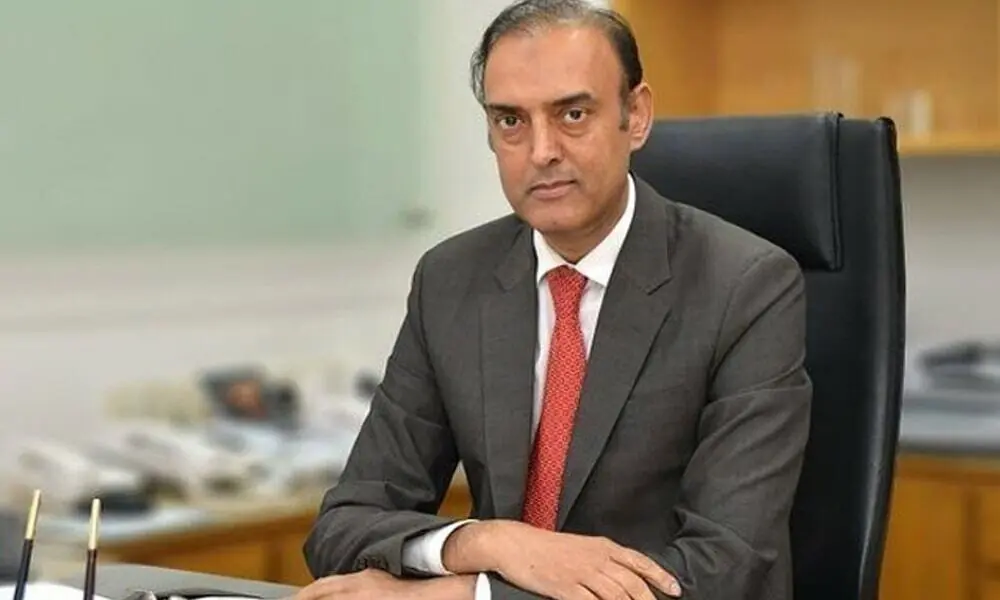
KARACHI Governor State Bank of Pakistan (SBP) Jameel Ahmad has called for greater regional cooperation and innovation to build integrated capital markets that can mobilize investment, enhance resilience, and drive sustainable growth across Asia. Addressing the International Capital Market Conference 2025 in Karachi, he said regional market integration was “not an option but a necessity” in today’s interconnected world. Ahmad emphasized that harmonized regulations, efficient capital allocation, and broader investment opportunities could help economies with low savings and limited bank financing, especially for climate and infrastructure projects. Citing ASEAN+3 and Caribbean examples, he noted that collective action can lower costs and diversify risk. He outlined four priorities: aligning regulations, improving connectivity, harmonizing legal frameworks, and boosting regulatory cooperation. Highlighting SBP’s Vision 2028, he said Pakistan is linking its Raast system with the Buna platform and developing a unified digital KYC framework to advance regional financial integration.

Scroll to Top