Pakistan

NDMA Issues Cold Wave Alert for Northern Pakistan Amid Forecast of Heavy Snowfall
Pakistan

NDMA Issues Cold Wave Alert for Northern Pakistan Amid Forecast of Heavy Snowfall

Pakistan’s National Disaster Management Authority (NDMA) has activated its National Emergencies Operations Center (NEOC) to issue a cold wave alert for Gilgit-Baltistan, upper Khyber Pakhtunkhwa, and Azad Jammu & Kashmir. The advisory, released on January 15, 2026, warns of very cold to extremely cold conditions, particularly at night and early morning, with daytime temperatures remaining below normal levels. Severe Weather Forecast and Potential Disruptions Meteorological data predicts moderate to heavy snowfall in high-altitude and hilly areas, which could lead to road blockages, transportation halts, and power outages in mountainous regions. Plains adjoining these areas are expected to face cold and dry weather, with frost forming in isolated pockets. Authorities highlight risks of snow slides and avalanches in vulnerable zones, posing threats to human life, infrastructure, livestock, and safety. Prolonged cold exposure increases health vulnerabilities for children, the elderly, and individuals with chronic conditions, while frost may damage standing crops and orchards in lower elevations. Public Safety Measures and Official Preparations NDMA urges the public to avoid unnecessary travel to high-altitude and snowfall-prone regions. If travel is essential, vehicles should be equipped with snow chains, and individuals must prepare warm clothing, heating arrangements, and adequate shelter—especially for vulnerable groups. Local communities are advised to heed instructions from provincial and district authorities. NDMA has instructed relevant departments to remain on high alert, ready for snow clearance, emergency response, and quick restoration of essential services like electricity and communications. The NEOC will continuously monitor developments and provide updates. Citizens are encouraged to rely on official channels, including television, radio, verified social media, and the “Pak NDMA Disaster Alert” mobile app (available on Android and iOS) for the latest information and alerts.

Dr. Syed Amir Ali PhD Earns Doctorate Degree Conferred by Governor Sindh
Pakistan

Dr. Syed Amir Ali PhD Earns Doctorate Degree Conferred by Governor Sindh

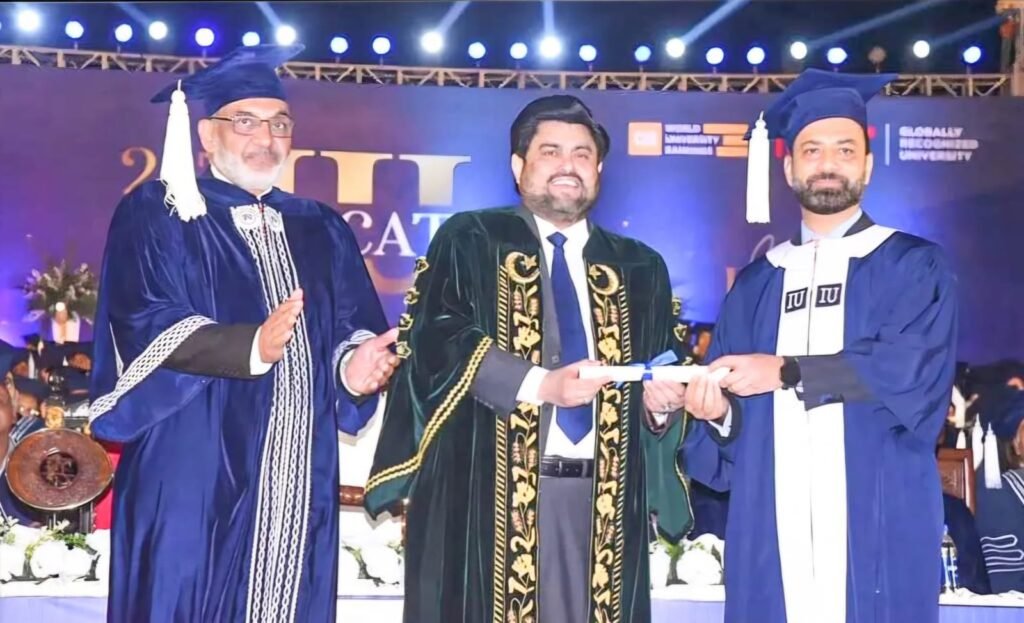
Dr. Syed Amir Ali PhD, President & Chief Executive Officer of Meezan Bank, has achieved a significant academic milestone by being awarded his Doctor of Philosophy degree at the 23rd Convocation of Iqra University, held at the PAF Museum, Karachi. The prestigious degree was conferred by the Honorable Governor of Sindh, Mr. Kamran Tessori, marking a proud moment for Pakistan’s Islamic banking industry. This achievement not only reflects personal academic excellence but also reinforces Meezan Bank’s leadership role in advancing Islamic digital banking, ethical finance, and financial inclusion across Pakistan. Dr. Syed Amir Ali PhD Research Focus on Islamic Digital Banking The doctoral research of Dr. Syed Amir Ali PhD, titled “SME Financing through the Islamic Digital Banking Ecosystem,” addresses one of the most critical challenges facing emerging economies limited access to financing for small and medium enterprises (SMEs). His research explains how digital innovation, when integrated with Shariah-compliant financial principles, can unlock sustainable funding avenues for SMEs. The study highlights that Islamic digital banking platforms can: • Improve SME access to capital through digital channels• Reduce operational costs via technology-driven financing models• Strengthen transparency, governance, and Shariah compliance• Support inclusive economic growth in countries like Pakistan Rather than listing theories in isolation, the research emphasizes real-world application, positioning Islamic digital banking as a practical solution for economic development. Alignment with Meezan Bank’s Digital and Ethical Vision The academic work of Dr. Syed Amir Ali PhD strongly aligns with Meezan Bank’s strategic vision of delivering inclusive, ethical, and digitally enabled financial solutions. As Pakistan’s leading Islamic bank, Meezan Bank has consistently invested in digital transformation while maintaining strict adherence to Shariah principles. Through this research, Dr. Amir Ali reinforces the idea that digital banking is not merely a technological upgrade but a powerful enabler of ethical finance, particularly for underserved business segments such as SMEs. Distinguished Academic and Professional Profile Beyond earning his doctorate, Dr. Syed Amir Ali PhD brings an exceptional blend of academic excellence and industry leadership. His qualifications reflect a rare combination of finance, law, technology, and management expertise. His academic and professional credentials include: • Chartered Accountant (Gold Medalist)• CFA Charterholder• MBA (Gold Medalist)• LL.B.• Certification in Software Engineering• Alumnus, Advanced Management Program, Harvard Business School This multidisciplinary background has played a pivotal role in shaping Meezan Bank’s innovation-led growth while preserving the core values of Islamic banking. Why Dr. Syed Amir Ali PhD’s Achievement Matters for Pakistan The achievement of Dr. Syed Amir Ali PhD carries broader significance for Pakistan’s financial ecosystem. As the country moves toward digitalization and financial inclusion, leadership grounded in both academic research and practical banking experience becomes increasingly vital. His research provides a roadmap for policymakers, regulators, and financial institutions seeking to expand SME financing through Shariah-compliant digital solutions—an area critical for job creation, exports, and long-term economic stability. A Milestone Worth Celebrating We extend our heartfelt congratulations to Dr. Syed Amir Ali PhD on this remarkable accomplishment. His academic success further strengthens Meezan Bank’s reputation as a thought leader in Islamic finance and digital banking innovation. With this milestone, Dr. Amir Ali continues to set a powerful example of how knowledge, leadership, and ethical banking can work together to shape Pakistan’s financial future.

Gold Price in Pakistan Declines as Market Sentiment Softens
Pakistan

Gold Price in Pakistan Declines as Market Sentiment Softens

Gold price in Pakistan moved lower on Thursday, reflecting both domestic market adjustments and a mild pullback in global bullion prices. According to the All-Pakistan Gems and Jewelers Sarafa Association (APGJSA), the price of 24-karat gold dropped significantly, signaling a cautious outlook among investors amid easing geopolitical and monetary tensions. The decline comes after recent highs and suggests profit-taking activity, both locally and internationally, as market participants reassess risk factors and near-term demand for safe-haven assets. Gold Price in Pakistan Today – Latest Rates In the local bullion market, 24-karat gold was sold at Rs482,462 per tola, registering a day-on-day decrease of Rs3,700. On a per-gram basis, 24-karat gold per 10 grams fell by Rs3,172 to Rs413,633. Lower-purity gold followed the same trend. 22-karat gold was quoted at Rs379,177 per 10 grams, reflecting reduced buying interest amid volatile pricing conditions. From a broader perspective, gold prices in Pakistan remain elevated despite today’s correction. On a month-on-month basis, gold prices are still higher by over Rs31,600 per tola, while the financial year-to-date (FYTD) increase stands above Rs132,000 per tola, highlighting the metal’s strong long-term performance as an inflation hedge. Silver Prices Fall Alongside Gold Price in Pakistan Silver prices in Pakistan also declined, mirroring weakness in gold and international precious metals markets. 24-karat silver was sold at Rs9,425 per tola, down Rs150, while silver per 10 grams fell by Rs129 to Rs8,080. Despite the daily decline, silver continues to show resilience over longer time horizons. Since the start of the financial year, silver prices have increased by more than Rs5,600 per tola, underlining sustained industrial and investment demand. Global Gold Market Impact on Gold Price in Pakistan Internationally, spot gold traded near $4,603 per ounce, down $11.5 or 0.25% from the previous session. The modest pullback came as investors locked in profits following recent rallies. A softer tone from US President Donald Trump regarding Federal Reserve policy and geopolitical tensions with Iran helped ease market anxiety. Reduced geopolitical risk typically weakens demand for gold as a safe-haven asset, which in turn impacts the gold price in Pakistan, given its strong linkage with global bullion trends and currency movements. What This Means for Investors and Buyers The latest decline in the gold price in Pakistan may offer short-term relief to buyers who were sidelined by record-high prices. However, analysts caution that volatility remains elevated due to: • Ongoing uncertainty around global interest rate policies• Exchange rate fluctuations in Pakistan• Persistent inflationary pressures• Shifting geopolitical developments For investors, gold continues to serve as a long-term store of value, even as short-term corrections create entry opportunities. Outlook for Gold Price in Pakistan Looking ahead, the gold price in Pakistan is expected to remain sensitive to global economic signals and domestic currency movements. While near-term corrections may continue, the broader trend remains supported by inflation concerns and cautious investor sentiment. Market participants are advised to closely monitor international gold prices, US monetary policy signals, and PKR stability to better anticipate future price movements.

REVOO Lithium Electric Bikes in Pakistan Mark a New Era of Electric Mobility
Pakistan

REVOO Lithium Electric Bikes in Pakistan Mark a New Era of Electric Mobility

REVOO Lithium Electric Bikes in Pakistan have officially arrived, setting a new benchmark for electric mobility in the country. REVOO, a global electric mobility brand under Transsion Holdings, has launched its latest lithium-powered electric bikes REVOO A11 LFP and REVOO A12 LFP in Pakistan for the first time globally. This landmark launch highlights Pakistan’s growing strategic importance in REVOO’s international expansion roadmap. The introduction of lithium battery technology under the campaign “Reborn in Lithium” reflects a significant shift toward faster charging, longer lifespan, and enhanced safety for electric vehicles in Pakistan’s rapidly evolving EV ecosystem. Why REVOO Lithium Electric Bikes in Pakistan Matter The launch of REVOO’s lithium electric bikes signals a major upgrade from conventional graphene battery systems. While REVOO’s graphene-powered models have already gained strong traction nationwide, the new A11 LFP and A12 LFP retain the same trusted build quality while delivering superior performance and durability. Both models are equipped with fast-charging lithium batteries that fully charge in just 3 to 3.5 hours, making them ideal for daily urban use. REVOO is also offering a 36-month battery warranty and a 24-month motor warranty, reinforcing consumer confidence in lithium-powered electric mobility. REVOO Lithium Electric Bikes in Pakistan: A Strategic Market Choice Speaking at the launch, Kyle Zhang, Country Head of REVOO Pakistan, emphasized the importance of the local market, stating that Pakistan holds a special position in REVOO’s global vision. Launching lithium technology in Pakistan before any other market reflects the brand’s long-term commitment to supporting sustainable, reliable, and cost-efficient transportation solutions for Pakistani consumers. This move aligns with Pakistan’s increasing demand for affordable electric mobility amid rising fuel costs and urban congestion. REVOO A11 LFP: Built for Daily Commuting The REVOO A11 LFP is designed specifically for single riders and everyday commuting needs. It delivers a balanced mix of efficiency, comfort, and power, making it suitable for office travel and routine city rides. Instead of listing specifications in a table, the A11 LFP can be described as a lightweight commuter electric bike powered by a 1000W motor, capable of achieving speeds between 35 and 45 km/h. Depending on riding habits, users can expect a range of 75 to 90 kilometers per charge. The bike is equipped with front and rear hydraulic suspension, ensuring a smooth and stable ride on urban roads. REVOO A12 LFP: Designed for Family Mobility For users seeking a more versatile option, the REVOO A12 LFP caters to family-oriented and household commuting needs. It offers similar speed performance of 35 to 45 km/h, but extends the riding range to approximately 80 to 100 kilometers per charge. The A12 LFP stands out with enhanced safety and practicality features. It includes front disc and rear drum brakes, front and rear hydraulic suspension, and a 150 mm ground clearance, making it suitable for varied road conditions. Added conveniences such as under-seat storage make it an ideal electric bike for daily errands and family travel. Future of REVOO Lithium Electric Bikes in Pakistan REVOO has also announced plans to further expand its lithium-based EV portfolio in Pakistan. Upcoming models such as Y04, Y06, and B12 are expected to enter the market in the coming months, strengthening REVOO’s position as a leading electric mobility brand in the country. With government incentives for EV adoption and increasing consumer awareness, the launch of REVOO lithium electric bikes is well-timed to support Pakistan’s transition toward cleaner and more sustainable transportation. The arrival of REVOO Lithium Electric Bikes in Pakistan marks a significant milestone in the local EV industry. By introducing advanced lithium battery technology, fast charging, extended warranties, and commuter-focused designs, REVOO is redefining electric two-wheel mobility for Pakistani consumers. As fuel prices rise and sustainability becomes a priority, REVOO’s lithium-powered lineup positions itself as a smart, future-ready solution for urban mobility.

Punjab Potato and Kinno Exports Receive Major Boost Through Alternative Routes
Pakistan

Punjab Potato and Kinno Exports Receive Major Boost Through Alternative Routes

Punjab potato and kinno exports have received a critical boost after the federal government allowed farmers to export their produce through alternative routes, a move attributed to the intervention of Punjab Chief Minister Maryam Nawaz. The decision comes as a major relief for growers grappling with surplus production, falling prices, and prolonged trade disruptions. The Punjab government confirmed the development on Tuesday, stating that the approval was granted following the chief minister’s special efforts to address farmers’ concerns and stabilise the agricultural economy. Punjab Potato and Kinno Exports: Relief After Months of Market Stress Punjab’s potato and kinno farmers had been calling for urgent government support after a production surplus coincided with weak domestic demand and shrinking export opportunities. The situation worsened due to months-long disruptions in cross-border trade through Afghanistan, traditionally one of the key export routes for Pakistani agricultural produce. As a result, farmgate prices of potatoes plunged below production costs in several major growing districts, including Sahiwal, Okara, Pakpattan, Kasur, and adjoining areas. In extreme cases, farmers reported ploughing standing crops back into the soil to avoid further financial losses. By allowing Punjab potato and kinno exports through alternative routes, the federal government has provided a pathway for growers to access international markets and recover value from their produce. CM Maryam Nawaz’s Role in Reviving Punjab Potato and Kinno Exports Chief Minister Maryam Nawaz underscored her commitment to protecting farmers’ livelihoods, stating that the hard work of potato and kinno growers would not be allowed to go to waste. She revealed that she remains in continuous contact with Prime Minister Shehbaz Sharif to ensure coordinated efforts between the federal and provincial governments. The Punjab government formally approached the Centre to establish a high-level committee dedicated to facilitating exports and resolving bottlenecks. High-Level Committee to Support Punjab Potato and Kinno Exports To institutionalise export facilitation, a high-level committee has been formed with the following structure explained below: The committee is headed by Deputy Prime Minister Ishaq Dar and includes representatives from relevant federal ministries, export authorities, and key agricultural stakeholders. Its primary role is to streamline export procedures, reduce logistical hurdles, and ensure faster decision-making for perishable goods such as potatoes and kinnow. This coordinated approach aims to make Punjab potato and kinno exports more competitive while safeguarding farmers’ incomes. Exploring New Markets and Reducing Export Costs The Punjab government has also urged the federal authorities to explore new international markets for kinnow and potatoes and reduce export-related costs. High freight charges, compliance costs, and route restrictions have historically limited Pakistan’s agricultural export potential. According to CM Maryam Nawaz, practical measures are being taken daily to resolve export-related challenges, maximise foreign exchange earnings, and ensure smoother trade flows for agricultural produce. Punjab’s Dominance in Potato and Kinno Production Punjab plays a dominant role in Pakistan’s agricultural output, particularly in potatoes and kinnow. Explained in production terms: Punjab accounts for approximately 95% of the country’s total potato and kinnow production, making export access vital for price stability and farmer sustainability. For the current season: • Potato production in Punjab is expected to reach around 12 million tonnes• Kinno production is projected at approximately 4 million tonnes Without strong export channels, such volumes can overwhelm domestic markets and depress prices, underscoring the importance of sustained policy support for Punjab potato and kinno exports. Economic Impact of Strengthening Punjab Potato and Kinno Exports The approval of alternative export routes is expected to: • Stabilise farmgate prices• Prevent crop wastage• Improve farmer incomes• Boost Pakistan’s agricultural exports• Increase foreign exchange earnings For a province that forms the backbone of Pakistan’s food supply, export facilitation is not just a farmer issue but a broader economic priority. The federal government’s decision to allow Punjab potato and kinno exports through alternative routes marks a timely intervention in support of farmers facing severe market pressures. Backed by Chief Minister Maryam Nawaz’s engagement with the Centre, the move reflects a growing focus on export-led agricultural growth, market diversification, and farmer protection. If implemented effectively, these measures could set a precedent for resolving future agricultural export crises and strengthening Pakistan’s position in global produce markets.

Sindh Modaraba Riba-free Subordinated Fund Approved to Strengthen Capital Base
Pakistan

Sindh Modaraba Riba-free Subordinated Fund Approved to Strengthen Capital Base

Sindh Modaraba Riba-free subordinated fund has received a significant boost after the board of directors of Sindh Modaraba Management Limited approved the transfer of a Shariah-compliant subordinated fund of up to Rs1 billion to Sindh Modaraba. This strategic move underscores the management company’s commitment to strengthening the Modaraba’s capital structure while adhering strictly to Islamic finance principles. The decision was finalized during a board meeting held on January 14, 2026, and is subject to the completion of all required regulatory and procedural formalities. The development was formally communicated to the Exchange through an official notification, ensuring transparency and timely disclosure for investors and market participants. Sindh Modaraba Riba-free Subordinated Fund and Shariah-Compliant Financing The approval of the Sindh Modaraba Riba-free subordinated fund reflects a growing emphasis on Shariah-compliant financial instruments within Pakistan’s capital markets. Subordinated funds, particularly when structured on a Riba-free basis, play a vital role in reinforcing the financial resilience of Modarabas without compromising Islamic principles. Unlike conventional debt, this subordinated fund does not involve interest (Riba) and is aligned with Shariah governance frameworks. Such funding arrangements typically rank below senior liabilities, providing long-term capital support while allowing the Modaraba to expand its operational and investment capacity responsibly. Strategic Impact of Sindh Modaraba Riba-free Subordinated Fund From a strategic perspective, the Sindh Modaraba Riba-free subordinated fund is expected to deliver multiple benefits. The additional capital will enhance the Modaraba’s balance sheet strength, improve risk absorption capacity, and support future growth initiatives in line with Islamic finance standards. If one were to summarize the impact in explanatory terms, the approved Rs1 billion facility can be viewed across three key dimensions: • Capital Strengthening: The fund directly augments equity-like capital, improving financial stability.• Shariah Compliance: It reinforces confidence among Islamic investors seeking Riba-free instruments.• Market Credibility: Support from the management company signals long-term commitment and governance strength. This structured capital injection positions Sindh Modaraba favorably amid a competitive and evolving Islamic financial landscape. Sindh Modaraba Riba-free Subordinated Fund and Investor Confidence Investor confidence is closely tied to capital adequacy and governance standards. The approval of the Sindh Modaraba Riba-free subordinated fund sends a positive signal to existing and potential investors, highlighting proactive management oversight and adherence to disclosure requirements. By announcing the decision through an Exchange notification, Sindh Modaraba Management Limited demonstrated transparency an essential factor for listed entities. This move is likely to strengthen market perception, particularly among institutional and Shariah-conscious investors. Broader Significance for Pakistan’s Islamic Finance Sector The development surrounding the Sindh Modaraba Riba-free subordinated fund also carries broader implications for Pakistan’s Islamic finance ecosystem. As demand for ethical and Shariah-compliant investments continues to rise, such capital support mechanisms contribute to sectoral depth and sustainability. This approval aligns with national objectives to promote Islamic financial instruments, encourage non-interest-based funding, and enhance the role of Modarabas in economic development. In conclusion, the approval of the Sindh Modaraba Riba-free subordinated fund of up to Rs1 billion marks a strategically important step toward strengthening Sindh Modaraba’s capital base. Backed by its management company and governed by Shariah principles, this initiative reinforces financial stability, boosts investor confidence, and supports the long-term growth of Islamic finance in Pakistan. As regulatory formalities are completed, market participants will be closely watching how this capital infusion translates into operational expansion and value creation.

Jetour SUVs in Pakistan Set to Redefine the Local SUV Market
Pakistan

Jetour SUVs in Pakistan Set to Redefine the Local SUV Market

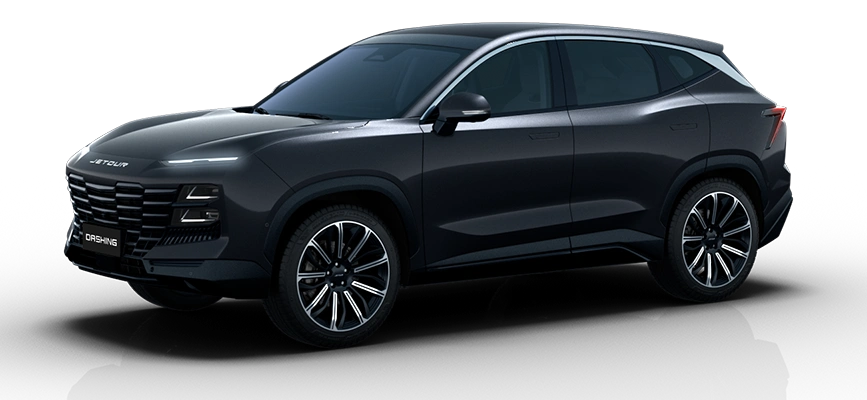
Jetour SUVs in Pakistan are officially making headlines as the Chinese automaker confirms the launch of two brand-new SUV models, signaling a major expansion of its footprint in the country’s rapidly growing automotive sector. The announcement highlights Jetour’s confidence in Pakistan’s SUV demand and its long-term commitment to the local market. Pakistan’s auto industry has witnessed a clear shift in consumer preferences, with SUVs outperforming traditional sedans due to their versatility, road presence, and adaptability to local driving conditions. Jetour’s entry at this stage positions the brand to capitalize on this evolving demand. Jetour SUVs in Pakistan: A Strategic Market Expansion The decision to introduce Jetour SUVs in Pakistan aligns with the brand’s broader global growth strategy. Pakistan, with its expanding middle class and increasing appetite for feature-rich vehicles, has emerged as a key destination for international automakers. Jetour’s upcoming SUVs are expected to compete in the mid-size and compact SUV segments, where demand has surged due to improved road infrastructure and changing lifestyle preferences. Industry analysts believe the move could intensify competition among both local assemblers and imported brands. What to Expect From Jetour’s New SUVs While Jetour has yet to officially reveal model names or pricing, the company’s global portfolio provides strong clues about what Pakistani consumers can expect. Internationally, Jetour vehicles are known for combining modern design, advanced safety features, and competitive pricing. Instead of presenting specifications in a table, it is important to understand Jetour’s value proposition in practical terms. The upcoming SUVs are likely to offer turbocharged engines for better fuel efficiency, spacious interiors suited for families, and advanced infotainment systems that appeal to tech-savvy buyers. Safety features such as multiple airbags, electronic stability control, and driver-assistance technologies are also expected to be part of the package. Jetour SUVs in Pakistan and the Growing SUV Trend The launch of Jetour SUVs in Pakistan comes at a time when SUVs dominate new vehicle launches in the country. Rising fuel efficiency in newer SUV models and flexible financing options have further fueled demand. From urban professionals to long-distance travelers, SUVs are increasingly viewed as practical all-rounders. Jetour’s entry could offer consumers a fresh alternative, especially those seeking premium features at competitive prices. Impact on Pakistan’s Automotive Industry Jetour’s expansion may encourage greater innovation and price competitiveness across the industry. With more international brands entering Pakistan, consumers benefit from better features, improved after-sales services, and diversified choices. Additionally, if Jetour opts for local assembly in the future, it could contribute positively to employment generation, technology transfer, and supply chain development within Pakistan’s automotive ecosystem. Launch Timeline and Market Expectations Although an official launch date has not been announced, industry sources suggest the SUVs could arrive within the next few months. The rollout is expected to be supported by dealership expansion, marketing campaigns, and customer engagement initiatives. Market analysts predict strong initial interest, particularly if Jetour prices its SUVs strategically against existing competitors. Early adopters are likely to include buyers looking for a balance between affordability and premium features. A Promising Future for Jetour SUVs in Pakistan The announcement of Jetour SUVs in Pakistan marks an important milestone for both the brand and the local automotive market. With rising SUV demand, evolving consumer preferences, and increasing competition, Jetour’s entry could reshape buyer expectations and raise industry standards. As details unfold, Pakistani car buyers will be watching closely to see how Jetour positions its new SUVs and whether they can deliver on performance, value, and reliability.

PTA Debunks Internet Shutdown Rumors: Services Fully Operational on January 15
Pakistan

PTA Debunks Internet Shutdown Rumours: Services Fully Operational on January 15

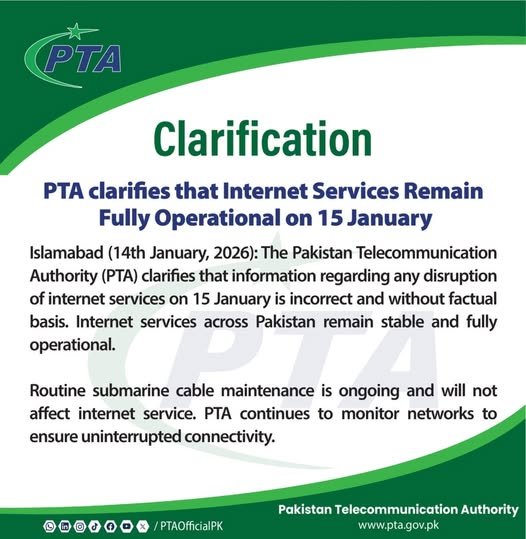
Islamabad: The Pakistan Telecommunication Authority (PTA) clarifies that information regarding any disruption of internet services on 15 January is incorrect and without factual basis. Internet services across Pakistan remain stable and fully operational. Routine submarine cable maintenance is ongoing and will not affect internet service. PTA continues to monitor networks to ensure uninterrupted connectivity.

KSE-100 Index Performance Declines Amid Broad-Based Selling Pressure
Pakistan

KSE-100 Index Performance Declines Amid Broad-Based Selling Pressure

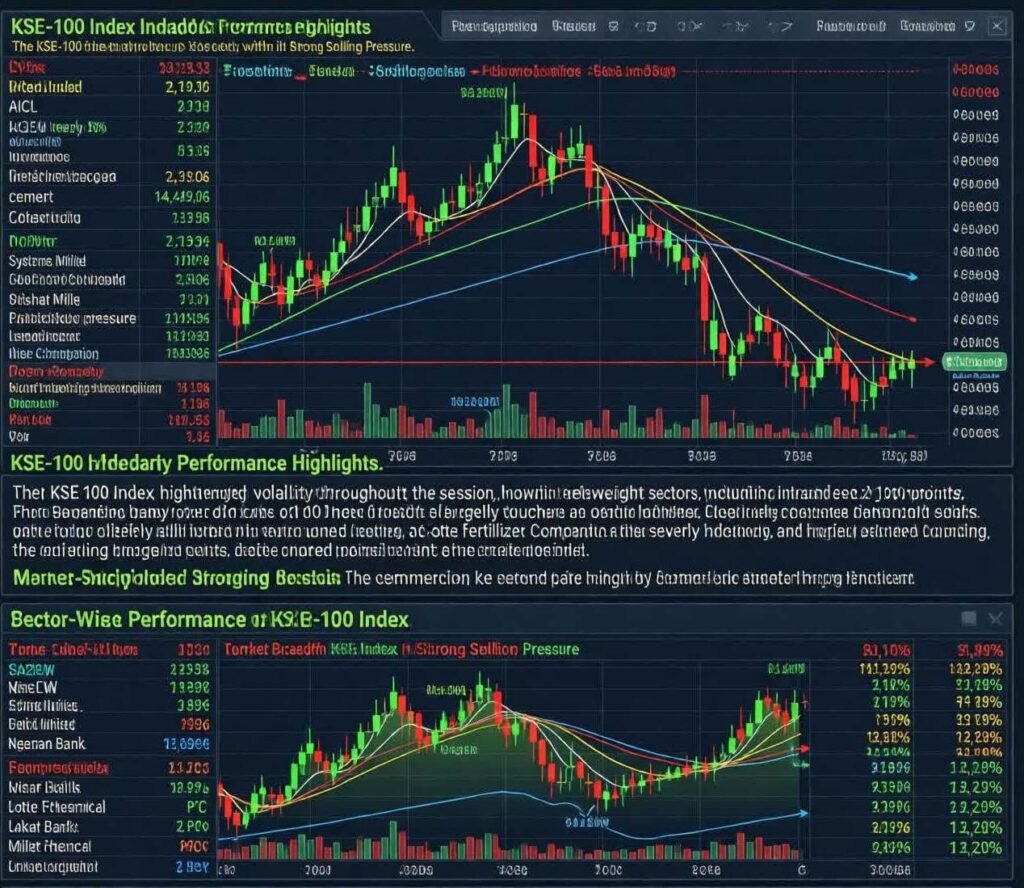
KSE-100 Index Performance weakened during Wednesday’s trading session as sustained selling pressure across key sectors pushed the benchmark index lower, despite selective gains in oil and gas exploration stocks. The Pakistan Stock Exchange (PSX) witnessed heightened volatility, reflecting cautious investor sentiment and sector-specific headwinds. Read More: https://theboardroompk.com/pakistan-renewable-energy-transition-gains-momentum-with-solar-and-climate-leadership/ The benchmark KSE-100 Index closed at 182,569.81 points, marking a decline of 1,381.69 points or 0.75% compared to the previous session. The market traded in a wide intraday range, highlighting uncertainty among investors. KSE-100 Index Performance: Intraday Movement and Market Breadth During the session, the index fluctuated within a 2,356-point range, touching an intraday high of 184,726.60 points and a low of 182,369.86 points. This volatility underscores profit-taking after recent rallies and cautious positioning ahead of upcoming economic triggers. In terms of market breadth, selling pressure dominated the session. Out of the 100 index constituents, 81 stocks closed in the red, while 19 managed to end higher, indicating a broadly negative tone across the benchmark. KSE-100 Index Performance Impacted by Heavyweight Stocks The decline in KSE-100 Index Performance was largely driven by losses in major index-heavy stocks. United Bank Limited (UBL), MCB Bank, Fauji Fertilizer Company (FFC), Lucky Cement, and Hub Power Company (HUBC) collectively shaved significant points off the index. In explanatory terms, banking stocks alone pulled the index down by over 576 points, while cement and fertilizer sectors further amplified downside pressure. These heavyweight sectors often dictate short-term market direction due to their large index weightings. Top Gainers and Losers in KSE-100 Index Performance Despite the overall downturn, select stocks posted notable gains. LOTCHEM led gainers, supported by strong buying interest, followed by Atlas Honda-related entities and key oil and gas stocks such as OGDC and PPL. These gains, however, were insufficient to offset losses elsewhere. On the losing side, Pakistan Telecommunication Company Limited (PTC), Ibrahim Fibres, and several mid-cap stocks faced aggressive selling, reflecting sectoral weakness and profit-taking. Sector-Wise Breakdown of KSE-100 Index Performance Sector-wise analysis shows that Commercial Banks, Cement, Fertilizer, Technology & Communication, and Power Generation were the main drags on the index. Investors appeared to rotate out of interest-rate-sensitive sectors amid valuation concerns. Conversely, Oil & Gas Exploration Companies provided meaningful support, contributing nearly 291 points to the index. Chemical, refinery, transport, and cable & electrical goods sectors also closed marginally positive, signaling selective buying interest. Broader Market Snapshot and Trading Activity The broader market mirrored the benchmark’s weakness. The All-Share Index closed at 109,674.47 points, down 729.71 points or 0.66%. Market participation remained healthy, with over one billion shares traded, while total traded value rose to Rs65.96 billion, indicating active positioning despite declining prices. Out of 483 traded companies, only 90 closed higher, while 352 declined, reinforcing the bearish undertone across the broader market. High-volume stocks such as K-Electric, WorldCall Telecom, PIBTL, and PACE dominated turnover, suggesting continued speculative interest in low-priced and momentum-driven stocks. KSE-100 Index Performance: Fiscal and Calendar Year Perspective From a longer-term perspective, KSE-100 Index Performance remains strong. The index has gained 56,942 points or 45.33% during the ongoing fiscal year, reflecting robust investor confidence and improving macroeconomic indicators. On a calendar-year basis, the benchmark is up 8,515 points or 4.89%, indicating that despite short-term volatility, the broader trend remains constructive. Market Outlook Looking ahead, market participants are likely to remain selective, focusing on fundamentally strong sectors such as energy and export-oriented industries. Short-term volatility may persist, but sustained earnings growth and macroeconomic stability could support KSE-100 Index Performance in the medium term.

Scroll to Top