Health

Pakistan's First Polio Case of 2026 Confirmed in Sindh
Health

Pakistan’s First Polio Case of 2026 Confirmed in Sindh

Pakistan’s National Emergency Operations Centre for Polio Eradication (NEOC) announced the country’s first wild poliovirus case of 2026 on Thursday. The infection was detected in a four-year-old child from Bello Union Council in Sujawal district, southern Sindh province, highlighting persistent challenges in high-risk areas despite ongoing vaccination drives. Read More: https://theboardroompk.com/pakistans-competition-watchdog-detects-212-cases-with-ai/ Case Details and Confirmation The case emerged through routine polio surveillance and was verified by the Regional Reference Laboratory for Polio Eradication at the National Institute of Health (NIH) in Islamabad. Health officials described it as a setback in efforts to eliminate the virus, which can cause irreversible paralysis or death but is fully preventable with safe, effective vaccines used in 195 countries, including Muslim-majority nations. Response and Broader Context The Polio Eradication Initiative (PEI) is analyzing the situation to craft a targeted response and prevent further spread. Pakistan launched a nationwide campaign earlier in 2026, reaching over 45 million children, with another planned for April. Officials stressed collective responsibility, urging parents to ensure full vaccination doses, including routine immunizations. In 2025, the country recorded 31 cases after five nationwide campaigns, showing a decline from 2024 detections but ongoing circulation in Sindh and southern Khyber Pakhtunkhwa. Since 1994, cases have dropped 99.8% from an estimated 20,000 annually. The PEI called on communities, religious leaders, and media to combat misinformation and support vaccination to achieve a polio-free Pakistan and world.

One in Three Pakistanis Obese- Health Minister Pushes for Immediate Reforms
Health

One in Three Pakistanis Obese- Health Minister Pushes for Immediate Reforms

ISLAMABAD: Dr. Mukhtar Ahmad Malik, Minister of State for National Health Services, Regulations and Coordination, has sounded the alarm on Pakistan’s escalating obesity epidemic, describing it as a pressing health and economic threat requiring immediate national response. Read More: https://theboardroompk.com/mobile-phone-imports-jump-31-36-to-1-139-billion-in-7-months/ The minister made the call while chairing a high-profile event on World Obesity Day 2026, jointly organized by the Ministry of National Health Services, Regulations and Coordination (MONHSRC) and Novo Nordisk. Alarming Statistics Highlight Scale of Crisis Dr. Malik revealed that nearly 38 million Pakistanis—roughly one in three people—are now living with obesity. He pointed out that women and urban residents bear a disproportionate burden, while childhood obesity continues to rise at concerning rates. These figures underscore a shift toward non-communicable diseases (NCDs) driven by modern lifestyles. Obesity serves as a major modifiable risk factor for serious conditions like diabetes, cardiovascular diseases, and certain cancers. The minister stressed that the crisis is straining Pakistan’s healthcare infrastructure and could lead to long-term economic losses if left unchecked. Calls for Lifestyle Changes and Policy Integration Prevention lies at the heart of the solution, according to Dr. Malik. He advocated for widespread promotion of balanced diets, reduced reliance on fast food, and greater emphasis on physical activity. The government has already incorporated obesity prevention into broader health strategies, including the Prime Minister’s Programme for Prevention and Control of Diabetes Mellitus (2024–2029). This initiative focuses on awareness campaigns, behavioral modifications, and early screening to disrupt the obesity-diabetes link. The minister urged multi-sectoral collaboration involving government, private partners, and communities to build sustainable habits. Secretary MONHSRC Hamed Yaqoob described obesity as a complex chronic disease shaped by biological, environmental, and social elements. He reaffirmed the ministry’s dedication to reducing stigma and expanding person-centered care. Danish Ambassador H.E. Maja Mortensen highlighted the value of international partnerships for sharing knowledge and innovative solutions. The event ended with pledges to bolster prevention policies, strengthen regulations, and encourage cross-sector efforts to protect public health. Experts agree that without swift, collective intervention, obesity-related complications could overwhelm the system. The minister’s message serves as a wake-up call for proactive measures to safeguard future generations.

From COVID Lessons to Nipah: Ineffective Airport Measures Highlighted by Health Pros
Health

From COVID Lessons to Nipah: Ineffective Airport Measures Highlighted by Health Pros

Asian countries have ramped up airport screenings for the Nipah virus following two confirmed cases in India’s West Bengal, but experts argue these measures offer little more than public reassurance. Malaysia, Thailand, Indonesia, and Pakistan introduced temperature checks this week as precautionary steps against the deadly bat-borne infection, which has a fatality rate of up to 75%. Read More:https://theboardroompk.com/musk-regrets-govt-jobs-cutting-program-doge-role-somewhat-successful-but-wouldnt-lead-again/ However, the World Health Organization (WHO) stated on Friday that such screenings are not recommended, emphasizing the low risk of international spread from the current outbreak. Expert Views on Screening Ineffectiveness Leading specialists, including Dr. Md Zakiul Hassan from Bangladesh’s icddr,b, assert that the likelihood of a large global epidemic from this Nipah event is very low. Nipah primarily spreads through contaminated fruit or products from infected bats and does not transmit easily between humans, reducing the need for widespread airport interventions. Professor Piero Olliaro of the University of Oxford described these actions as governments “flexing muscles” to assure citizens, rather than relying on science. He highlighted how temperature screenings failed during COVID-19, missing most cases according to studies, as fevers can stem from various illnesses. Follow-up testing for rare diseases like Nipah is also resource-intensive and impractical at busy airports. Better Alternatives for Nipah Preparedness Instead of symbolic measures, experts urge focusing on regions where Nipah recurs annually, such as Bangladesh, to better understand the virus and develop vaccines or treatments. Olliaro stressed that true preparedness means investing in tools now to protect vulnerable populations and prevent future pandemics if the virus evolves. This approach would address the suffering of those affected and build global resilience. The WHO’s assessment aligns, noting no evidence of heightened international threat. As countries respond to the Indian cases, the debate underscores the balance between public perception and evidence-based health strategies.

HIV Outbreak Among Children Reported in Karachi’s SITE Town
Health

HIV Outbreak Among Children Reported in Karachi’s SITE Town

Karachi: A cluster of HIV cases has emerged in Karachi’s SITE Town, where multiple children aged between one and nine have tested positive, prompting alarm among residents and local authorities. At least two children have reportedly died, with the total number of confirmed infections rising as screening expands in the area. The situation came to light after families from UC-1 reported that their children, who had been receiving treatment at the Kulsum Bai Valika Social Security Hospital, were diagnosed with HIV. Local representatives formed a five-member committee to push for an urgent response and demand accountability from the hospital’s administration. Hospital officials say screening and treatment have begun, while the Sindh Health Department has assured that additional anti-retroviral therapy (ART) centres are being established to manage rising caseloads. However, the source of the outbreak remains under investigation. Dr. Kanwal Mustafa, Additional Director for HIV/AIDS, said the department is pursuing a comprehensive strategy to contain the spread and ensure proper care for affected children. Residents have raised concerns over alleged unsafe medical practices at the hospital, including the reuse of syringes — a claim that, if confirmed, could point to serious lapses in infection control. Health experts note that structural issues such as poverty, low literacy rates, unregulated clinics and overreliance on injections continue to fuel vulnerability to HIV transmission in underserved communities. The inquiry is ongoing as authorities work to trace the cause and prevent further cases.

Health

A lesson for Pakistan in Indian sweet syrup death

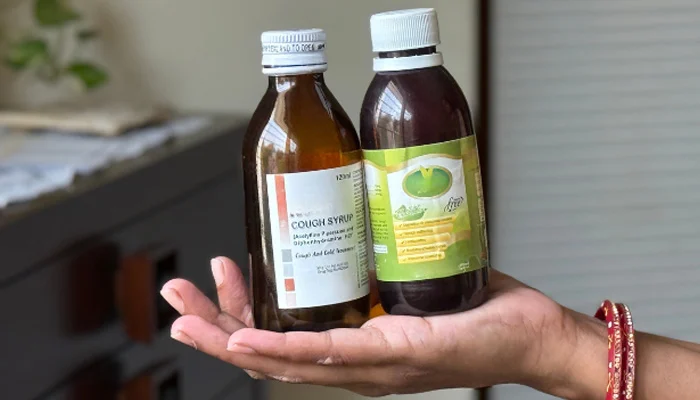
When 23 children died in India’s Madhya Pradesh after consuming contaminated cough syrup in early September, the news barely registered across the border. In Pakistan — where self-medication is rampant and syrup bottles are household staples — the tragedy strikes dangerously close to home. Many in Pakistan remain unaware that those sweet, over-the-counter syrups can be fatal. In the recent Indian case, the children — all under six — died of kidney failure after consuming syrup laced with diethylene glycol (DEG), a toxic solvent found at 500 times the permissible limit. Investigations revealed the manufacturer, Sresan, had sourced industrial-grade propylene glycol from local chemical and paint dealers instead of certified pharmaceutical suppliers. With no qualified chemist overseeing production, the syrup went untested — and deadly. This isn’t the first such incident. In 2022, Indian-made syrups caused the deaths of at least 70 children in The Gambia and 18 in Uzbekistan. Between December 2019 and January 2020, at least 12 children died in Indian Illegally Occupied Jammu and Kashmir (IIOJK) after taking similarly contaminated syrup. The prescribing doctor in India was the first to be arrested, followed by the suspension of the drug inspector and deputy director. The manufacturer, who had been absconding since September, has now been caught. “It shows that even doctors can get caught in legal and ethical trouble, even when unaware of a drug’s quality issues,” said Professor Mishal Khan of the London School of Hygiene & Tropical Medicine. “The tragedy is a warning for Pakistan — weak regulation hurts everyone: doctors, pharma companies, and patients alike.” A 2024 study by Khan found that approximately 40% of Karachi doctors accepted incentives in return for prescribing medicines from a fake pharmaceutical company without any checks on the company’s manufacturing standards or medicine quality. Antibiotics and cough syrups were among the medicines they agreed to promote. As Pakistan enters its flu season, Karachi’s hospitals are filling up. “Between 50 to 70% of children who visit our clinics have respiratory tract infections,” said Dr Wasim Jamalvi of Dr Ruth K M Pfau, Civil Hospital Karachi. And with the flu comes a predictable companion: cough syrup. “If a child is brought for consultation for fever, cough and cold, parents feel a prescription is incomplete without a cough syrup,” said Dr. D.S. Akram, a senior pediatrician, who stopped prescribing them two decades ago. “Cough syrups don’t work — they just make the children drowsy or irritable,” she said. Jamalvi agrees, “We don’t recommend syrups for under-fives, but parents still give them — they’re easily available over the counter.” Self-medication culture In Pakistan, cough syrups — often called sherbet — are viewed as harmless cures. “I swear by this syrup a doctor gave me years ago,” said Mohammad Yusuf, a 31-year-old houseboy. “One spoon at night and I sleep better.” Two weeks ago, when Rakhi Matan’s children, aged 10 and 13, came down with the flu, she reached for a bottle of leftover cough syrup from last year. “It saved me the doctor’s fee — he’d have prescribed the same thing,” she said. Such casual self-medication is common — and hard to control. Dr Qaiser Sajjad, former secretary general of the Pakistan Medical Association, said regulating cough syrup sales is nearly impossible with thousands of quacks operating in the city. Medical store worker Majid Yusufzai agreed, admitting syrups are sold freely without prescriptions and “entire families share the same bottle”. Health experts say Pakistan’s culture of self-prescription — reinforced by weak enforcement and cheap access to medicines — makes the system vulnerable to similar disasters. Dr Obaidullah Malik, heading the Drug Regulatory Authority of Pakistan (Drap), told IPS that Pakistan imported the majority of the raw materials (for several drugs, including cough syrups) from India and China. With over 100,000 drug manufacturing companies, India, referred to as the ‘pharmacy of the world’, is known for affordable generic drugs. But recent deaths have cast a long shadow on its safety standards. Tighter drug oversight “It is of great concern,” said Malik, adding that scrutiny of domestic quality control was enhanced after it received a global alert from the WHO on October 13, of three substandard cough syrups manufactured in India. “Thankfully, the contaminated syrups were never exported to Pakistan,” confirmed Malik. “There’s no evidence of illegal shipments either — but we’re staying vigilant to ensure a tragedy like India’s doesn’t happen here.” “Drap has made it mandatory for all pharmaceuticals, including herbal and nutraceutical manufacturers as well as importers, to pre-test additives such as glycerin, propylene glycol, and sorbitol — either in their own laboratories or through public sector facilities like the Central Drugs Laboratory (CDL) in Karachi or the 12 provincial drug testing,” said Malik. The authority is double-checking vendor credentials and certifications and instructed field teams to step up sampling and testing — both of raw materials coming in and the finished syrups. Recently, it trained pharma company reps from Nepal, Gambia, Sierra Leone, Maldives, and Sri Lanka on a quick detection method called Thin Layer Chromatography (TLC), which helps spot contamination early — saving time, cutting costs, and improving safety checks nationwide. There are between 700 and 800 pharmaceutical companies across Pakistan, but only about 300 are members of the Pakistan Pharmaceutical Manufacturers Association — leaving much of the industry operating with little oversight. Yet, despite its fledgling state compared to India’s, Pakistan’s pharma sector is eager to expand into global markets. Khan cautioned that the recent scandal over unsafe medicines could jeopardise those ambitions before they even take off. To avoid a similar crisis and protect its reputation abroad, Pakistan’s regulator has stepped up oversight at home. “Since November 2023, Drap has recalled 63 finished products contaminated with diethylene glycol (DEG) and ethylene glycol (EG), identified 44 impurities, and issued 13 alerts about contaminated raw materials,” said Drap’s CEO. As Karachi’s clinics continue to fill up this flu season, syrup bottles are flying off shelves — often with no pharmacist in sight. “It’s just a syrup,” said Yusuf. He does not

Scroll to Top