
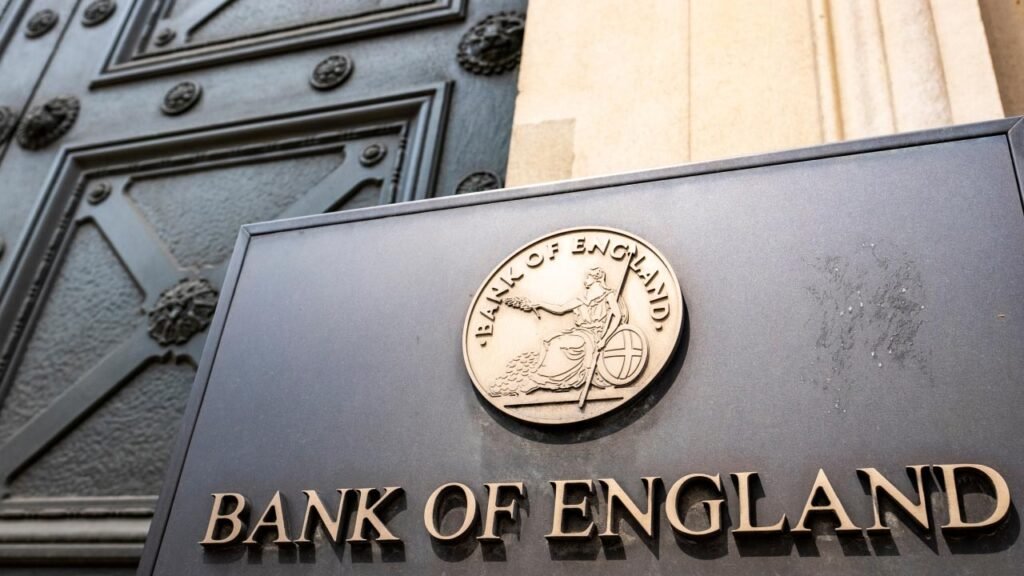
The Bank of England (BoE) has reduced its benchmark interest rate by 25 basis points to 3.75%, marking its final monetary policy decision of 2025 and the fourth rate cut this year. The move reflects growing concerns over a weakening UK economy, even as inflation remains above the central bank’s official target.
The decision was reached after a narrowly split vote within the Bank’s nine-member Monetary Policy Committee (MPC). Five members supported the rate cut, while four voted to keep borrowing costs unchanged, highlighting deep divisions among policymakers over the pace of monetary easing.
Economic Growth Slows as Inflation Cools Faster Than Expected
The interest rate reduction comes amid lackluster economic growth, a softening labour market, and a sharper-than-anticipated decline in inflation. UK inflation stood at 3.2 percent in November, down significantly from earlier levels but still above the Bank of England’s 2 percent target.
Governor Andrew Bailey aligned with more dovish policymakers, emphasizing the need to support economic activity as growth momentum fades. However, those opposing the cut warned that inflationary pressures have not been fully defeated, arguing that premature easing could reignite price instability.
Impact on Households, Businesses, and Savers
Lower interest rates are expected to provide modest relief for households and businesses, particularly through reduced mortgage and loan repayments. Companies facing higher operating costs may also benefit from cheaper financing condition.
On the other hand, savers are likely to see lower returns on deposits and fixed-income products as interest rates continue to decline.
Further Rate Cuts Likely in 2026
According to Allan Monks, Chief UK Economist at JPMorgan, the Bank of England is likely to continue cutting rates in 2026. JPMorgan’s base-case scenario anticipates two additional rate cuts in March and June, which could bring the benchmark rate down to 3.25 percent.
However, policymakers remain cautious due to elevated wage expectations for next year. Persistent wage growth could keep inflation pressures alive, slowing the pace of monetary easing.
Monks noted that any clear moderation in pay growth could allow the central bank to accelerate rate cuts, potentially opening the door for another reduction as early as February 2026.
Lowest Interest Rate Since 2023
Thursday’s decision brings the UK interest rate to its lowest level since 2023, signaling a decisive shift in the Bank of England’s policy stance from aggressive inflation control toward supporting economic stability and growth.
As inflation trends, wage dynamics, and economic data evolve in early 2026, markets will closely watch whether the central bank moves faster to ease financial conditions.