
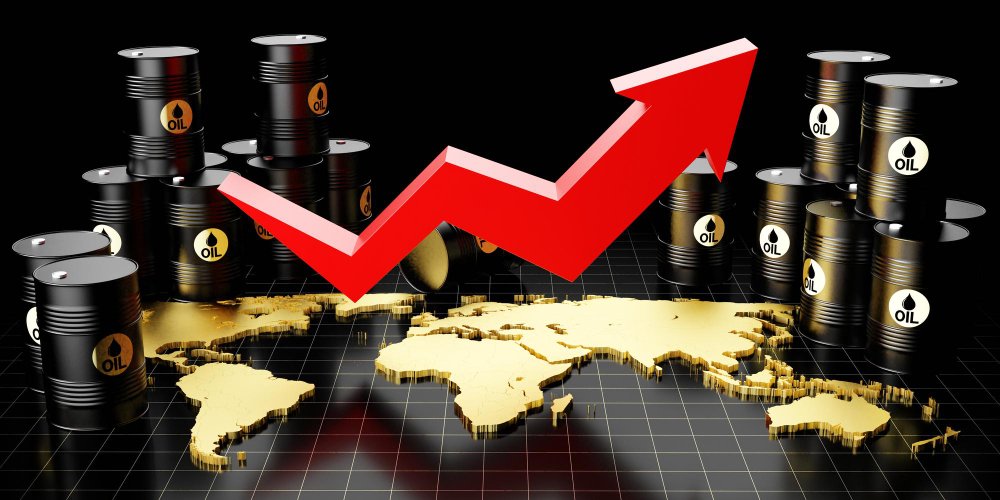
Oil prices surge became the biggest global market story on Monday after fears of a wider Middle East conflict intensified dramatically. Investors rushed into oil markets as diplomatic efforts to end the Iran war appeared to collapse, while fresh attacks on Gulf energy infrastructure triggered fears of a major supply disruption.
Global benchmark Brent crude crossed the critical $111 per barrel mark, while US West Texas Intermediate crude climbed above $107, sending shockwaves through financial markets and raising concerns over inflation, fuel costs, and economic stability worldwide.
The sudden rise comes at a time when global economies are already struggling with slowing growth, rising interest rates, and geopolitical instability.
Oil Prices Surge After UAE Nuclear Plant Attack
The biggest trigger behind the latest oil rally was the reported drone attack near the Barakah nuclear power plant in the United Arab Emirates. Emirati officials confirmed an investigation was underway and warned that the country reserved the right to respond firmly to what it described as a terrorist attack.
The attack immediately intensified fears that the Iran conflict is expanding beyond direct military confrontations and now threatens critical Gulf energy infrastructure.
At the same time, Saudi Arabia revealed that it intercepted three drones entering its airspace from Iraq. Saudi authorities warned they would take all necessary operational measures to defend national sovereignty and energy security.
These developments sparked panic among traders who fear the region could move toward a wider regional war involving multiple Gulf states.
Strait of Hormuz Fears Shake Global Oil Markets
The Strait of Hormuz remains the center of global energy fears. Nearly one-fifth of the world’s oil supply passes through this narrow waterway every day.
Last week, hopes for a peace breakthrough weakened after talks between US President Donald Trump and Chinese President Xi Jinping failed to produce any clear diplomatic solution regarding the Iran conflict.
Markets are increasingly worried that renewed military action could lead to attacks on oil tankers, shipping routes, and export facilities across the Gulf region.
Analysts believe even a temporary disruption in Hormuz shipping could send crude oil prices soaring far beyond current levels.
Analysts Warn of More Proxy Attacks
Market experts say the latest drone strikes could be only the beginning.
According to IG market analyst Tony Sycamore, the attacks send a clear signal that further US or Israeli strikes on Iran may trigger retaliation through regional proxy groups targeting Gulf energy infrastructure.
Energy traders now fear that oil facilities, ports, pipelines, and shipping lanes could become vulnerable if the conflict escalates further.
The possibility of prolonged instability is forcing investors to price in a higher geopolitical risk premium across global energy markets.
Trump’s Iran Military Discussions Add Fuel to Oil Rally
Oil prices surge further accelerated after reports emerged that Donald Trump is expected to meet senior national security advisers to discuss military options regarding Iran.
The possibility of direct US military involvement has significantly increased uncertainty across global markets.
Investors fear that any major military escalation involving the United States could destabilize the entire Middle East energy corridor.
The White House has not officially confirmed any decision, but speculation alone has been enough to trigger aggressive buying in oil futures markets.
Russia Sanctions Add More Pressure on Oil Supply
In another major development, the Trump administration allowed a sanctions waiver on Russian seaborne oil purchases to expire.
The waiver had temporarily allowed countries including India to continue importing Russian oil under limited conditions. Its expiration now threatens to tighten global oil supplies even further.
Energy market analyst Vandana Hari stated that fears of renewed strikes on Iran, combined with tougher Russian oil restrictions, are creating a dangerous supply shock scenario for global markets.
This dual pressure from Iran tensions and Russian sanctions is now pushing traders to prepare for a potentially prolonged energy crisis.
Global Consumers May Soon Feel the Impact
If oil prices continue climbing, consumers around the world could soon face higher petrol prices, rising transportation costs, and expensive electricity bills.
Economists warn that another major oil shock could fuel inflation globally and complicate recovery efforts for vulnerable economies already struggling with debt and currency pressures.
Developing countries that rely heavily on imported fuel may face the harshest consequences if Gulf tensions continue escalating in the coming weeks.
Oil prices surge has become more than just a market headline. It now reflects growing fears of a wider Middle East conflict with global economic consequences.
As drone attacks target Gulf infrastructure, diplomatic talks stall, and military tensions rise between the United States and Iran, energy markets remain on edge.
The coming days could prove critical for the future direction of oil prices and global economic stability.