
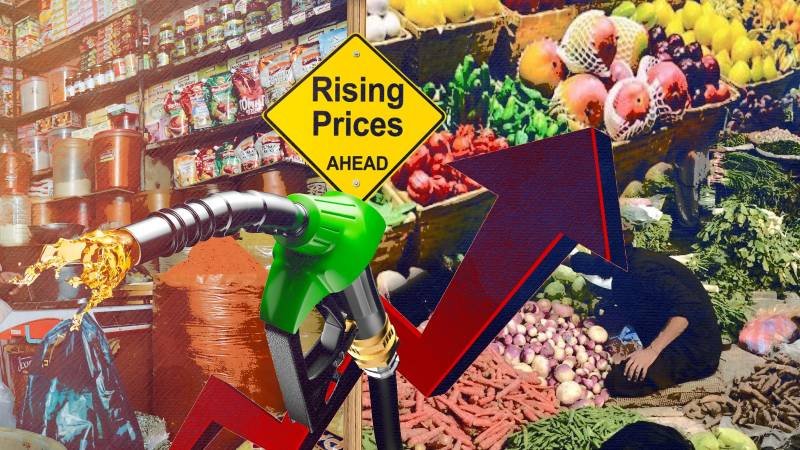
Pakistan’s headline inflation is showing clear signs of acceleration as the oil price shock begins to feed into domestic prices. According to Optimus Research, the National Consumer Price Index (NCPI) is expected to rise 7.4% year-on-year in March 2026, driven mainly by a sharp increase in fuel costs.
Read More: https://theboardroompk.com/master-changans-deepal-s05-delivers-1000km-range-at-minimal-cost/
Fuel Prices Trigger Major Monthly Uptick Fuel prices surged approximately 25% month-on-month in March, contributing nearly 65% of the overall 1.3% M/M increase in NCPI. International crude oil prices jumped dramatically, with Arab Light rising 71% and Gasoil and Gasoline increasing by 150% and 90% respectively over February averages. Although the government absorbed part of the impact, domestic fuel prices still rose significantly. The transport index is projected to jump 13.6% M/M and 14.3% Y/Y.
Electricity and Energy Costs Add Further Pressure Electricity prices are also rising after the PKR 1.63/KWh Fuel Cost Adjustment (FCA) was extended to protected consumers. This adjustment is expected to push the electricity index up around 5% M/M and 15% Y/Y. As a result, the overall energy index is forecast to cross into double digits at 16.6% Y/Y after 17 months.
Food prices remained largely flat in March due to a supply glut caused by border closures, with the food index showing a marginal -0.1% M/M change. However, recent SPI data indicates food prices have begun rising with a lag as higher fuel costs pass through the supply chain.
Analysts at Optimus Research warn that NCPI could peak near 13% Y/Y from April 2026 onward. This rise will be fueled by base effects, sustained high oil prices, lagged spillovers to other sectors, and possible negative economic impacts if geopolitical tensions continue.
The report highlights risks to fiscal and current account balances if the government continues fuel subsidies amid already tight fiscal space. Government bond yields have already increased by 100–200 basis points across various tenors in response.
Transport and Housing, Water, Electricity, Gas & Fuels (HWEGF) categories are expected to post double-digit year-on-year inflation in March. The detailed breakdown shows Transport inflation at 14.3% Y/Y and HWEGF at 11.3% Y/Y.
This resurgence in inflation comes as a setback after months of moderation and could influence future monetary policy decisions by the State Bank of Pakistan.