
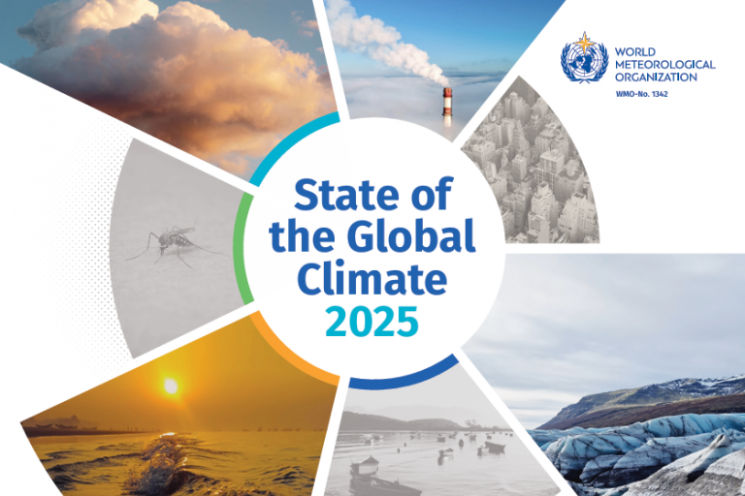
The Global Climate Crisis 2025 is no longer a distant threat it is unfolding in real time, reshaping economies, livelihoods, and daily life across the globe, including Pakistan. A new report by the World Meteorological Organization (WMO) paints a stark picture: Earth’s climate system is now more out of balance than at any point in recorded history.
From rising temperatures to devastating floods and heatwaves, the signals are clear our planet is under stress, and the consequences are accelerating.
Global Climate Crisis 2025: Hottest Years Ever Recorded
One of the most striking findings of the Global Climate Crisis 2025 is that the period from 2015 to 2025 marks the 11 hottest years ever recorded. The year 2025 alone ranked among the top three warmest years, with global temperatures about 1.43°C above pre-industrial levels.
According to António Guterres, this is no coincidence: repeated record-breaking heat is a clear signal that human activity is pushing Earth beyond safe limits.
For countries like Pakistan, this translates into more frequent heatwaves, water stress, and agricultural uncertainty directly impacting economic stability.
Earth’s Energy Imbalance: The Hidden Driver of Climate Change
A key concept in the Global Climate Crisis 2025 is Earth’s energy imbalance the difference between energy entering the planet and energy leaving it.
Due to rising greenhouse gases such as carbon dioxide and methane, this balance has been disrupted. The result? Excess heat is trapped within the Earth system, driving long-term climate change.
Here’s where that excess heat is going:
• Over 90% is absorbed by oceans
• Around 5% heats land masses
• Only 1% warms the atmosphere we feel
This imbalance reached its highest level ever recorded in 2025, making it a critical indicator of worsening climate conditions.
Oceans in Crisis: Silent Absorbers of Heat
The oceans are playing a crucial yet dangerous role in the Global Climate Crisis 2025. They are absorbing heat equivalent to 18 times the total annual energy used by humans every year.
While this slows surface warming temporarily, it creates long-term risks:
• Marine ecosystems are deteriorating
• Fisheries and food supplies are under threat
• Stronger cyclones and storms are forming
Ocean warming has also doubled in pace over the past two decades, highlighting how rapidly the crisis is escalating.
Melting Ice and Rising Seas: A Long-Term Economic Threat
Glaciers and polar ice are melting at alarming rates. Arctic sea ice is near record lows, while Antarctic ice continues to shrink. This contributes directly to rising sea levels, which are now 11 cm higher than in 1993.
For coastal regions especially in developing countries this means:
• Increased flooding
• Damage to infrastructure
• Salinization of groundwater
• Loss of agricultural land
In Pakistan, coastal areas like Karachi could face serious long-term risks if sea levels continue to rise.
Extreme Weather: Billions Lost, Millions Affected
The Global Climate Crisis 2025 is already impacting lives through extreme weather events:
• Intense heatwaves
• Heavy rainfall and floods
• Droughts and wildfires
• Tropical cyclones
These events have caused billions of dollars in economic losses and affected millions of people worldwide. They also disrupt supply chains, increase food insecurity, and strain national economies.
Climate Change and Health: A Growing Risk
Climate change is no longer just an environmental issue it is a public health crisis.
Rising temperatures and changing rainfall patterns are:
• Increasing diseases like dengue
• Causing heat stress among workers
• Straining healthcare systems
According to global estimates, over 1.2 billion workers face heat-related risks annually, especially in agriculture and construction sectors critical to Pakistan’s economy.
A Call to Action: Observing Today to Protect Tomorrow
The WMO released its findings on World Meteorological Day, emphasizing the importance of monitoring climate trends to safeguard the future.
As Celeste Saulo highlighted, human activities are disrupting Earth’s natural balance in ways that will last hundreds if not thousands of years.
The message is clear:
Delaying action will only increase the cost economically, socially, and environmentally.
Why Global Climate Crisis 2025 Matters for Pakistan
For Pakistan, ranked among the most climate-vulnerable countries, the Global Climate Crisis 2025 is especially critical:
• Increased floods like those seen in recent years
• Rising temperatures affecting crops and water supply
• Urban heat stress in cities like Karachi and Lahore
Addressing climate change is no longer optional it is essential for economic resilience and national security.