
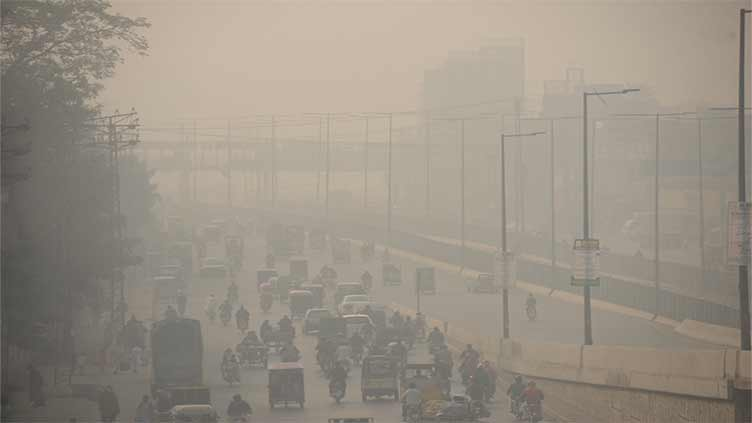
Pakistan Air Pollution 2025 has emerged as one of the most alarming environmental and public health challenges facing the country today. Recent global research reveals that Pakistan ranked as the most polluted country in the world in 2025, with dangerous levels of fine particulate matter (PM2.5) exceeding safe limits by up to 13 times.
Read More: https://theboardroompk.com/k-electric-appoints-pso-chief-syed-taha-as-new-ceo/
This shocking development is not just an environmental concern it has serious implications for public health, economic productivity, and the overall quality of life for millions of Pakistanis.
What Is Driving Pakistan Air Pollution 2025?
The rise in Pakistan Air Pollution 2025 is largely driven by a combination of urbanization, industrial expansion, and environmental mismanagement.
PM2.5 particles microscopic pollutants released from vehicle exhaust, industrial emissions, construction dust, and even wildfires are particularly dangerous. These particles are small enough to penetrate deep into the lungs and bloodstream, increasing the risk of respiratory diseases, heart conditions, and premature death.
Major urban centers such as Karachi, Lahore, and Hyderabad have become hotspots of pollution due to rapid population growth and weak environmental regulation enforcement.
Pakistan Air Pollution 2025: Karachi and Other Cities Under Threat
In 2025, Karachi witnessed dangerously high pollution levels. On September 29, PM2.5 levels crossed 100 micrograms per cubic meter far above safe thresholds making the air “unhealthy for sensitive groups.”
Lahore and Hyderabad also faced similar conditions, with frequent smog episodes affecting daily life, reducing visibility, and disrupting economic activity.
The situation highlights how Pakistan Air Pollution 2025 is no longer seasonal it has become a year-round crisis impacting urban living standards.
How Pakistan Compares Globally
Globally, air pollution remains a widespread issue, but Pakistan Air Pollution 2025 stands out for its severity.
According to international data:
• Only 14% of cities worldwide met the World Health Organization’s air quality standards in 2025.
• The most polluted cities globally were concentrated in South Asia and parts of China.
• Countries like Bangladesh and Tajikistan followed Pakistan among the most polluted nations.
Meanwhile, countries such as Australia, Iceland, Estonia, and Panama managed to maintain cleaner air, showing that effective environmental policies can make a difference.
Mixed Global Trends: Improvements and Setbacks
While Pakistan Air Pollution 2025 worsened, some countries showed encouraging progress. Nations like Laos, Cambodia, and Indonesia experienced better air quality due to favorable weather conditions linked to La Niña.
Mongolia recorded a significant reduction in pollution levels, demonstrating that policy interventions and environmental factors can lead to measurable improvements.
However, global monitoring faced setbacks when a major pollution tracking program was shut down in March 2025, creating gaps in data and making it harder to assess real progress in certain regions.
Health and Economic Impact of Pakistan Air Pollution 2025
The consequences of Pakistan Air Pollution 2025 go far beyond environmental damage.
On the health front, rising pollution levels are increasing the burden on hospitals, with more cases of asthma, lung infections, and cardiovascular diseases.
Economically, poor air quality reduces workforce productivity, increases healthcare costs, and discourages foreign investment—posing a serious challenge for Pakistan’s long-term growth.
Why Pakistan Must Act Now
The reality of Pakistan Air Pollution 2025 calls for urgent and coordinated action. Without immediate intervention, the situation could worsen further, impacting future generations.
Key measures that can help address the crisis include:
• Stricter emission regulations for industries and vehicles
• Investment in renewable energy and public transport
• Urban planning reforms to reduce congestion and pollution
• Public awareness campaigns about environmental responsibility
The Road Ahead for Pakistan Air Pollution 2025
Pakistan stands at a critical crossroads. The findings of 2025 should serve as a wake-up call for policymakers, businesses, and citizens alike.
Addressing Pakistan Air Pollution 2025 is not just about improving air quality it is about safeguarding public health, strengthening the economy, and ensuring a sustainable future.
The question is no longer whether action is needed, but how quickly and effectively it can be implemented.