
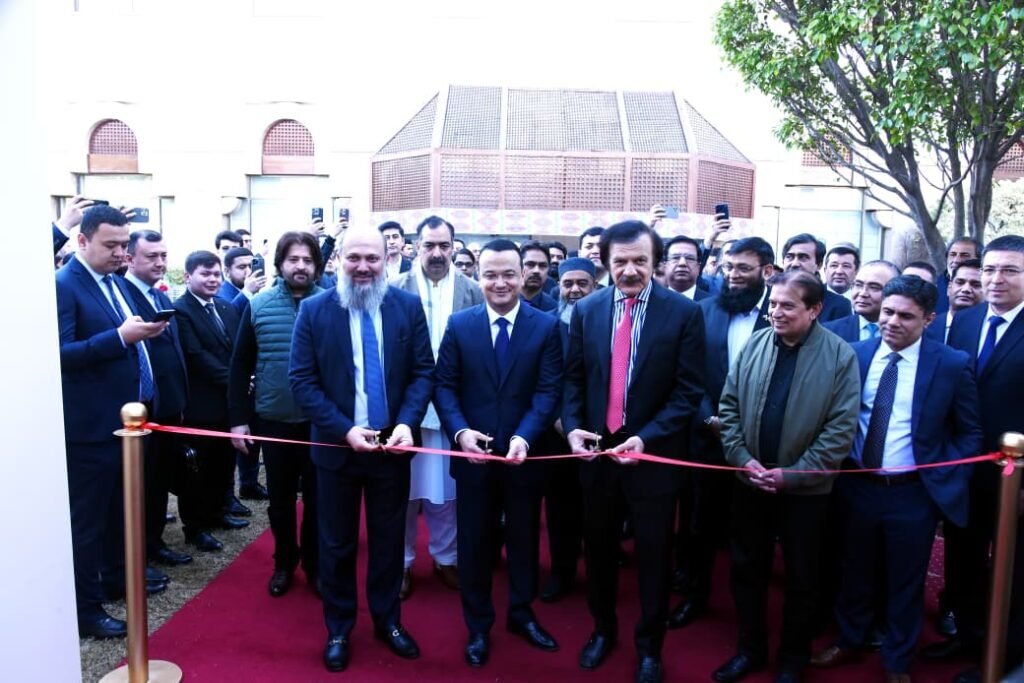
The Made in Uzbekistan Exhibition emerged as a powerful symbol of deepening economic diplomacy when it was inaugurated in Islamabad during the Pakistan–Uzbekistan Business Forum. Far more than a ceremonial ribbon-cutting, the exhibition marked a strategic moment—one that signals a shift from political goodwill to tangible commercial outcomes between the two regional partners.
Federal Minister for Commerce Jam Kamal Khan officially inaugurated the Made in Uzbekistan Exhibition, reinforcing Pakistan’s intent to transform regional connectivity into real trade, investment, and industrial collaboration. With decision-makers, investors, and manufacturers under one roof, the exhibition set the stage for what many see as a new chapter in Central and South Asian trade integration.
Made in Uzbekistan Exhibition Highlights Growing Regional Economic Ambitions
The inauguration ceremony drew strong representation from both governments. Alongside Jam Kamal Khan were Uzbekistan’s Minister of Trade, Federal Minister for Communications Abdul Aleem Khan, Federal Minister for National Food Security and Research Rana Tanveer Hussain, and Special Assistant to the Prime Minister on Industries and Production Haroon Akhtar Khan.
As Jam Kamal Khan toured the exhibition stalls, he praised the quality, innovation, and export readiness of Uzbek products. From textiles and leather goods to pharmaceuticals, engineering solutions, food products, and consumer goods, the exhibition demonstrated Uzbekistan’s growing industrial depth while revealing strong complementarities with Pakistan’s own export-driven economy.
Why the Made in Uzbekistan Exhibition Matters for Pakistan
According to the Commerce Minister, exhibitions like Made in Uzbekistan are not just showcases they are deal-making platforms. He emphasized that Pakistan is actively working to expand bilateral trade through structured mechanisms such as the Preferential Trade Agreement (PTA), the Pakistan–Uzbekistan Joint Business Council, and regular business forums.
Previous Pakistan–Uzbekistan Business Forums have already resulted in multiple MoUs, commercial agreements, and sectoral understandings. This exhibition, officials believe, could accelerate cooperation across key sectors including:
• Textiles and apparel manufacturing
• Leather and footwear
• Agriculture and food processing
• Pharmaceuticals and healthcare products
• Engineering and light manufacturing
• Consumer goods and logistics
Rather than listing figures and charts, the exhibition tells its own story—one of industrial capability meeting market opportunity.
Connectivity, Corridors, and the Trade Future
A recurring theme during the event was regional connectivity. Jam Kamal Khan reaffirmed Pakistan’s commitment to facilitating Uzbek trade and transit, even amid regional logistical challenges. He stressed the urgency of developing alternative trade corridors to ensure uninterrupted commercial flows between Central Asia and South Asia.
Federal Minister Abdul Aleem Khan echoed this sentiment, highlighting the role of infrastructure and transport connectivity in sustaining rising trade volumes. Improved road, rail, and logistics cooperation, he noted, could unlock Pakistan’s role as a natural trade gateway for Uzbekistan.
Agriculture and Industry Take Center Stage
Federal Minister Rana Tanveer Hussain pointed to agriculture and food processing as low-hanging fruit for bilateral cooperation. With Pakistan’s fertile lands and Uzbekistan’s evolving agri-technology, both sides see potential in value-added agri-exports and food security partnerships.
Meanwhile, SAPM Haroon Akhtar Khan emphasized industrial cooperation, manufacturing alliances, and investment in priority sectors suggesting that the exhibition could evolve into long-term joint production ventures rather than one-off trade deals.
Made in Uzbekistan Exhibition: A Strategic Signal, Not Just a Showcase
Held from February 5–6, 2026, the Made in Uzbekistan Exhibition does more than display products it reflects a broader shift in regional economic thinking. Uzbekistan’s industrial rise and Pakistan’s export ambitions are increasingly aligned, creating a foundation for sustainable trade growth.
As political ties mature into commercial partnerships, this exhibition may well be remembered as a turning point where curiosity sparked conversations, conversations sparked deals, and deals reshaped regional trade dynamics.