
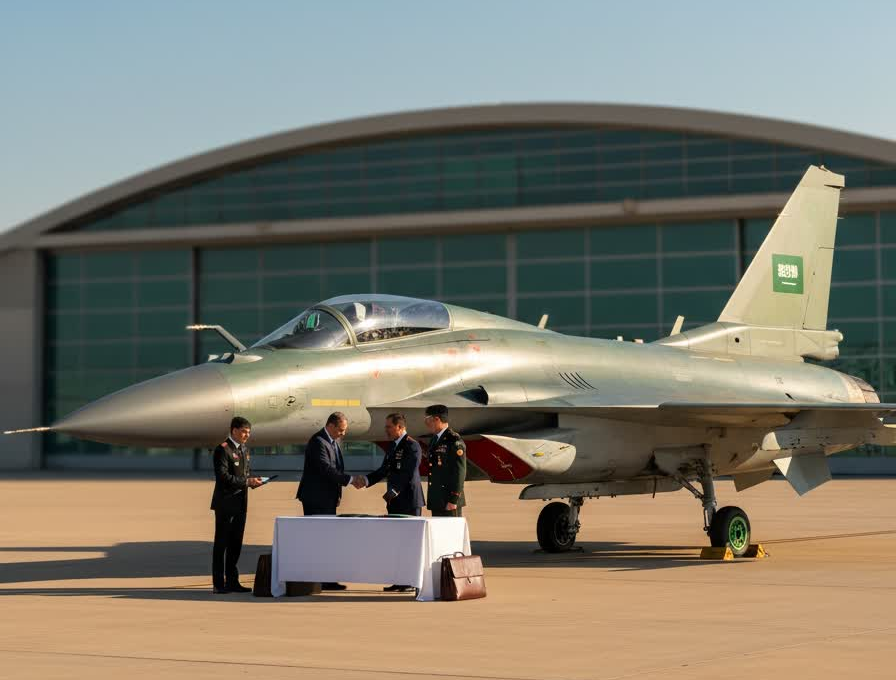
Islamabad and Riyadh are engaged in discussions to convert approximately $2 billion in existing Saudi loans into a purchase agreement for Pakistan’s JF-17 Thunder fighter jets. Sources close to the Pakistani military indicate that the negotiations aim to operationalize a mutual defence pact signed in September 2025, which treats aggression against one nation as an attack on both.
The talks come at a pivotal time. Pakistan is grappling with severe economic challenges, including reliance on a $7 billion IMF programme, while Saudi Arabia seeks to diversify its security alliances amid uncertainties over U.S. commitments in the Middle East. The pact was prompted by regional tensions, including Israel’s strikes on alleged Hamas targets in Doha.
JF-17 Thunder: A Combat-Tested Asset Boosting Pakistan’s Exports
The JF-17, a lightweight multirole fighter co-developed by Pakistan and China, has gained appeal due to its cost-effectiveness and proven performance. It was deployed during Pakistan’s intense aerial clashes with India in May 2025, marking its combat credentials. One source revealed the potential deal could reach $4 billion, with an additional $2 billion for related equipment and systems.
Pakistan’s Air Chief Zaheer Ahmed Baber Sidhu recently visited Saudi Arabia for talks on military cooperation. Retired Air Marshal Aamir Masood noted that Pakistan is negotiating or finalizing defence deals with six countries, including Saudi Arabia, highlighting the JF-17’s growing marketability.
Defence Minister Khawaja Asif has expressed optimism, stating that surging arms exports could reduce Pakistan’s dependence on international lenders. Recent deals, such as a over $4 billion arms package with Libya including JF-17s, underscore this shift. Historically, Saudi Arabia has provided crucial financial support to Pakistan, including rollovers and deposits during economic crises.
This jets-for-loans arrangement could alleviate Pakistan’s debt burden while enhancing Saudi air capabilities, fostering deeper bilateral ties rooted in long-standing security partnerships.