
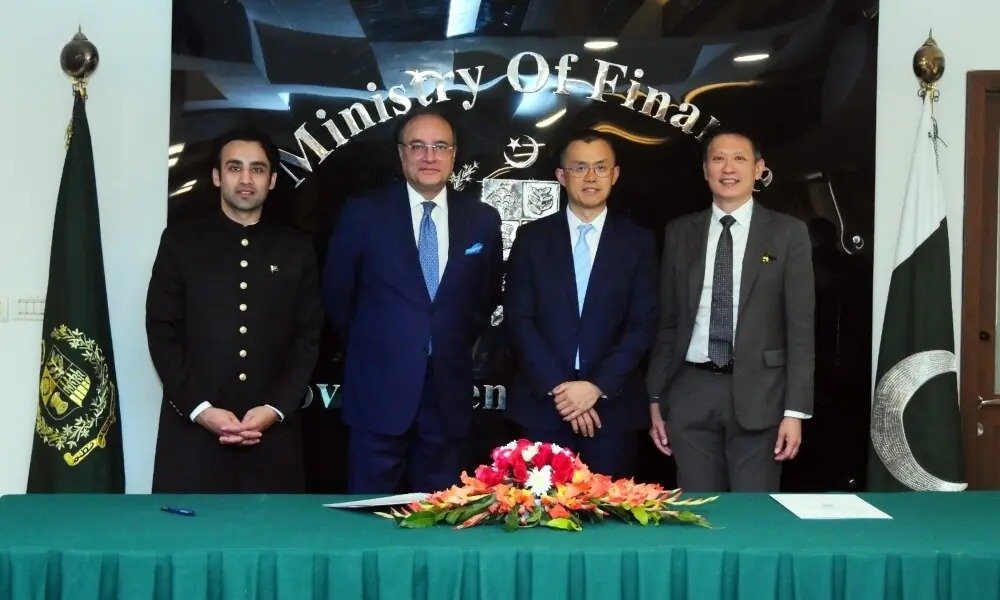
ISLAMABAD – In a landmark move signaling Pakistan’s embrace of blockchain innovation, the Ministry of Finance signed a Memorandum of Understanding (MoU) with Binance Investments Company Limited on Friday, paving the way for tokenizing up to $2 billion in sovereign assets. The non-binding agreement, inked by Finance Minister Senator Muhammad Aurangzeb and Binance CEO Richard Teng, aims to bolster capital markets through emerging financial technologies, enhancing liquidity and global investor access.
This collaboration comes against a backdrop of explosive crypto adoption in Pakistan, where Binance has thrived as one of the most downloaded finance apps—ranking fourth in the category as of early 2025—despite operating without formal government registration or regulatory oversight. With over 20 million smartphone users engaging in peer-to-peer trading and digital asset exchanges, the platform’s popularity has fueled a shadow economy estimated at billions in annual volume. However, this unregulated surge raised red flags: experts warn of heightened risks including money laundering, investor fraud, and capital flight, as transactions evaded anti-money laundering (AML) checks and consumer protections. The State Bank of Pakistan had previously cautioned against crypto’s volatility, yet enforcement lagged, leaving users exposed to scams and market manipulations.
The MoU establishes a framework for blockchain-based distribution of assets like government bonds, treasury bills, and commodity reserves, subject to regulatory approvals. Binance may offer technical expertise, training, and advisory support to build compliant infrastructure, ensuring sovereign control and adherence to Pakistani laws. Definitive agreements are targeted within six months.
“This is a strong signal of Pakistan’s reform trajectory—a very strong message not only for Pakistan but for the entire world,” Aurangzeb said, crediting top leadership’s vision. Binance founder Changpeng Zhao, present as an advisor to the Pakistan Crypto Council, hailed it as a “landmark development” for the nation’s tech-driven future, promising “positive and lasting outcomes.”
This pact underscores Islamabad’s pivot toward responsible innovation, aligning with global standards while mitigating past regulatory voids. As Pakistan’s digital economy matures, it could unlock foreign investment but demands vigilant governance to avert pitfalls seen in other emerging markets.