
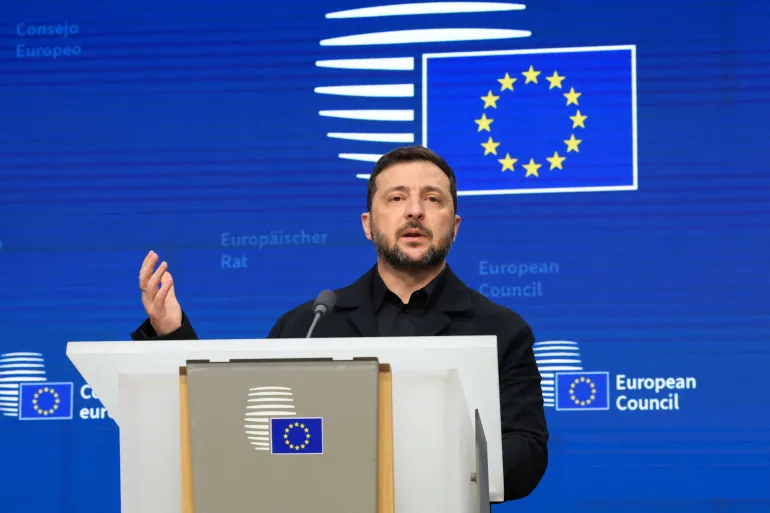
BRUSSELS – The European Union is poised to make a landmark move in its economic warfare against Russia, voting on Friday to indefinitely immobilize some 210 billion euros ($246 billion) in frozen Russian central bank assets held in Europe. This shift would pave the way for channeling the funds—or their profits—into loans and support for Ukraine, battered by nearly four years of Moscow’s full-scale invasion.
For those new to the saga, it began on February 24, 2022, when Russian President Vladimir Putin launched a brutal assault on Ukraine, aiming to topple its pro-Western government. The unprovoked war has killed hundreds of thousands, displaced millions, and triggered the biggest energy crisis in decades. In response, the West imposed sweeping sanctions, including freezing around $300 billion in Russian sovereign assets worldwide—mostly central bank reserves parked in Europe, the U.S., and Japan. These windfalls, built from oil and gas exports, were meant to stabilize Russia’s ruble but became hostages in the geopolitical standoff.
Since 2022, the EU has renewed the asset freeze every six months, a cumbersome process that risked legal challenges and economic fallout if not unanimous. Now, under a new legal framework, EU governments plan a qualified majority vote by 1600 GMT to lock them down “for as long as necessary,” shielding against disruptions to Europe’s markets. The assets, held mainly by Euroclear in Belgium, generate about 3 billion euros in annual interest—profits the G7 has already pledged for Ukraine’s reconstruction.
Critics, including Russia’s central bank, slam the plan as “illegal expropriation,” warning of retaliation like asset seizures abroad. “This theft undermines global financial trust,” a Moscow spokesperson fumed. Yet EU foreign policy chief Josep Borrell hailed it as “solidarity in action,” potentially unlocking tens of billions for Kyiv’s defense and recovery amid stalled U.S. aid.
The decision underscores Europe’s resolve post-Ukraine’s Kursk incursion and as winter looms. But risks linger: Legal battles in neutral courts could tie up funds, and escalation might spike energy prices. As one Brussels diplomat put it, “It’s not reparations yet—but it’s a step toward justice.” With the vote imminent, the EU balances retribution and restraint in a war without end.