
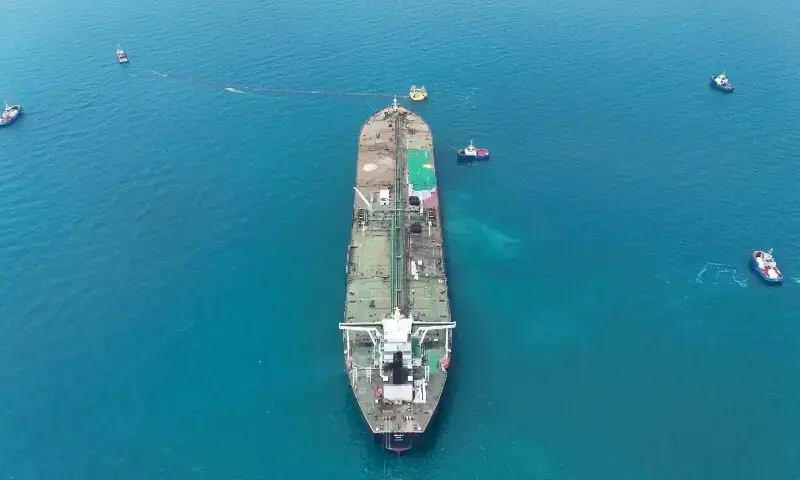
Oil Prices Jump Above $107
Global oil prices climbed more than 2% on Monday as fresh attacks on Saudi Arabia and commercial vessels in the Gulf added to supply concerns following the shutdown of a key Saudi oil pipeline.
Brent crude futures rose $2.90, or 2.77%, to $107.51 a barrel as of 2313 GMT. US West Texas Intermediate (WTI) futures increased $2.27, or 2.27%, to $102.32 a barrel.
Prices had initially gained more than 3% at the start of trading, reflecting growing fears that the conflict could cause further disruption to global oil flows.
Saudi East-West Pipeline Shutdown Raises Supply Risks
Saudi Arabia’s East-West oil pipeline was shut on Friday after a drone strike originating in Iraq.
The pipeline is particularly important because it allows Saudi Arabia to reroute crude exports while avoiding the Strait of Hormuz. Its shutdown therefore removes an important alternative route at a time when shipping through the Gulf is already under pressure.
The disruption threatens as much as 4% of global oil supply, according to the report.
Houthi Attacks Add Pressure on Saudi Energy Flows
The latest oil-price surge also followed new Houthi attacks on Saudi Arabia.
Saudi state media released footage showing damage to homes and a mosque in the southern Jazan province following what it described as a Houthi attack. The Houthis also said they had targeted a Saudi military base in a neighbouring province.
The escalation is adding another layer of risk for the world’s largest oil exporter, particularly if attacks begin affecting energy infrastructure or transportation routes more directly.
Strait of Hormuz Comes Under Renewed Pressure
Shipping risks have also increased around the Strait of Hormuz, one of the world’s most important oil transit routes.
The British maritime security agency UKMTO said a vessel in the Strait was hit by a projectile, causing a fire and forcing the crew to evacuate. Iran separately said one person was killed and four crew members were wounded aboard an Iranian commercial vessel struck off its coast.
The developments have raised concerns that shipping disruptions could spread beyond individual incidents and further restrict the movement of crude and petroleum products.
Bab el-Mandeb Adds Another Supply Risk
The risk is not limited to the Gulf.
Iran-aligned Houthis reached the strategic island of Perim on Friday, raising concerns over the Bab el-Mandeb Strait, another important oil transit route.
The route has carried around 4% to 5% of global oil supply in recent months, meaning prolonged disruption could add further pressure to already strained global energy markets.
Oil Has Gained 8% in a Week
The latest disruptions pushed oil prices about 8% higher over the week and took Brent above $100 for the first time since July.
The market is now pricing a larger geopolitical risk premium as traders assess the potential duration of pipeline outages, shipping disruptions and attacks on regional infrastructure.
IG market analyst Tony Sycamore warned that crude could continue moving higher toward the $119.48 high recorded in early March if diplomatic efforts fail to produce an operational agreement or the Saudi East-West pipeline is not restored quickly.
Hormuz Meeting Postponed
Diplomatic efforts have also suffered a setback.
Omani Foreign Minister Badr Albusaidi said on Sunday that a planned Monday meeting between Gulf countries and Iran to discuss the Strait of Hormuz had been postponed.
No formal peace talks have taken place since an interim agreement reached in June collapsed after several weeks, leaving markets with limited visibility on when the wider conflict could ease.
Global Supply Outlook Remains Fragile
The combination of the Saudi pipeline shutdown, attacks on shipping and rising risks around both Hormuz and Bab el-Mandeb has created a more fragile outlook for global oil supplies.
For markets, the key questions are now whether Saudi Arabia can restore its alternative export route quickly, whether shipping through the region remains disrupted and whether diplomatic efforts can prevent further escalation.
Until there is greater clarity on those fronts, crude prices are likely to remain highly sensitive to every new attack or disruption.