
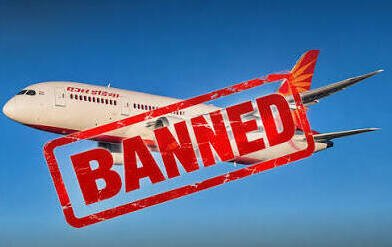
Pakistan has extended its airspace ban on Indian aircraft until September 24, keeping restrictions in place for Indian-registered aircraft and planes operated or leased by Indian airlines and operators, including military flights.
The Pakistan Airports Authority (PAA) issued a Notice to Airmen (Notam) early Wednesday announcing the extension. The previous restriction was scheduled to expire on August 23.
According to the latest Notam, Pakistan’s airspace will remain unavailable to Indian-registered aircraft and aircraft operated or leased by Indian airlines and operators until 4:59am on September 24.
The extension took effect from August 23 at 10:15am, according to the aviation authority’s notice.
Ban Applies To Indian Civil And Military Aircraft
The restriction covers Indian-registered aircraft as well as aircraft operated or leased by Indian airlines and operators.
The ban also applies to Indian military flights, maintaining the broad scope of the restrictions that Pakistan introduced after relations with India deteriorated in April 2025.
Pakistan’s airspace is divided into two Flight Information Regions (FIRs), namely Karachi and Lahore.
The latest Notam applies to both the Karachi FIR (OPKR) and Lahore FIR (OPLR), meaning the restriction covers the country’s two designated flight information regions.
The extension means Indian airlines and operators will continue to face restrictions on using Pakistani airspace for flights during the specified period.
Pakistan, India Airspace Restrictions Continue
Pakistan and India initially closed their airspace to each other’s airlines in late April 2025, following a sharp deterioration in bilateral relations after the deadly Pahalgam attack in Indian-occupied Kashmir.
On April 24, Pakistan announced several measures against India, including the closure of its airspace to all India-owned or Indian-operated airlines.
The decision came after New Delhi announced a series of measures against Pakistan following the attack, including suspending the Indus Waters Treaty and closing the Attari border crossing.
Pakistan subsequently extended its airspace restrictions several times as tensions between the two nuclear-armed neighbours remained high.
The latest extension indicates that the aviation restrictions will continue despite the passage of more than a year since the original measures were introduced.
Pahalgam Attack Triggered Diplomatic Crisis
The airspace restrictions were introduced amid a major diplomatic and military crisis between Pakistan and India following the Pahalgam attack in April 2025.
The attack killed at least 24 people and triggered a sharp escalation in relations between the two countries.
India accused Pakistan of supporting the attack, a claim Islamabad strongly rejected.
Pakistan denied any involvement and offered to participate in a neutral and transparent investigation into the incident.
The allegations nevertheless triggered a series of retaliatory diplomatic and economic measures, further worsening relations between the neighbouring countries.
The situation subsequently escalated into direct military confrontation.
Pakistan-India Conflict Escalated In May
The tensions eventually developed into a major military confrontation in May 2025.
Pakistan and India engaged in one of their most serious air confrontations in years, with both sides making competing claims about the outcome.
Pakistan said its armed forces had shot down seven Indian fighter jets during the conflict. India disputed Pakistan’s claims and maintained its own account of the military engagement.
The confrontation ended with a ceasefire following international diplomatic efforts, including intervention by the United States.
However, the ceasefire did not lead to a full restoration of normal bilateral relations.
Airspace restrictions have remained among the measures continuing to affect travel and aviation links between the two countries.
Impact On Regional Aviation
The continued closure of Pakistani airspace to Indian aircraft can also affect airline operations and flight planning across the region.
Pakistan occupies a strategically important geographical position between South Asia, Central Asia, the Middle East and Europe. Airlines using routes across the region may have to adjust flight paths depending on applicable restrictions.
For Indian airlines, continued restrictions can mean longer alternative routes on certain international services, potentially increasing flight times, fuel consumption and operating costs.
The broader impact depends on individual flight routes and available alternative air corridors.
The restrictions also underline the continuing effects of political tensions on regional aviation.
Airspace Ban Signals Continuing Tensions
The latest extension comes despite the absence of the intense military confrontation witnessed in May 2025.
The continued restrictions indicate that Pakistan’s aviation measures remain linked to the broader security and diplomatic situation between the two countries.
Neither side has fully restored the normal level of bilateral relations that existed before the Pahalgam attack.
Pakistan’s decision to extend the ban means Indian airlines, operators and military aircraft will remain barred from the country’s airspace through September 24 unless the restriction is withdrawn or modified before that date.
The development highlights how the consequences of the 2025 Pakistan-India crisis continue to affect aviation more than a year after the initial escalation.
With the latest Notam covering both Karachi and Lahore flight information regions, Indian aircraft will continue to face restrictions across Pakistan’s airspace while the bilateral dispute remains unresolved.