
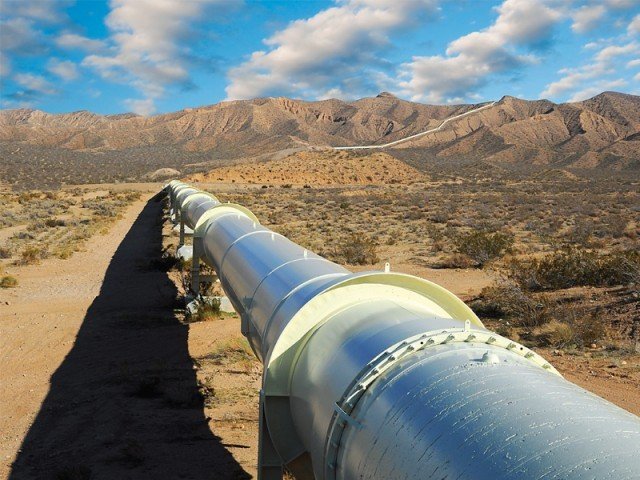
Balochistan has played a central role in building Pakistan’s natural gas economy, but the communities living around the province’s major gas fields have seen limited improvements in development and living standards.
For decades, fields in Dera Bugti, including Sui, Loti, Pirkoh, Uch and Zin, supplied a major share of Pakistan’s gas requirements. At its peak, Balochistan provided 82% of the country’s natural gas demand in 1982. Although its contribution has declined over time, the province still accounts for around one-fifth of national gas supplies.
Balochistan’s Role in Pakistan’s Gas Supply Has Declined
Balochistan’s contribution to Pakistan’s gas requirements stood at 55% in 1995 before falling to around 25% a decade later.
The decline has continued as older gas fields have moved into advanced stages of depletion and new discoveries have failed to replace the production being lost.
Pakistan’s overall gas production reached approximately 4,300 million standard cubic feet per day (mmscfd) in 2012. It has since declined to around 3,100 mmscfd.
Oil production has followed a similar pattern. Output peaked at approximately 95,000 barrels per day in 2015 but has now fallen to around 72,000 barrels per day.
Vast Exploration Potential Remains Untapped
Despite Balochistan’s importance to Pakistan’s energy sector, exploration activity in the province remains limited.
Only about 6% of the roughly 1,250 exploratory wells drilled across Pakistan have been located in Balochistan. Nearly 90% of the province remains unexplored.
Security concerns have become a major obstacle to expanding exploration, particularly over the past two decades. A more stable operating environment could allow exploration companies to search for new reserves and potentially slow the decline in indigenous oil and gas production.
Dera Bugti Remains Poor Despite Its Energy Wealth
The contrast between Dera Bugti’s contribution to Pakistan’s energy supply and its development indicators remains striking.
The discovery of the Sui No. 1 field in 1952, with an estimated 12 trillion cubic feet of gas, generated significant expectations among local communities. However, decades of gas production have not translated into comparable improvements in education, healthcare, employment and other basic services.
Dera Bugti has a Human Development Index of just 0.236, placing it among Pakistan’s 10 least developed districts. The other districts in the bottom 10 are also located in Balochistan.
Khuzdar, another important mining district, has an even lower HDI of 0.105.
Royalties Have Not Delivered Enough Local Development
Oil and gas-producing areas generate substantial revenue through royalties and production bonuses paid by exploration and production companies.
However, the continued underdevelopment of many producing districts suggests that these financial resources have not produced sufficient improvements in local living standards.
The gap between resource extraction and community development can contribute to frustration among residents. Limited access to employment, education and healthcare can deepen perceptions that local communities have not received a fair share of the benefits generated by their natural resources.
Community Engagement Could Support Security
The challenges facing exploration companies cannot be separated from the socioeconomic conditions of producing regions.
When the state fails to provide adequate public services or economic opportunities, local grievances can intensify and create an increasingly difficult environment for businesses operating in the area.
A more effective approach would treat communities as genuine stakeholders rather than relying primarily on a small group of intermediaries.
Exploration and production companies could strengthen local relationships through fair employment opportunities, greater local procurement and carefully designed community development programmes.
Respect for local traditions and engagement with community elders would also be important in building lasting trust.
Royalties Could Fund Skills and New Industries
As mature gas fields gradually decline, producing regions need alternative economic opportunities.
Royalties and production bonuses could potentially be directed towards technical and vocational education, scholarships for high-performing students and community-based industrial initiatives.
Such investments could help communities develop skills and businesses that remain viable even after oil and gas production declines.
For areas such as Sui, preparing for the eventual transition away from resource-dependent economic activity could be as important as discovering new reserves.
Development and Energy Security Are Closely Linked
Pakistan faces a dual challenge in Balochistan: unlocking its remaining energy potential while addressing the longstanding development gap in resource-producing communities.
A comprehensive assessment of human development in oil and gas districts could help determine whether existing policies are delivering meaningful results. International examples could also provide useful models for designing stronger community engagement and resource-sharing mechanisms.
Improving education, healthcare, employment and local economic opportunities would not only benefit residents but could also strengthen public confidence and create a more stable environment for future investment.
Pakistan Needs a New Model for Resource-Producing Areas
Balochistan’s experience demonstrates that natural resource wealth alone does not guarantee local prosperity.
The province helped build Pakistan’s energy base for decades, yet districts such as Dera Bugti continue to face severe development challenges. Addressing this imbalance will require more than additional exploration.
A stronger model would connect resource revenues with measurable improvements in human development, give communities a meaningful stake in economic activity and prepare resource-dependent areas for life after their major fields mature.
If Pakistan can combine responsible resource development with genuine local investment, Balochistan’s remaining energy potential could contribute not only to national energy security but also to lasting economic opportunities for the communities that have hosted these resources for generations.