
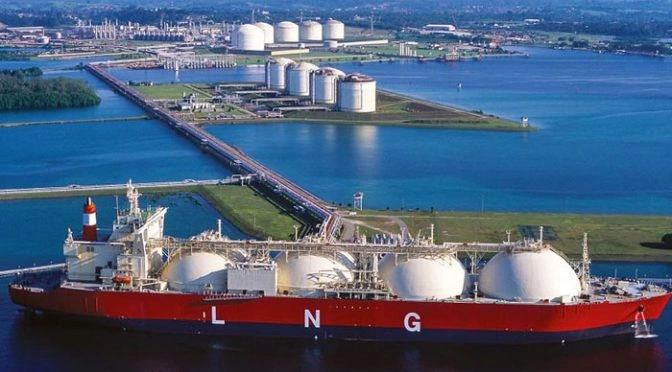
Pakistan received a Qatar LNG Cargo on Monday, marking the first shipment from Qatar in nearly two months as disruptions around the Strait of Hormuz continue to complicate regional energy supplies.
The LNG carrier Al Areesh arrived at the Pakistan GasPort Terminal at around 11:30am Pakistan time on August 10, according to sources cited by Mettis.
The arrival comes at a critical time for Pakistan’s energy sector, as the country continues to manage challenges surrounding LNG supplies and international shipping routes. The Strait of Hormuz is a major route for global energy shipments, making disruptions in the area particularly important for countries that depend on imported fuel.
The latest Qatar LNG Cargo is expected to support Pakistan’s domestic gas requirements while authorities continue to adjust procurement plans in response to supply disruptions and changing international LNG prices.
Pakistan Receives Seven Spot LNG Cargoes
The Ministry of Energy said Pakistan has received seven spot LNG cargoes since disruptions began on April 30.
Six cargoes, including the latest shipment, were delivered under long-term supply arrangements, highlighting the country’s continued reliance on both contractual and spot-market purchases.
Pakistan has increasingly used spot LNG purchases to bridge supply requirements. Procurement decisions are influenced by domestic consumption needs, available supplies and international LNG prices.
The previous LNG shipment from Qatar arrived in Pakistan on June 22. Meanwhile, the most recent spot LNG cargo was delivered during the July 27-28 window at a price of $21.88 per million British thermal units (MMBtu).
The use of spot cargoes provides Pakistan with additional flexibility when long-term shipments are disrupted or insufficient to meet domestic demand. However, spot-market purchases can also expose the country to fluctuations in global LNG prices.
LNG Import Bill Falls 36% In FY26
Despite continuing supply challenges, Pakistan’s LNG import bill declined significantly during fiscal year 2025-26.
According to Pakistan Bureau of Statistics data released on July 21, Pakistan spent $2.221bn on LNG imports in FY26, which ended on June 30.
The figure was significantly lower than the $3.476bn spent during the previous fiscal year, representing a decline of around 36%.
The reduction in LNG import expenditure could provide some relief to Pakistan’s external account and foreign exchange requirements. However, the country remains vulnerable to international energy prices and disruptions affecting major shipping routes.
The latest Qatar shipment therefore comes as Pakistan seeks to maintain a reliable energy supply while controlling import costs.
Pakistan Has Long-Term LNG Agreements With Qatar
Pakistan normally receives around nine to 10 LNG cargoes each month under its long-term agreements with Qatar.
The country signed its first long-term LNG supply agreement with Qatar in 2016 for 15 years. Under the agreement, the LNG price is linked to 13.37% of Brent crude oil.
Pakistan entered into another long-term agreement with Qatar in 2021 for a period of 10 years. LNG supplied under the second agreement is priced at 10.2% of Brent crude oil.
These agreements have remained an important part of Pakistan’s energy strategy, providing the country with a relatively predictable source of LNG for power generation, industry and other domestic requirements.
However, disruptions to regional energy transportation have increased the importance of flexible procurement arrangements.
Strait Of Hormuz Disruptions Create Fresh Challenges
The prolonged disruption around the Strait of Hormuz has created additional challenges for energy shipments, forcing Pakistan to reassess its LNG procurement strategy.
The latest Qatar LNG Cargo demonstrates the importance of maintaining stable supplies despite difficulties affecting regional energy markets.
Pakistan’s growing reliance on spot LNG cargoes allows authorities and buyers to respond more quickly to changing supply requirements. At the same time, the strategy can increase exposure to volatile international prices.
The government will therefore need to balance short-term supply requirements with the cost implications of spot purchases while ensuring sufficient gas availability for domestic consumers.
For Pakistan, maintaining reliable LNG supplies is particularly important because imported gas remains a key component of the country’s energy mix.
The arrival of the Al Areesh after nearly two months provides a fresh supply link with Qatar at a time when regional energy markets remain under pressure.
As disruptions around the Strait of Hormuz continue, Pakistan is likely to keep monitoring international LNG markets and adjusting its procurement strategy to protect domestic energy supplies and manage its import bill.