
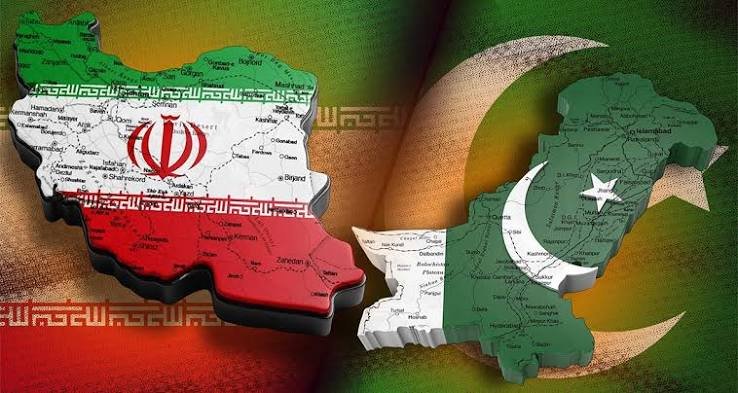
Pakistan and Iran on Tuesday agreed to speed up negotiations on the Pakistan-Iran FTA, with officials from both countries emphasising the importance of concluding the agreement as early as possible to strengthen economic ties and increase bilateral trade.
The Decision Taken At 10th Pakistan-Iran Joint Trade Committee Meeting
The decision was taken during the 10th Pakistan-Iran Joint Trade Committee (JTC) meeting held in Islamabad. The meeting was jointly chaired by Commerce Minister Jam Kamal Khan and Iranian Minister of Industry, Mine and Trade Dr Mohammad Atabak.
Both sides reaffirmed their commitment to increasing annual trade between the two neighbouring countries to $10 billion.
Speaking at the meeting, Jam Kamal Khan said the longstanding and brotherly relationship between Pakistan and Iran should now be transformed into a stronger economic partnership through the completion of the Pakistan-Iran FTA.
He stressed that eliminating obstacles related to customs procedures, transportation networks and border logistics would play a crucial role in facilitating trade activities.
According to the commerce minister, the establishment of joint border markets and the implementation of an electronic data interchange system could significantly improve trade efficiency and increase the volume of commercial activity between the two countries.
“The private sectors of both countries are prepared for greater cooperation, and it is now the responsibility of governments to provide a stable and reliable business environment,” he said.
Jam Kamal Khan added that the 10th JTC meeting would provide a practical framework for enhancing trade relations and expanding economic cooperation in the years ahead.
Iran Highlights Regional Connectivity And Trade Potential
Iranian Minister Dr Mohammad Atabak described Pakistan as one of Iran’s most important long-term trading partners and highlighted the importance of expanding regional trade links through the ports of Karachi and Gwadar.
He also expressed optimism that negotiations on the free trade agreement would soon reach a successful conclusion.
The Iranian minister identified electricity trade, infrastructure development and regional connectivity projects as areas with considerable potential for future cooperation.
Officials from both countries reaffirmed their determination to strengthen collaboration in investment, trade, logistics and private-sector development.
The meeting reflected the shared desire of Islamabad and Tehran to create new business opportunities and deepen economic integration across the region.
Pakistan-Iran PTA And Existing Trade Framework
The Joint Trade Committee serves as the main institutional platform for discussions related to bilateral trade and investment. Since its establishment, nine meetings have been held, with the ninth session taking place in Tehran in November 2021.
Pakistan and Iran already have a Preferential Trade Agreement (PTA), which came into force on September 1, 2006.
Under the existing arrangement, Pakistan offers tariff concessions on 338 product categories, while Iran extends concessions on 309 categories. The average reduction in tariffs stands at approximately 18%.
Despite the agreement, Pakistani exporters continue to face challenges because of higher tariffs imposed on their products in the Iranian market. In contrast, Iranian exports entering Pakistan benefit from comparatively lower duties.
Analysts believe that a comprehensive free trade agreement could help address these imbalances while creating opportunities for businesses on both sides of the border.
Greater trade cooperation is also expected to improve regional connectivity, strengthen supply chains and support economic growth in both countries.