
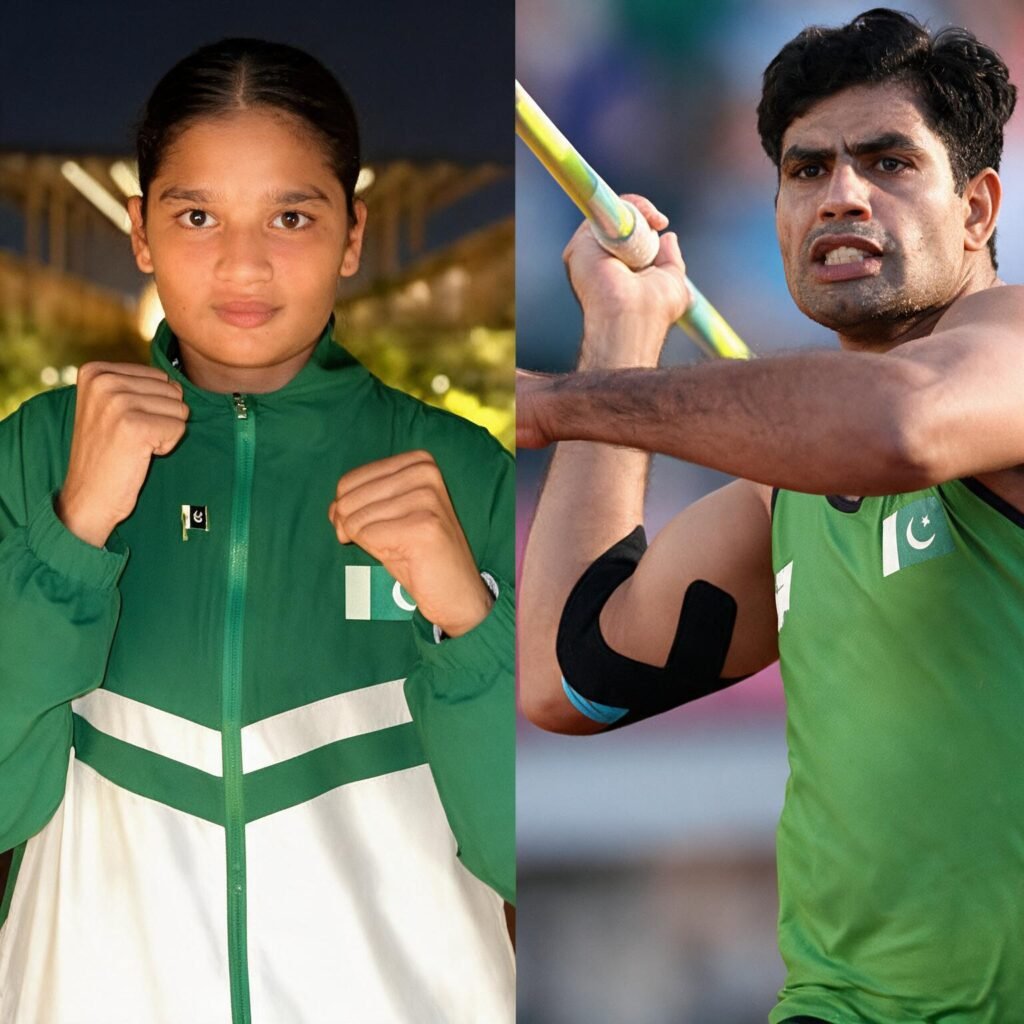
Pakistan finally has a reason to celebrate at the Commonwealth Games 2026 after boxer Fatima Zahra secured the country’s first medal of the tournament, bringing home a historic bronze in women’s boxing. Her achievement not only ended Pakistan’s 12-year boxing medal drought at the Commonwealth Games but also highlighted the untapped potential of women’s sports in the country.
While much of Pakistan’s attention was focused on Olympic javelin champion Arshad Nadeem, it was Fatima Zahra who emerged as the nation’s brightest performer. Her bronze medal offered a rare moment of celebration after Nadeem’s unexpected exit from medal contention in the men’s javelin event.
Pakistan Commonwealth Games 2026 Medal Ends 12-Year Boxing Drought
Fatima Zahra’s campaign has become one of Pakistan’s most inspiring sporting stories in recent years.
Earlier in the tournament in Glasgow, Zahra defeated New Zealand’s Jordan Wilson by a dominant 5-0 unanimous decision in the women’s 60kg quarter-final. Under Commonwealth Games boxing rules, reaching the semi-finals guaranteed her at least a bronze medal, as both losing semi-finalists receive bronze.
The achievement ended Pakistan’s 12-year wait for a boxing medal at the Commonwealth Games, according to the Pakistan Boxing Federation. It also marked another important milestone for women’s sports in Pakistan, demonstrating that female athletes can compete successfully on the international stage despite limited resources and opportunities.
In the semi-final, Zahra lost to Canada’s Marie Al Mahdieh, who advanced to claim the silver medal. Although she narrowly missed a place in the final, Zahra’s bronze has already secured her place in Pakistan’s sporting history.
Speaking after the bout, Zahra expressed hope that her achievement would inspire more young girls to take up boxing. She also urged authorities to provide greater support through improved training facilities, international exposure and better funding for female athletes.
Fatima Zahra’s Success Highlights the Need for Greater Investment
Fatima Zahra’s bronze medal is more than an individual success—it also shines a spotlight on the need for stronger institutional support for women’s sports in Pakistan.
Female athletes often compete with fewer resources, limited coaching opportunities and significantly less international exposure than their male counterparts. Despite these challenges, Zahra’s performance proved that talent can flourish when given the opportunity.
Sports experts believe Pakistan must now build on this momentum by investing in modern coaching programmes, grassroots talent development and equal opportunities across all sporting disciplines. Without long-term planning, individual achievements risk remaining isolated successes rather than becoming the foundation of sustained international competitiveness.
Arshad Nadeem Falls Short in Javelin Title Defence
While Pakistan celebrated its first medal of the Games, the men’s javelin final produced a major disappointment.
Olympic champion Arshad Nadeem entered the competition as one of the favourites but failed to finish among the top eight, ending his title defence well below expectations.
Instead, Sri Lanka’s Rumesh Tharanga Pathirage claimed the gold medal with an impressive throw of 89.75 metres. India’s Neeraj Chopra secured the silver medal, while fellow Indian athlete Yash Vir Singh took bronze.
Nadeem finished ninth, an outcome that surprised fans given his recent international success and reputation as one of the world’s leading javelin throwers.
Although one disappointing performance does not diminish his remarkable achievements, the result highlights the intense level of competition in world athletics. It also raises important questions about preparation, consistency and recovery ahead of future international events.
Pakistan’s Campaign Offers Both Celebration and Reflection
Pakistan’s campaign at the Commonwealth Games 2026 has delivered both encouraging moments and valuable lessons.
Fatima Zahra’s historic bronze medal demonstrates the growing potential of women’s sports in Pakistan and provides inspiration for the next generation of athletes. At the same time, Arshad Nadeem’s unexpected finish serves as a reminder that sustained international success requires continuous preparation, investment and strong support systems.
For Pakistan to become a consistent medal-winning nation, sporting authorities must move beyond celebrating individual achievements and focus on building a long-term strategy centred on athlete development, modern infrastructure and equal opportunities. If those foundations are strengthened, Fatima Zahra’s success could mark the beginning of a new era for Pakistani sport.
Future Success Depends on Long-Term Sports Development
Pakistan’s first Commonwealth Games 2026 medal is a significant achievement, but it also highlights the work that remains. Fatima Zahra’s bronze has ended a long medal drought in boxing and showcased the immense potential of female athletes, while Arshad Nadeem’s disappointing finish underlines the importance of continuous preparation at the highest level. Converting isolated successes into consistent international performances will require sustained investment, better governance and long-term planning across Pakistan’s sporting ecosystem.