
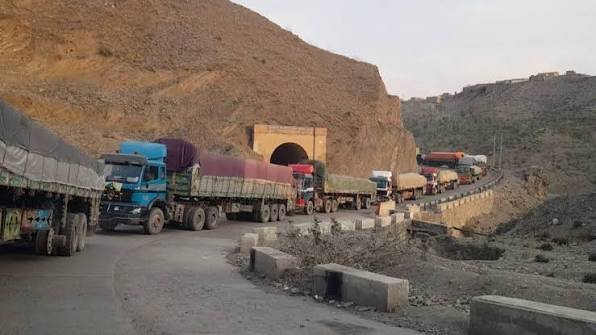
Pakistan has suffered export losses of approximately $3.1 billion as prolonged disruptions at the Afghan border and escalating tensions in the Middle East continue to weigh heavily on the country’s external trade, officials informed the National Assembly Standing Committee on Commerce on Friday.
The committee was told that the closure of the Afghan border alone caused export losses of $1.1 billion, while the recent conflict in the Middle East further reduced overseas shipments by an estimated $2 billion.
The briefing highlighted the growing economic impact of regional instability on Pakistan’s export sector at a time when the country is striving to boost foreign exchange earnings and strengthen its external account.
Standing Committee Reviews Impact of Regional Conflicts
The meeting was chaired by Javed Hanif Khan, who led discussions on the effects of geopolitical tensions on Pakistan’s trade performance.
Senior officials from the Ministry of Commerce briefed lawmakers on the challenges facing exporters, particularly disruptions to regional trade routes and increasing competition in international markets.
The committee reviewed the latest trade data and discussed policy measures aimed at supporting exporters and improving Pakistan’s competitiveness in global markets.
Afghan Border Closure Costs Pakistan $1.1 Billion
Commerce Secretary Jawad Paul informed the committee that the continued closure and disruption of trade through the Afghan border had resulted in export losses of $1.1 billion.
He said transit trade and exports collectively declined by approximately $1.2 billion during the first nine months of the current fiscal year, reflecting the adverse impact of border restrictions on regional commerce.
Afghanistan has traditionally served as an important export destination as well as a transit route for Pakistani goods destined for Central Asian markets. Any prolonged disruption at border crossings directly affects exporters, transporters, and businesses involved in cross-border trade.
Officials noted that restoring smooth trade flows remains critical for improving Pakistan’s export performance.
Middle East Conflict Adds to Pakistan Export Losses
In addition to border-related disruptions, officials informed lawmakers that recent tensions in the Middle East had caused an estimated $2 billion decline in Pakistan’s exports.
Although ministry officials did not identify specific sectors most affected by the regional conflict, they explained that geopolitical uncertainty disrupted trade routes, increased shipping costs, and affected demand in several export markets.
The combined impact of the Afghan border closure and Middle East conflict has significantly reduced Pakistan’s export earnings during the current fiscal year.
Food Exports Decline by 25%
The committee was also informed that Pakistan’s food export sector experienced a major setback.
According to Commerce Secretary Jawad Paul, food exports declined by 25 percent, reflecting weaker international demand and increased competition from other exporting countries.
The decline has affected one of Pakistan’s key export categories, raising concerns about the country’s ability to maintain growth in agricultural exports.
Officials emphasized the need to improve competitiveness through better pricing, higher productivity, and greater market diversification.
Pakistani Rice Faces Tough Competition
Rice exports were identified as one of the sectors facing the greatest challenges.
Commerce Secretary Jawad Paul said Pakistani rice continues to enjoy a strong reputation for quality in international markets. However, exporters are increasingly losing market share because Indian rice is being offered at significantly lower prices.
Officials told the committee that Indian rice is currently being sold for around $1,100 per tonne, while Pakistani rice is priced at approximately $1,300 per tonne.
The price difference has made Pakistani exports less competitive despite their higher quality.
Industry experts believe narrowing production costs and improving supply chain efficiency could help Pakistani exporters compete more effectively in international markets.
No Evidence of Rice Rebranding Claims
Committee members also discussed reports alleging that Indian traders were rebranding Pakistani rice before exporting it to international buyers.
Commerce Ministry officials acknowledged receiving complaints regarding the issue but clarified that no evidence has been found to substantiate those claims.
Officials said investigations had not confirmed that Pakistani rice was being relabeled and sold as Indian products in foreign markets.
Copyright Amendment Bill 2026 Approved
Besides reviewing trade performance, the committee also considered legislative matters.
Members received reports from the subcommittee examining the Copyright (Amendment) Bill 2026 and the Insurance Bill 2026.
Subcommittee convener Muhammad Nauman informed lawmakers that the Ministry of Commerce had finalized a new Insurance Bill 2026.
However, he said the Trade Organisations (Amendment) Bill 2026 had been referred back to the main committee because committee member Farooq Sattar was unable to attend the meeting.
Following discussion, the committee approved the Copyright (Amendment) Bill 2026.
Government Plans New Insurance Law
Briefing lawmakers on insurance sector reforms, Commerce Secretary Jawad Paul said the government had decided to introduce an entirely new insurance law instead of amending the existing legislation.
He explained that the current insurance law is around 25 years old and requires comprehensive reforms rather than limited amendments.
According to the secretary, the federal cabinet directed the ministry to prepare a completely new legal framework capable of addressing the changing needs of Pakistan’s insurance industry.
SECP Drafts Insurance Bill 2026
Officials informed the committee that the initial draft of the Insurance Bill 2026 had been prepared by the Securities and Exchange Commission of Pakistan (SECP).
The proposed legislation aims to increase competition in Pakistan’s insurance market while simplifying licensing procedures and improving the ease of doing business.
Committee members were informed that the SECP would continue serving as the insurance sector’s regulator after the new law comes into effect.
Officials also said government institutions would be permitted to purchase insurance services from private companies alongside state-owned insurers, promoting greater competition within the industry.
Stronger Consumer Protection Measures
The proposed legislation also includes enhanced safeguards for policyholders.
According to ministry officials, the new law introduces stronger consumer protection measures designed to improve transparency, strengthen regulatory oversight, and safeguard the interests of insurance customers.
Lawmakers noted that modernizing the insurance sector could improve investor confidence while encouraging greater private sector participation in Pakistan’s financial services industry.