
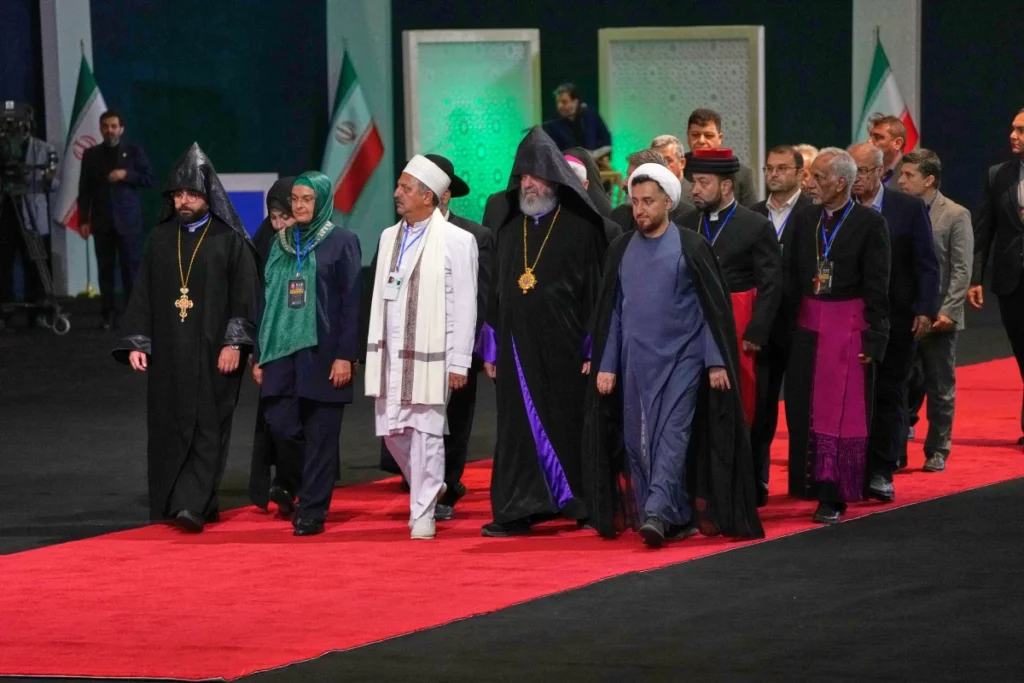
Thousands of mourners gathered in Tehran on Saturday as Ayatollah Ali Khamenei’s funeral officially began, with Iranian authorities expecting millions of people from across the country and abroad to participate in one of the largest state funerals in the Islamic Republic’s history. The week-long ceremonies will continue across multiple cities in Iran and Iraq before concluding with his burial in Mashhad later this week.
The ceremonies commenced at Tehran’s Imam Khomeini Grand Mosalla, where religious recitations, Quran readings, and the Iranian national anthem marked the beginning of the official mourning period.
Coffin Displayed During State Funeral
Television footage broadcast by Iranian state media showed Khamenei’s coffin draped in the Iranian flag and topped with his traditional black turban, symbolizing his lineage. The coffin was placed on a large black platform alongside the coffins of four members of his family who were also killed in the February airstrike.
Large crowds filled the expansive prayer complex carrying Iranian flags, portraits of the late leader, and banners expressing loyalty to the Islamic Republic. Many mourners were seen praying, weeping, and reciting religious verses as the funeral rites continued throughout the day.
Mourners Chant Slogans During Ceremony
State media reported that mourners chanted slogans including “Death to America” during the funeral procession. Videos published by Iranian media also showed crowds calling for revenge over Khamenei’s killing, reflecting widespread anger among many supporters of the country’s leadership.
Authorities deployed extensive security arrangements while also using water misting systems around the prayer complex to help cool mourners gathered under Tehran’s summer heat. Khamenei’s coffin is expected to remain at the Grand Mosalla until Sunday evening before the next stage of the funeral begins.
Funeral Procession to Continue Across Iran and Iraq
Following the ceremonies in Tehran, Iranian authorities plan to transport Khamenei’s remains to the holy city of Qom before continuing funeral processions in the Iraqi cities of Najaf and Karbala.
The final burial will take place on Thursday in Mashhad, Khamenei’s hometown and the location of the Imam Reza shrine, one of the holiest sites for Shia Muslims.
The multi-city funeral reflects both the religious and political significance of Khamenei, who served as Iran’s Supreme Leader for nearly four decades before his death earlier this year.
Public Mourning Continues Across the Country
Public mourning began on Thursday evening when Khamenei’s coffin was first unveiled before large crowds of supporters.
State television showed mourners crying, beating their chests, and throwing flowers toward the bier as religious elegies echoed through the gathering.
On Friday, the late leader’s coffin was placed in state inside the grand prayer hall dedicated to the founder of the Islamic Republic, Ayatollah Ruhollah Khomeini, allowing thousands of visitors to pay their respects before the main funeral ceremonies began.
Government Prepares for Millions of Pilgrims
Iranian authorities have launched extensive logistical arrangements to accommodate the anticipated influx of mourners.
According to official reports, transportation services, temporary accommodation, food distribution, and medical facilities have been expanded to support visitors traveling from different parts of Iran and neighboring countries.
Officials estimate that more than 10 million people, including delegations and representatives from over 100 countries, may participate in various stages of the funeral ceremonies.
Thousands of Schools Open for Visitors
To accommodate the large number of pilgrims, Iran’s Ministry of Education has opened thousands of schools across the country.
According to Iran’s ISNA news agency, more than 5,000 schools and between 40,000 and 50,000 classrooms have been designated as temporary accommodation for people attending the funeral events.
The initiative is intended to ease pressure on hotels and public facilities while ensuring visitors have access to shelter during the week-long ceremonies.
Mojtaba Khamenei Remains Out of Public View
The new Supreme Leader, Mojtaba Khamenei, has not appeared publicly since he was reportedly injured in the February strike that killed his father.
His absence has attracted considerable attention as funeral ceremonies continue, although Iranian authorities have not announced when he may make his first public appearance since assuming the country’s highest leadership position.
Funeral Seen as Symbol of National Unity
Iranian authorities have described the funeral ceremonies as both a religious event and a demonstration of national solidarity.
The week-long processions are expected to draw millions of mourners across several cities, making them one of the largest public gatherings in Iran in recent decades.
International observers are closely watching the ceremonies, viewing them as an important indicator of domestic public support and the country’s political direction following the transition in leadership.