
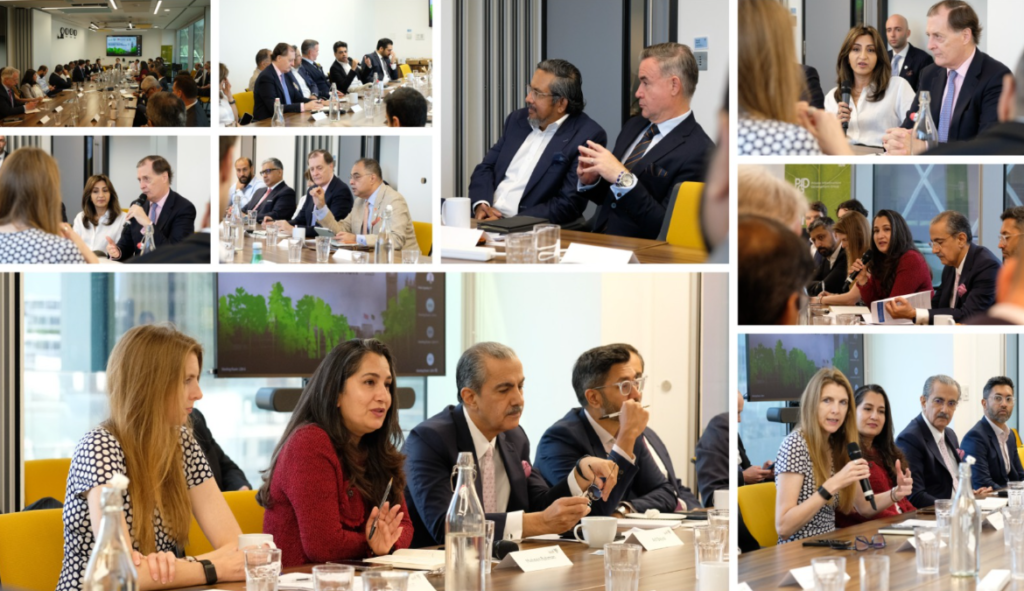
InfraZamin Pakistan, in collaboration with the Private Infrastructure Development Group (PIDG), brought together senior government officials, financial institutions, development finance organizations, investors, and private sector leaders for a high-level roundtable titled “Investing in Pakistan’s Sustainable Transformation” during London Climate Action Week 2026.
Held at PIDG Headquarters in London, the event focused on mobilizing private capital for Pakistan’s climate-resilient infrastructure and strengthening collaboration between public and private stakeholders to unlock sustainable investment opportunities.
High-Level Leaders Discuss Pakistan’s Investment Potential
The roundtable was chaired by Maheen Rahman, CEO of InfraZamin Pakistan, and Philippe Valahu, CEO of PIDG.
The event featured prominent participants from Pakistan and the United Kingdom, including:
- Jane Marriott, British High Commissioner to Pakistan
- Zafar Masud, Chairman of the Pakistan Banks’ Association and OGDCL
- Atif Bajwa, President and CEO of Bank Alfalah
- Ayesha Khan, Managing Director at Acumen Funds
More than 30 representatives from development finance institutions, commercial banks, institutional investors, and climate-focused organizations attended the discussion.
Pakistan Seen as a Strong Destination for Climate Investment
Participants agreed that Pakistan offers significant opportunities for climate and infrastructure investment but emphasized that attracting large-scale private capital will require stronger collaboration among investors, government institutions, project developers, and blended finance providers.
The discussion highlighted the importance of developing a robust pipeline of bankable projects, supported by enabling policies and innovative financing mechanisms to improve investor confidence and accelerate project implementation.
Building a Pipeline of Investable Projects
One of the key recommendations was the establishment of a multi-stakeholder task force to develop a steady pipeline of investable infrastructure and climate projects.
Participants proposed creating a coordinated platform that brings together government agencies, private sector developers, financiers, and investors to identify, structure, and accelerate projects capable of attracting long-term investment.
Such a platform would help streamline project development while improving coordination between public and private stakeholders.
Strengthening Research and Market Intelligence
The roundtable also emphasized the need for stronger research and market intelligence to support investment decisions.
Participants recommended expanding evidence-based analysis and improving market data to design more effective financing structures and strengthen policy formulation.
Better research, they noted, would enhance investor confidence and improve the overall investment environment.
Climate-Resilient Agriculture Identified as a Priority
Climate-smart agriculture emerged as another major focus area.
Participants stressed the importance of increasing investment in climate-resilient farming practices to improve agricultural productivity, strengthen food security, and enhance Pakistan’s resilience to climate change.
The discussion recognized agriculture as a key sector where sustainable investment can deliver both economic and environmental benefits.
Policy Reforms Key to Unlocking Private Capital
The forum highlighted the need for a stronger policy and regulatory framework to encourage greater private sector participation.
Participants called for targeted incentives, supportive regulations, and predictable policy measures that reduce investment risks and facilitate financing for sustainable infrastructure projects.
A stable and transparent regulatory environment was identified as essential for attracting both domestic and international investors.
Commitment to Sustainable Infrastructure Development
The roundtable concluded with a shared commitment to strengthen partnerships and develop practical solutions that mobilize larger volumes of private capital for Pakistan’s sustainable infrastructure.
Participants reaffirmed their support for initiatives that promote innovation, collaboration, and long-term investment, helping Pakistan transition toward a greener, more resilient, and inclusive economy.
They also commended InfraZamin Pakistan for organizing the timely dialogue during London Climate Action Week 2026 and pledged continued engagement to advance sustainable investment opportunities in the country.