
LONDON, June 19 — Gulf airlines are gradually returning to normal operations after months of disruption caused by the conflict involving Iran, which repeatedly affected air traffic across the Middle East.
The region hosts some of the world’s largest carriers, whose networks were heavily impacted as missile and drone attacks forced airport closures and prompted airlines to reroute flights through limited safe corridors.
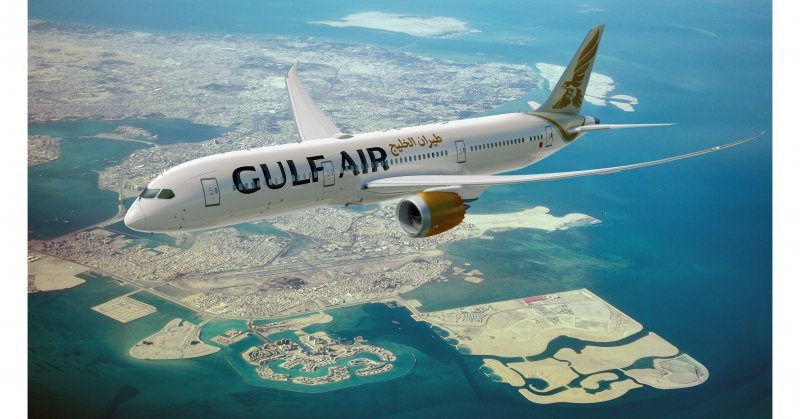
According to Flightradar24 data, overall flight activity among major Gulf airlines has recovered to around 82% of levels recorded on February 27, the day before the conflict began. Gulf Air and Kuwait Airways have recently surpassed their pre-conflict flight volumes.
The region’s three largest carriers — Emirates, Qatar Airways and Etihad Airways — are operating at or near 90% of their pre-war capacity. Just a month ago, Etihad and Qatar Airways had fallen to roughly 40-50% of normal levels, while Emirates maintained a relatively stronger schedule throughout the crisis.
Following a preliminary agreement reached between the United States and Iran on Wednesday to end the nearly four-month conflict, with further talks on implementing a ceasefire expected on Friday, the outlook for Gulf carriers has improved significantly.
James Halstead, managing partner at Aviation Strategy, said a lasting end to hostilities would allow the reopening of regional airspace and enable airlines to fully restore operations.
“If it gets back to normal, I just see them acting as normal, coming back in full force,” he said.
Safety concerns remain
Drone attacks during the conflict repeatedly forced flights to divert, raising concerns for passenger and crew safety and restricting airlines to a limited number of secure routes.
Many European and Asian carriers suspended services to the region, while travel warnings remain in place. Australia this week eased its travel advice for several Middle Eastern countries, providing a boost for the region’s aviation hubs.
The European Union Aviation Safety Agency (EASA) has maintained its warning against flights to parts of the region because of conflict-related risks. The agency said it would assess recent developments when reviewing its advisory, which remains valid until June 24, but noted it was still too early to determine whether the current de-escalation would result in a lasting reduction in risks to civil aviation.
Impact extends beyond the Gulf
Gulf countries have invested heavily in recent years to strengthen their position as global transport and tourism hubs through large-scale spending on airports, hotels and events. A full reopening of regional airspace is expected to provide further support to Gulf economies.
Emirates CEO Tim Clark said last week the airline would focus on reassuring passengers about safety and reliability. Flightradar24 data shows the Dubai-based carrier is operating at 86% of its pre-conflict flight volume.
Etihad Airways has introduced complimentary medical travel insurance for visitors to Abu Dhabi from July through December.
Flight activity at Gulf Air and Etihad stood at 93% of February levels, while Kuwait Airways and Qatar Airways had recovered to 86% and 87%, respectively. Air Arabia and Flydubai were operating at 75% and 57% of their pre-conflict levels.
The effects of the conflict have extended well beyond the Middle East. Rising jet fuel prices, which have recently begun to ease, disrupted airline finances and schedules across Europe and Asia, while some carriers temporarily grounded aircraft and operated repositioning flights.
Earlier this month, the International Air Transport Association (IATA), which represents more than 370 airlines responsible for around 85% of global air traffic, nearly halved its 2026 industry profit forecast because of the conflict. The association now expects global airlines to post a combined net profit of $23 billion in 2026, down from an earlier estimate of about $41 billion and below the $45 billion recorded in 2025.