
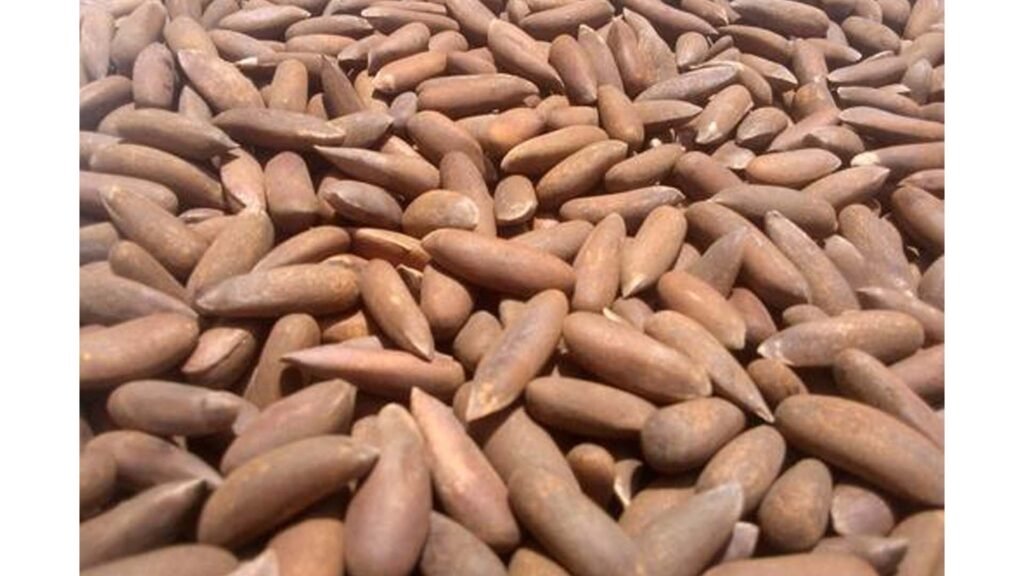
BEIJING: Pakistan’s pine nut exports to China nearly doubled between 2023 and 2025, reflecting growing Chinese demand for premium food products and opening new opportunities for value-added agricultural trade between the two countries.
According to data from China’s General Administration of Customs (GACC), exports of Pakistani pine nuts to China increased from 579.8 tonnes in 2023 to 1,147 tonnes in 2025. Export earnings climbed from $8.2 million in 2023 to $18.8 million in 2024 before easing slightly to $17.9 million in 2025.
China Emerges as Dominant Market
Industry estimates suggest that China now absorbs around 80-90% of Pakistan’s pine nut exports, making it the country’s most important overseas market for chilgoza.
Chinese consumers prefer Pakistani pine nuts because of their thin shell, distinctive flavour and crisp texture, according to exporters engaged in the trade.
Abdul Mateen, CEO of AM Enterprises, told China Economic Net (CEN) that his company has been exporting pine nuts to China for the past 12 years and has witnessed a steady increase in demand from Chinese buyers.
Pakistan’s chilgoza forests are mainly located in North and South Waziristan, along with parts of Balochistan, Khyber Pakhtunkhwa and Gilgit-Baltistan.
According to Amjad Zarin, Associate Professor at Jilin International Studies University, North and South Waziristan account for around 80-85% of Pakistan’s total pine nut production.
North Waziristan produces an estimated 1,700-2,000 metric tonnes annually, while South Waziristan contributes another 800-900 metric tonnes.
Pakistan’s overall production ranges between 2,100 and 2,900 metric tonnes annually, depending on weather conditions and harvest quality.
Scope for Value-Added Exports
Despite rising exports, experts believe Pakistan has yet to fully tap the potential of China’s vast premium nut market.
Mateen said there is considerable room for cooperation between Chinese and Pakistani firms in agricultural processing and value addition.
Areas identified for collaboration include modern cleaning and sorting facilities, dehydration technology, roasting plants, advanced packaging and cold-chain logistics.
Such investments could help reduce post-harvest losses, improve product quality and extend shelf life, enabling exporters to access higher-value retail segments.
Experts also highlighted the importance of certification, branding and quality standardisation to strengthen Pakistan’s position in China’s competitive food market.
The growing popularity of e-commerce platforms in China presents another avenue for Pakistani exporters seeking direct access to consumers.
Industry observers believe that improved processing and stronger supply chains could significantly increase export earnings and help Pakistan secure a larger share of China’s expanding premium food sector.