
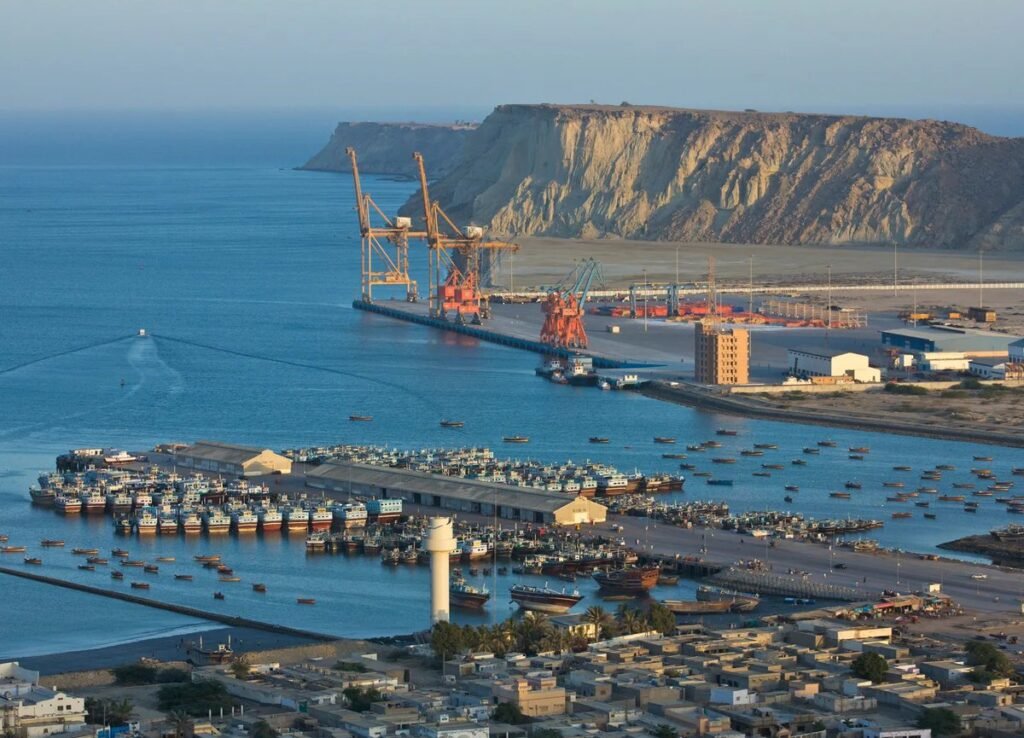
Trade and shipping activity at Pakistan’s Gwadar Port has received a significant boost due to the ongoing US-Iran conflict. Port utilisation has climbed to 30 percent, with expectations of sustained growth as regional trade patterns shift.
Geopolitical Realignment Creates New Opportunities
The Middle East war is redrawing geopolitical boundaries. On one side stand the United States, UAE, and Israel, while Saudi Arabia, Iran, Turkey, Qatar, and Egypt form another bloc. This polarisation has accelerated the development of alternative trade and energy corridors.
Pakistan is capitalising on this situation by highlighting Gwadar’s strategic location. The port offers a viable bypass to the volatile Strait of Hormuz, attracting shipping companies seeking safer routes.
Pakistan Offers Emergency Support to Stranded Ships
During the height of the conflict, hundreds of vessels were stranded at sea. Pakistan responded swiftly by providing both on-dock and off-dock facilities. This was the first major initiative to increase activity at national ports.
The government also opened six land routes to clear 3,000 stuck Iranian containers. This move not only eased immediate pressure but also opened fresh connectivity avenues with Central Asia, especially after Afghanistan suspended transit trade with Pakistan.
Tariff Reductions Aim to Attract More Business
In a bold incentive package, authorities announced sweeping tariff reductions at Gwadar Port. Berthing fees for container vessels and transshipment cargo were cut by 25 percent. International transshipment charges dropped by 40 percent, while transit container charges were reduced by 31 percent.
Additionally, general cargo now enjoys one month of free storage, compared to the standard five days at other Pakistani ports. These measures position Gwadar as a competitive logistics and transshipment hub against Dubai and Iran’s Chabahar ports.
Future Challenges and Regional Connectivity Plans
Experts believe Pakistan must sustain this momentum once the conflict ends. Maritime Affairs Minister Muhammad Junaid Anwar Chaudhry stated that the port is operating at 20-30 percent capacity and a master plan is in place to utilise the remaining capacity.
Pakistan and Iran have strengthened ties through peace efforts. Plans are under discussion to link ports of Iran, Pakistan, and Oman. Meanwhile, Central Asian states and Russia are exploring new transit corridors that could eventually connect with Gwadar while bypassing Iran.
However, major hurdles remain. Security issues in Balochistan and the lack of proper road and rail links to Gwadar continue to limit full potential. China and Russia are mediating between Afghanistan and Pakistan to reduce tensions.
CPEC 2.0 and Industrial Push Expected
Pakistan and China are advancing CPEC 2.0 with a focus on B2B investments worth $20 billion. These include industrial projects and battery storage facilities. Saudi Arabia and Kuwait are also being approached for strategic energy reserves and an Energy City featuring LPG and LNG terminals.
To overcome infrastructure gaps, Pakistan has offered cargo airlines to Central Asian states, providing one month of free storage. Kazakhstan has already established a cargo company for this purpose.