
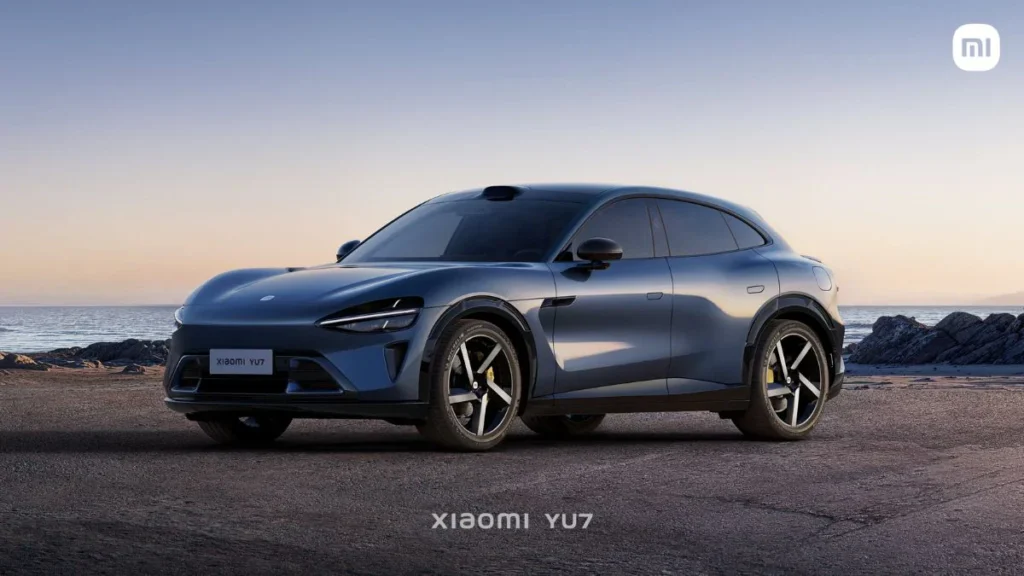
Xiaomi budget electric car has sent shockwaves through the global automotive and technology industries after outperforming the Ferrari SF90 XX in a head-to-head drag race. Known globally for disrupting the smartphone and consumer electronics market with affordable innovation, Xiaomi is now redefining expectations in the electric vehicle (EV) space—challenging even the most elite supercar brands.
The stunning result has sparked intense debate across automotive forums, business circles, and investor communities, raising an important question: Are affordable electric vehicles about to overtake traditional high-performance combustion supercars?
How the Xiaomi Budget Electric Car Beat a Ferrari
Xiaomi Budget Electric Car vs Ferrari SF90 XX: Performance Explained
In multiple drag race runs, Xiaomi’s budget electric car demonstrated faster off-the-line acceleration than Ferrari’s SF90 XX, one of the most powerful hybrid supercars ever produced. While Ferrari boasts decades of racing heritage and cutting-edge engineering, Xiaomi leveraged the inherent advantages of electric propulsion instant torque delivery, seamless power transfer, and optimized weight distribution.
Instead of focusing on top speed, Xiaomi optimized its EV for real-world acceleration, where electric motors excel. The result was a surprising yet repeatable victory that has redefined perceptions of what a “budget” electric car can achieve.
Key Performance Comparison Explained in Text
When comparing both vehicles, the performance gap becomes clearer when broken down:
• Acceleration: The Xiaomi budget electric car reaches 0–100 km/h significantly faster due to instant electric torque, while the Ferrari relies on complex hybrid power delivery.
• Power Delivery: Xiaomi’s single-speed electric drivetrain eliminates gear shifts, giving it smoother and quicker launches.
• Cost-to-Performance Ratio: Ferrari’s SF90 XX costs hundreds of thousands of dollars, whereas Xiaomi’s EV is positioned for mass-market affordability.
• Technology Focus: Xiaomi emphasizes software optimization, battery efficiency, and motor tuning rather than mechanical complexity.
This contrast highlights how electric mobility is shifting the performance paradigm away from traditional engineering prestige toward software-led innovation.
Why Xiaomi’s Budget Electric Car Matters for the EV Market
Xiaomi Budget Electric Car Signals Industry Disruption
Xiaomi’s entry into electric vehicles is not just about selling cars it’s about reshaping industries. Much like its smartphones disrupted premium brands, Xiaomi is applying the same playbook to mobility: high specifications, aggressive pricing, and ecosystem integration.
For investors and automakers, the implications are profound. Legacy car manufacturers now face competition not only from Tesla and Chinese EV startups, but also from global tech giants with massive supply chains and software expertise.
Impact on Supercar Brands and Luxury Automakers
The drag race result doesn’t mean Ferrari is obsolete but it does expose a vulnerability. Supercar brands have historically justified premium pricing through performance superiority. As electric vehicles democratize acceleration and efficiency, luxury brands must pivot toward design, heritage, and experiential value rather than raw speed alone.
The Xiaomi budget electric car represents a broader shift: performance is no longer exclusive to luxury pricing.
What This Means for Consumers and Businesses
Xiaomi Budget Electric Car Creates New Buyer Expectations
For consumers, this milestone reinforces the idea that affordable EVs can deliver thrilling performance without compromise. For businesses, especially in emerging markets like Asia, the Middle East, and Pakistan, Xiaomi’s EV strategy could accelerate EV adoption at scale.
Fleet operators, ride-hailing companies, and urban commuters are likely to benefit from lower costs, better efficiency, and competitive performance reshaping transportation economics globally.
The Future of Affordable High-Performance EVs
The Xiaomi budget electric car beating the Ferrari SF90 XX is more than a viral moment—it’s a symbol of transformation. As battery technology improves and software-driven optimization advances, traditional benchmarks of automotive excellence are being rewritten.
Xiaomi’s success suggests that the next era of performance vehicles will be defined not by price tags or legacy brands, but by innovation, efficiency, and intelligent engineering.