
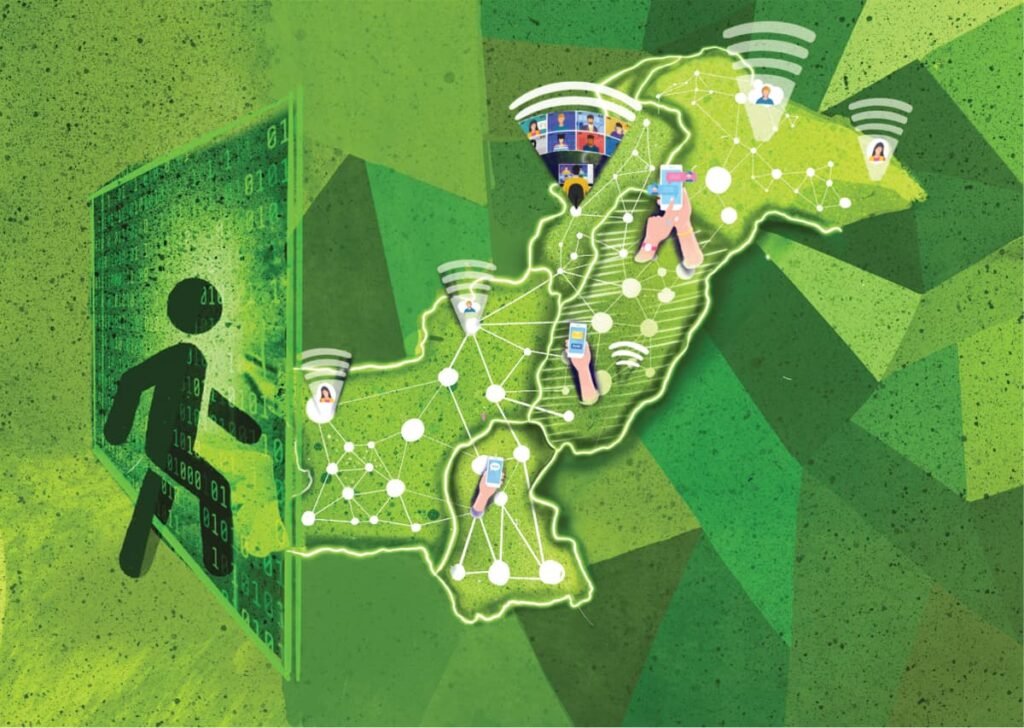
Pakistan’s Digital Growth Faces Rising Concerns Over Online Freedom, Report Finds
Pakistan has emerged as one of South Asia’s most digitally connected societies, but growing concerns over online regulation, surveillance and freedom of expression are creating what a new report describes as a “Digital Paradox.” According to the newly released Pakistan Freedom Report 2026, the country’s expanding digital ecosystem is increasingly intersecting with stricter cyber laws and heightened state oversight, raising concerns among citizens, businesses and digital rights advocates. Pakistan’s Digital Footprint Continues to Expand The report highlighted Pakistan’s rapid digital growth over the past few years. The country now has more than 195 million cellular subscriptions and up to 150 million broadband users. Active social media users have reached nearly 70 million. The government’s “Connect Pakistan 2030” strategy has played a key role in this expansion. Meanwhile, the Universal Service Fund (USF) recently awarded telecom projects worth Rs13.05 billion to provide high-speed internet access to around 5.55 million people across underserved areas. Pakistan’s information technology and freelance exports have also crossed $3 billion annually, making the country one of the world’s leading freelance markets. Social Media Overtakes Traditional Media The report found that digital platforms have surpassed television and newspapers as the main source of information for most Pakistanis. Facebook accounted for 24.8 percent of public information consumption, followed by WhatsApp at 19.9 percent. General internet websites represented 18 percent, while X, formerly Twitter, accounted for 15 percent. Traditional television emerged as the primary source of news for only 15 percent of respondents, highlighting a major shift in media consumption patterns. PECA Amendments Expanded State Powers While digital platforms have increased access to information and civic participation, the report said the shift has also led to stronger state intervention. It pointed to the 2025 amendments to the Prevention of Electronic Crimes Act (PECA), which granted authorities broader powers to block platforms, remove content deemed anti-state and impose stricter penalties related to digital expression. The amendments also introduced wider definitions of harmful content and accelerated complaint mechanisms for digital publishers and online platforms. Government Reported More Than 15,000 Accounts According to the report, the Government of Pakistan engaged with major technology companies regarding 15,391 accounts between May 2025 and May 2026 over alleged violations of legal or cultural standards. Out of these cases, platforms acted against 7,036 accounts, reflecting an overall compliance rate of 45.84 percent. Telegram recorded the highest compliance rate at 72.52 percent, followed by WhatsApp at 71.98 percent and Instagram at 66.94 percent. Meta’s Facebook platform acted on 56.3 percent of requests, while TikTok complied with 54.89 percent. In contrast, YouTube and X showed compliance rates of around 15 percent. The report estimated that content moderation and account actions affected audiences totaling nearly 302 million followers and users. Public Expresses Concerns Over Information Access The survey revealed growing concerns among citizens regarding the quality and independence of information available online. Around 55 percent of respondents expressed doubts about their ability to access unbiased information. Many cited misinformation and algorithm-driven polarization as major challenges. Meanwhile, 62 percent voiced concerns about freedom of speech and the future of digital expression in Pakistan. Businesses Warn Against Internet Disruptions Business leaders and IT professionals also raised concerns over internet disruptions and debates surrounding national firewall policies. According to the report, frequent outages and restrictions act as hidden costs for digital businesses by affecting operations, damaging reputations and creating uncertainty for investors. Experts warned that such measures could undermine the country’s growing digital economy and limit future growth opportunities. New Regulatory Authority Proposed The government has proposed establishing the Social Media Protection and Regulatory Authority (SMPRA) to strengthen digital governance and improve coordination with international technology companies. The proposed body aims to ensure that online spaces comply with national laws and societal values. However, the report stressed that sustainable digital development would require transparent and rights-based regulatory frameworks. It concluded that balancing national security with freedom of expression will be essential to protect Pakistan’s $3 billion IT sector and safeguard the rights of more than 110 million internet users.