Securities and Exchange Commission of Pakistan

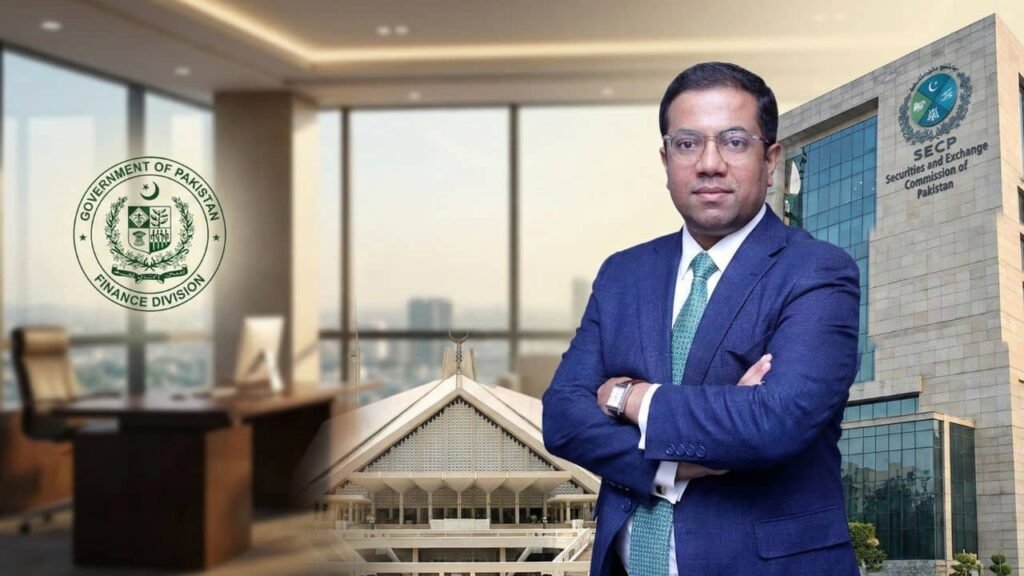
SECP Appoints Ali Farid Khawaja as Commissioner, Marks Strategic Shift
Pakistan

SECP Appoints Ali Farid Khawaja as Commissioner, Marks Strategic Shift

The SECP Commissioner Appointment has once again put Pakistan’s financial regulatory landscape in the spotlight. In a move that signals continuity, reform, and institutional strengthening, the federal government has appointed Muhammad Ali Farid Khawaja as a new Commissioner at the Securities and Exchange Commission of Pakistan (SECP) for a three-year term. Approved by the Prime Minister and confirmed through an official notification issued on Monday, the appointment comes at a time when regulatory confidence and capital market stability are under intense scrutiny. According to sources, the notification has already been received by Samaa News, underscoring the significance of this development at the national level. Who Is Muhammad Ali Farid Khawaja? The latest SECP Commissioner Appointment brings a seasoned market professional into the regulator’s leadership. Muhammad Ali Farid Khawaja is currently serving as the Chief Executive Officer of a brokerage house and is widely regarded as a respected name in Pakistan’s capital markets ecosystem. An Oxford-educated professional, Khawaja brings with him years of hands-on experience in market operations, compliance frameworks, and investor-centric financial services. His appointment is expected to strengthen SECP’s policy oversight at a time when market transparency, digitalization, and investor protection are top priorities. Instead of viewing this appointment as a routine bureaucratic reshuffle, market participants see it as a calculated decision aimed at injecting real-world market expertise into the regulator. SECP Commissioner Appointment Comes Amid Leadership Changes This SECP Commissioner Appointment follows closely on the heels of Kabir Sidhu’s appointment as the new Chairman of SECP, signaling a broader restructuring within Pakistan’s apex market regulator. Over the past year and into the current one, four commissioners have been appointed, reflecting an aggressive effort to refresh leadership and address regulatory gaps. However, sources within the commission reveal that one commissioner’s seat remains vacant, suggesting further appointments may be on the horizon. Rather than listing appointments in tabular form, the bigger picture tells a clearer story: SECP is quietly but steadily rebuilding its leadership bench to respond to evolving market challenges. Why This SECP Commissioner Appointment Matters for Investors The importance of this SECP Commissioner Appointment extends well beyond internal governance. For investors, brokers, listed companies, and foreign stakeholders, regulatory credibility is a deciding factor. A commissioner with direct market exposure can: • Improve regulatory clarity for brokerage firms• Enhance enforcement aligned with real market behavior• Strengthen investor confidence during economic uncertainty With Pakistan navigating fiscal reforms, IMF commitments, and capital inflow challenges, leadership decisions at SECP carry weight far beyond the commission’s walls. A Broader Signal to Capital Markets This SECP Commissioner Appointment reflects a growing realization within policymaking circles: effective regulation requires both technical knowledge and market realism. By appointing professionals who understand the mechanics of capital markets from the inside, SECP appears to be positioning itself as a more responsive and credible watchdog. While one commissioner’s position remains unfilled, the momentum suggests further changes are imminent. Observers believe the regulator is preparing itself for tougher oversight, improved governance standards, and alignment with global best practices. What to Watch Next As the dust settles on this SECP Commissioner Appointment, attention now turns to: • Filling the remaining vacant commissioner seat• Policy direction under the new chairman• Regulatory reforms impacting Pakistan Stock Exchange and brokerage firms For now, Muhammad Ali Farid Khawaja’s induction adds a layer of optimism to Pakistan’s financial regulatory outlook.
Dr Kabir Ahmed Sidhu SECP Chairman Appointment Signals Strong Regulatory Push
Pakistan

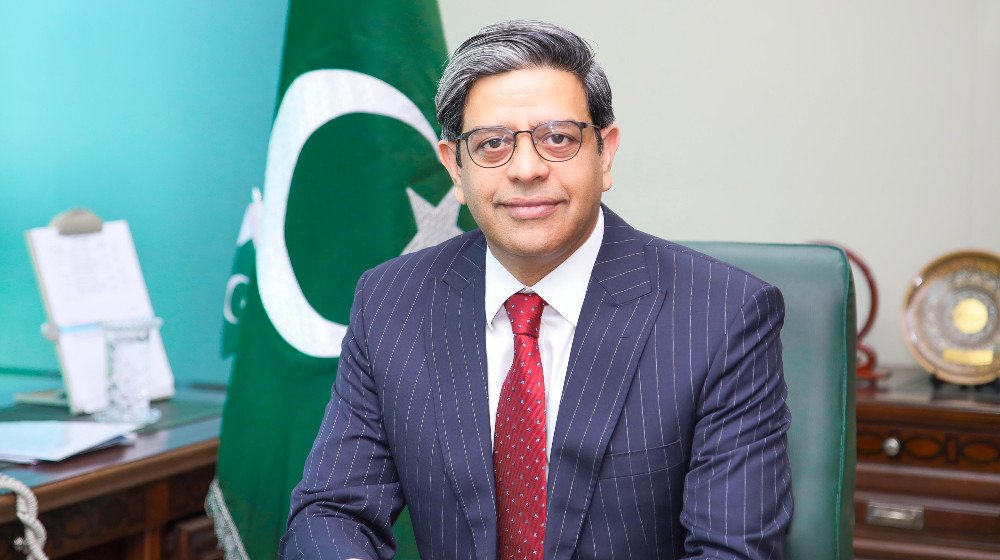
Dr Kabir Ahmed Sidhu SECP Chairman Appointment Signals Strong Regulatory Push

Dr Kabir Ahmed Sidhu SECP Chairman marks a significant milestone for Pakistan’s financial and corporate regulatory landscape, as the Federal Government has approved his appointment as the new Chairman of the Securities and Exchange Commission of Pakistan (SECP) with immediate effect. The decision, officially notified by the Finance Division, reflects a clear intent to strengthen institutional governance, enforcement, and investor confidence in Pakistan’s capital markets. Dr Sidhu brings with him a proven track record of regulatory reform, most notably from his tenure as Chairman of the Competition Commission of Pakistan (CCP), where he led one of the most impactful institutional turnarounds in the regulator’s history. Dr Kabir Ahmed Sidhu SECP Chairman: A Proven Reformist Regulator When Dr Kabir Ahmed Sidhu assumed office as CCP Chairman in August 2023, the Commission was grappling with long-standing enforcement bottlenecks, litigation delays, and a growing backlog of unresolved cases. Within just two years, his leadership transformed the regulator’s operational effectiveness. Under his stewardship, the CCP reduced its pending court case backlog by more than 70 percent. Out of 567 pending matters, 434 cases were successfully decided, restoring confidence in the regulator’s enforcement capability and credibility. This progress also contributed to the development of stronger legal precedent and jurisprudence for competition law in Pakistan. Enforcement Impact and Financial Recoveries Under Dr Sidhu A key achievement during Dr Kabir Ahmed Sidhu’s CCP tenure was the unprecedented recovery of penalties. Approximately PKR 1.36 billion was recovered during his leadership—an extraordinary figure when compared to the Commission’s total recoveries of just PKR 2 billion over the previous two decades combined. In addition to recoveries, the CCP imposed over PKR 2 billion in fresh penalties through new enforcement actions. These measures sent a clear message that market abuse, cartels, and deceptive practices would no longer be tolerated. Crackdown on Cartels and Market Abuse Dr Kabir Ahmed Sidhu SECP Chairman appointment comes on the back of his aggressive enforcement stance against cartels and anti-competitive behavior. During his CCP tenure, major investigations were initiated in sectors critical to Pakistan’s economy, including poultry, sugar, edible oil, telecommunications, and medical services. Several landmark enforcement actions were upheld by the Supreme Court of Pakistan and the Competition Appellate Tribunal. This judicial validation significantly strengthened the CCP’s authority and set robust enforcement benchmarks for future regulators including the SECP. Consumer Protection and Corporate Accountability Beyond cartel enforcement, Dr Sidhu placed strong emphasis on consumer protection and misleading marketing practices. The CCP imposed substantial penalties on companies operating across real estate, FMCG, education, pharmaceuticals, and the automobile sector. High-profile enforcement actions were taken against firms such as Kingdom Valley, FrieslandCampina, Unilever, Engro, Al-Ghazi Tractors, Hyundai Nishat, British Lyceum, and 3N Lifemed. These actions reinforced regulatory accountability and enhanced consumer trust in regulated markets. Institutional Innovation and Market Facilitation One of the most notable institutional reforms under Dr Sidhu was the establishment of the Market Intelligence Unit (MIU), the CCP’s first AI-powered surveillance and analytics wing. This initiative marked a strategic shift from reactive enforcement to proactive, data-driven market monitoring an approach that aligns closely with global regulatory best practices. On the market facilitation front, the CCP processed 139 mergers across 34 economic sectors. High-profile transactions included the PTCL–Telenor merger, Shell Pakistan’s sale to Wafi Energy, and several deals across financial services, energy, and logistics. The PTCL–Telenor merger, in particular, was widely recognized for balancing foreign investment facilitation with competition safeguards. Dr Kabir Ahmed Sidhu’s Academic and Professional Credentials Dr Kabir Ahmed Sidhu holds a Bachelor’s degree in Law, an LLM in Banking, Insurance, and International Business Law, and a PhD from the University of Manchester. His academic journey also includes a postgraduate diploma in Civil Litigation from the Manchester Law Society and professional certifications in mortgage and financial advice from the London Institute of Banking and Finance. His doctoral research focused on investor protection and the regulation of stock exchanges in the UK, US, and Shariah-compliant markets expertise that is highly relevant to SECP’s evolving mandate. With over two decades of professional experience, Dr Sidhu has worked with law firms, insurance companies, financial institutions in the UK, and key government ministries in Pakistan, including the Ministry of Law and the Privatisation Commission. What Dr Kabir Ahmed Sidhu SECP Chairman Means for Pakistan The appointment of Dr Kabir Ahmed Sidhu as SECP Chairman is widely seen as a strategic move to enhance regulatory enforcement, investor protection, and market transparency. His track record suggests a strong focus on institutional reform, technology-driven oversight, and balanced market facilitation key pillars for the next phase of Pakistan’s capital market development. As Pakistan navigates economic stabilization and seeks to attract long-term investment, Dr Sidhu’s leadership at SECP could play a decisive role in shaping a more resilient, credible, and investor-friendly regulatory environment.

Scroll to Top