Pakistan fiscal discipline

Pakistan UK Economic Reforms Enter New Phase with Strong British Support
Pakistan

Pakistan UK Economic Reforms Enter New Phase with Strong British Support

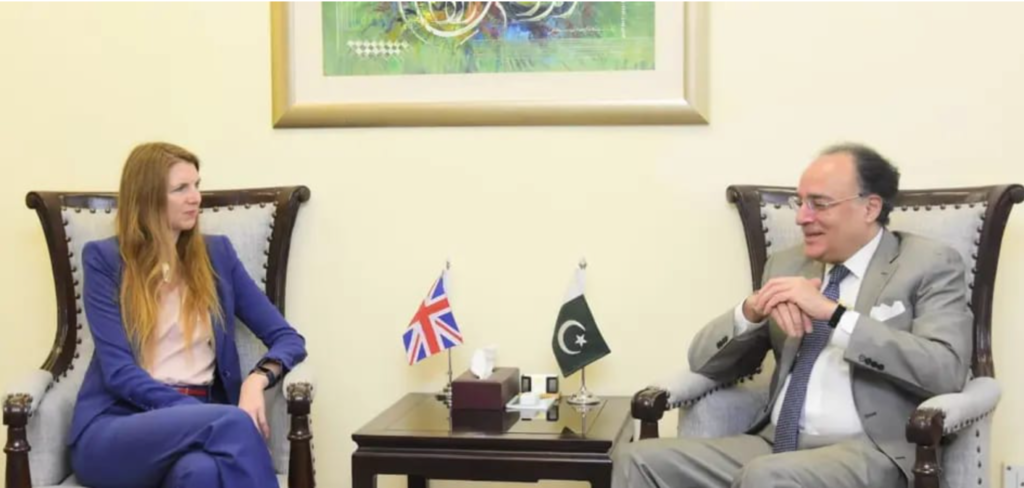
Pakistan UK Economic Reforms are once again in the spotlight after Islamabad and London reaffirmed their commitment to deepening economic and institutional cooperation during a high-level meeting in Islamabad. Federal Minister for Finance and Revenue Senator Muhammad Aurangzeb met British High Commissioner to Pakistan Jane Marriott at the Finance Division, where both sides discussed Pakistan’s fragile but improving economy, ongoing reforms, and rising geopolitical pressures affecting global markets. The meeting comes at a crucial time when Pakistan is navigating economic uncertainty, volatile energy prices, and pressure on global supply chains. However, government officials insist the country is gradually stabilizing after months of difficult economic adjustments. Pakistan UK Economic Reforms Focus on Stability and Investor Confidence During the talks, Senator Muhammad Aurangzeb highlighted what he described as encouraging economic signals emerging from Pakistan’s economy. According to the finance minister, the government has managed to improve several key indicators, including external account stability, stronger remittance inflows, and improving investor sentiment. These developments are being presented as proof that Pakistan’s aggressive reform agenda is beginning to deliver results. Officials also briefed the British side on efforts to expand the tax net and modernize revenue collection through technology-driven systems. The government believes digital reforms can reduce leakages, improve transparency, and increase public trust in state institutions. The discussions also emphasized fiscal discipline and continuity of economic policies, issues long viewed by international investors as critical for Pakistan’s long-term recovery. Britain Signals Confidence in Pakistan’s Reform Agenda The United Kingdom’s support carries major symbolic and diplomatic importance for Pakistan at a time when the country is seeking greater global economic confidence. British High Commissioner Jane Marriott appreciated Pakistan’s continued engagement on regional and economic matters and reaffirmed London’s support for Islamabad’s development and reform priorities. The British side also showed interest in Pakistan’s broader institutional reform efforts, including public sector efficiency, coordination between state institutions, and creating a more business-friendly environment for private investment. Analysts believe stronger UK backing could improve Pakistan’s international economic image and encourage broader investor engagement from Western markets. Pakistan UK Economic Reforms Linked to Global Economic Pressures Another major focus of the meeting was the rapidly evolving global economic situation. Both sides discussed the impact of geopolitical tensions, rising energy costs, and disruptions in international supply chains. Pakistan’s economic managers remain concerned about how external shocks could affect inflation, imports, and industrial growth. Climate resilience and humanitarian concerns also featured prominently in the talks. Pakistan continues to face economic risks linked to climate-related disasters, making international cooperation increasingly important for future planning and recovery strategies. Population planning, social sector coordination, and engagement with international financial institutions were also discussed as part of broader development cooperation between Islamabad and London. Pakistan Seeks Long-Term Economic Resilience The government is attempting to project an image of economic resilience and policy consistency to international partners. Finance Minister Muhammad Aurangzeb stressed that Pakistan remains committed to structural reforms aimed at long-term sustainability rather than short-term fixes. These reforms include improving governance standards, increasing institutional efficiency, and encouraging private sector-led economic expansion. Economic experts say sustained implementation will be critical because Pakistan has historically struggled to maintain reform momentum after periods of temporary stabilization. Still, the latest Pakistan UK Economic Reforms dialogue signals that international partners are closely watching Islamabad’s progress and remain willing to support reform-driven economic recovery. For Pakistan, maintaining that confidence may now be just as important as the reforms themselves.
Pakistan Fiscal Surplus 1HFY26 Signals a Rare Economic Turning Point
Pakistan

Pakistan Fiscal Surplus 1HFY26 Signals a Rare Economic Turning Point

For the first time in recent history, Pakistan Fiscal Surplus 1HFY26 has entered the economic conversation with unexpected optimism. In the first half of fiscal year 2026, Pakistan posted a fiscal surplus of Rs542 billion, equivalent to 0.4% of GDP a sharp and symbolic reversal from the Rs1.5 trillion deficit (1.2% of GDP) recorded during the same period last year. Read More: https://theboardroompk.com/turning-saplings-into-trees-is-real-victory-dg-sepa-stresses-care-in-new-plantation-campaign/ According to the Finance Division of the Government of Pakistan, this surplus is not the result of a single windfall. Instead, it reflects a carefully stitched mix of revenue growth, falling debt costs, and tighter expenditure controls, hinting at a shift toward more disciplined fiscal management. What Drove the Pakistan Fiscal Surplus 1HFY26? The story behind Pakistan Fiscal Surplus 1HFY26 is best understood through two powerful forces moving in opposite directions spending coming down and revenues climbing up. Total government expenditures declined by 10.27%, while overall revenues expanded by 9.42%. This rare alignment created the fiscal breathing room Islamabad has struggled to achieve for years. A standout factor was the sharp reduction in debt servicing costs. Markup payments fell by 30.69%, primarily due to a 33.92% decline in domestic debt servicing, which stood at Rs3.1 trillion during the period. In plain terms, lower interest burdens gave the government room to stabilize its books without slashing critical development or social spending. Revenue Engines Behind Pakistan Fiscal Surplus 1HFY26 Revenue performance played an equally decisive role in shaping the Pakistan Fiscal Surplus 1HFY26. The Federal Board of Revenue (FBR) collected Rs6.1 trillion, posting a 10% year-on-year increase, signaling improved tax administration and compliance. Non-tax revenues surged to Rs3.8 trillion, largely driven by Rs2.4 trillion in profits transferred from the State Bank of Pakistan. Energy-related levies also delivered a surprise boost. Petroleum Development Levy (PDL) collections jumped 50% to Rs823 billion, providing the federal government with a critical cushion amid volatile global energy markets. At the provincial level, fiscal performance added further momentum. Provincial tax receipts rose 28% to Rs569 billion, while non-tax revenues increased 8% to Rs155 billion, reinforcing the broader national surplus. Pakistan Fiscal Surplus 1HFY26 and the Primary Balance Breakthrough Beyond the headline surplus, Pakistan also recorded a primary surplus of Rs4.1 trillion, equivalent to 3.2% of GDP, during 1HFY26 an improvement from Rs3.6 trillion in the same period last year. This means that excluding interest payments, the government generated a sizable surplus, reflecting stronger underlying fiscal health and improved budgetary discipline. Spending Priorities Remain Intact Despite tighter controls, essential spending was not sidelined. Provincial current expenditure stood at Rs2.8 trillion, while primary current spending reached Rs3.2 trillion. Development expenditure amounted to Rs950 billion, supported mainly by higher allocations from Punjab, Sindh, and Balochistan. Crucially, spending on social protection and energy subsidies, including BISP and power sector support, remained aligned with program targets suggesting that fiscal consolidation did not come at the cost of vulnerable segments. Debt Management: The Silent Contributor One of the quieter but most impactful contributors to Pakistan Fiscal Surplus 1HFY26 was proactive debt management. The early retirement of Rs1.62 trillion in domestic debt generated Rs1.59 trillion in savings on future debt servicing, easing pressure on upcoming budgets. Why Pakistan Fiscal Surplus 1HFY26 Matters Going Forward While challenges remain, Pakistan Fiscal Surplus 1HFY26 sends a strong signal to markets, multilaterals, and investors: fiscal discipline is no longer just a promise it’s showing up in the numbers. If sustained, this trajectory could lower borrowing costs, strengthen investor confidence, and provide the government with greater flexibility to support growth without reopening the deficit floodgates. For now, Pakistan’s fiscal books tell a story few expected but many will be watching closely.

Scroll to Top