
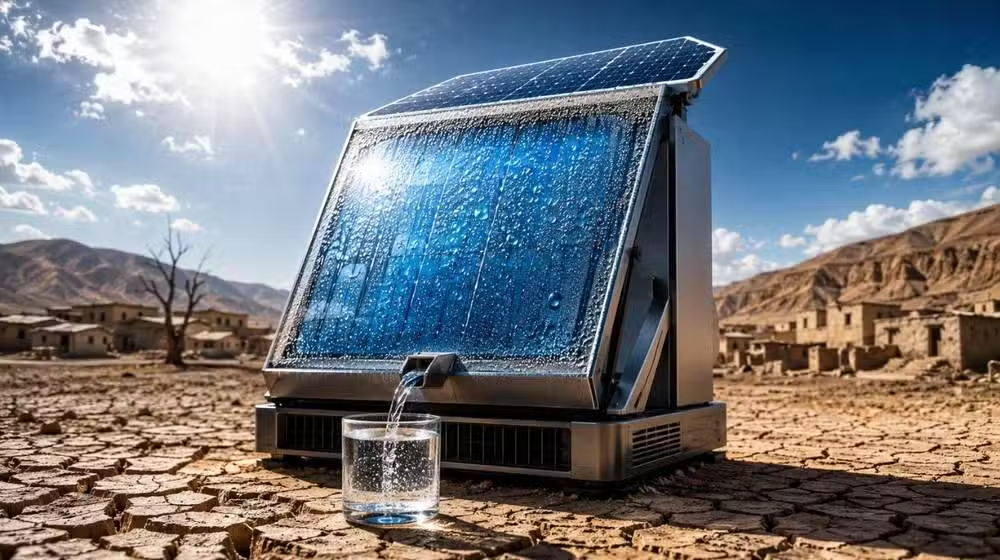
Researchers from Stanford University and Massachusetts Institute of Technology (MIT) have developed a breakthrough solar powered water system capable of extracting drinking water directly from the atmosphere using sunlight.
The innovative technology could offer a practical solution for water shortages in dry and water stressed regions where access to clean drinking water remains limited.
How the Solar Powered Water System Works
At the center of the new system is a sponge like hydrogel made from lithium chloride and polyacrylamide. The material absorbs moisture from the air during cooler conditions and later releases the trapped vapor when exposed to sunlight.
Researchers explained that solar heat triggers the release process. The vapor then condenses into liquid water that can be collected and used for drinking purposes.
The technology relies entirely on solar energy, removing the need for electricity intensive water extraction methods.
Durability Problem Finally Addressed
Atmospheric water harvesting has been studied for years, but long term durability remained one of the biggest challenges preventing large scale use.
Earlier versions of similar hydrogel systems began degrading after repeated solar exposure. Previous models reportedly survived only around 30 heating cycles before their performance declined significantly.
Scientists discovered that the metal surface supporting the hydrogel reacted under continuous sunlight exposure. Those reactions gradually damaged the material and reduced efficiency over time.
To solve the issue, researchers introduced a protective anti corrosion coating to block harmful reactions.
The improvement dramatically increased the lifespan of the system. During testing, the upgraded solar powered water system successfully completed more than 190 solar driven cycles without noticeable degradation.
Researchers said the system maintained stability over several months of continuous testing.
Desert Testing Shows Promising Results
Field trials were carried out in harsh desert environments where strong sunlight improved the performance of the system.
Scientists noted that solar energy performs most of the work in both capturing moisture and releasing water from the hydrogel.
Under current conditions, a single panel approximately the size of a bath towel can produce nearly two liters of drinking water per day.
Researchers are now working to increase output levels to around five liters daily, which could make the technology more useful for rural communities, disaster relief operations, and emergency humanitarian situations.
Potential Low Cost Water Solution
The research team believes the technology could become an affordable water production method if manufactured on a larger scale.
According to estimates shared by the scientists, the cost of generating water through this process could eventually fall below one cent per liter.
Such pricing could make atmospheric water harvesting a viable solution for regions struggling with drought, climate change, and limited freshwater resources.
Study Published in Nature Communications
The findings were published in Nature Communications, highlighting growing global interest in technologies designed to extract water directly from the atmosphere.
Despite the promising results, researchers cautioned that the solar powered water system is still in the experimental stage and not yet ready for widespread commercial deployment.
However, experts believe the latest breakthrough represents major progress toward solving one of the field’s most persistent problems.
The improved durability of the hydrogel system could help move atmospheric water harvesting closer to real world use in some of the planet’s driest regions.