
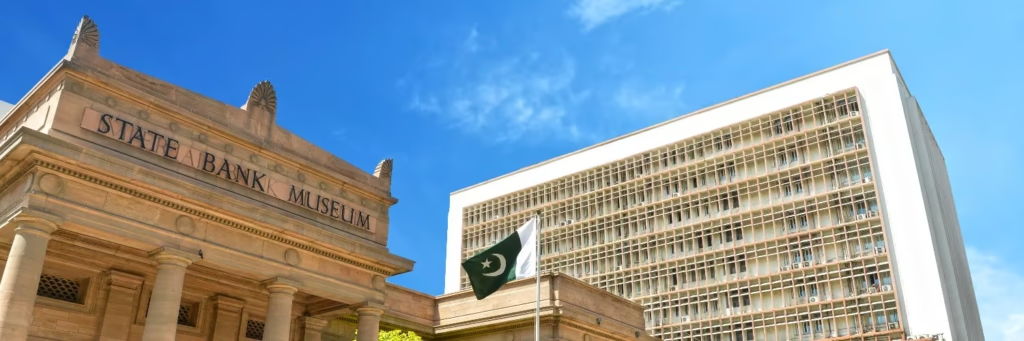
The State Bank of Pakistan (SBP) has officially kicked off the implementation of the WE-Finance Code, a bold initiative designed to empower women entrepreneurs and transform their access to finance across the nation. The move marks a critical step in Pakistan’s journey toward inclusive economic growth, creating pathways for women-led businesses to thrive in both conventional and digital financial ecosystems.
“We are building pathways that ensure women entrepreneurs can fully participate in and contribute to Pakistan’s economic growth,” said Mr. Saleem Ullah, Deputy Governor of SBP, at the inaugural Women Entrepreneurship Finance (WE-FI) Code Consultative Workshop.
This milestone aligns with SBP’s Strategic Plan 2028, emphasizing financial inclusion, gender equality, and sustainable development.
Understanding the WE-Finance Code: A Game-Changer for Women Entrepreneurs
Adopted on July 7, 2025, the WE-Finance Code addresses structural barriers that have historically limited women entrepreneurs from accessing formal credit. Its framework is action-oriented, aiming to:
• Expand financial access for women-led businesses
• Promote gender-intelligent product innovation
• Strengthen credit appraisal mechanisms tailored to women-led MSMEs
SBP leads a coalition of 23 financial institutions covering conventional, Islamic, and microfinance banks along with the Pakistan Banks Association (PBA). Together, they are committed to operationalizing the Code across Pakistan’s financial sector.
Workshop Highlights: Driving Action Through Collaboration
To officially launch the implementation, SBP and the Asian Development Bank (ADB) hosted a two-day Consultative Workshop in Islamabad, bringing together banks, regulators, and development partners.
The workshop focused on:
- Gender-Intelligent Product Innovation – Designing loan products, financing solutions, and digital platforms tailored for women-led enterprises.
- Enhanced Data Collection & Reporting – Strengthening institutional frameworks to track women’s access to finance more accurately.
- Actionable Credit Appraisal Strategies – Improving evaluation methods to reduce barriers for women entrepreneurs seeking formal financing.
Participants also reviewed existing gaps in women’s financial inclusion and formulated a forward-looking National Action Plan under the WE-Finance Code. The discussions emphasized market segmentation for women, portfolio strategies focused on women-led MSMEs, and reinforcing institutional commitment through the WE-Finance Code Charter.
Expanding the Coalition: Roadshows and Policy Dialogues
Prior to the workshop, SBP and ADB officials conducted a WE-FI Code Roadshow, engaging key stakeholders beyond the financial sector. Strategic dialogues were held with:
• Securities and Exchange Commission of Pakistan (SECP)
• Pakistan Telecommunication Authority (PTA)
• Small and Medium Enterprises Development Authority (SMEDA)
These discussions aimed to strengthen policy coordination, enhance inter-agency collaboration, and build a robust national coalition supporting the WE-Finance Code.
Through these efforts, SBP is ensuring that the initiative not only reforms banking practices but also accelerates women-led entrepreneurship, ultimately fueling sustainable economic growth.
The Road Ahead: A Transformative Shift for Pakistan
With the WE-Finance Code now in motion, Pakistan stands at the threshold of a transformative financial revolution. Women entrepreneurs long constrained by structural and institutional barriers can expect:
• Greater access to credit and financial services
• Innovative products tailored to their business needs
• Enhanced support through digital finance initiatives
By driving these initiatives, SBP is not only fostering financial inclusion but also creating an ecosystem where women-led businesses can thrive, contributing meaningfully to Pakistan’s economic growth and sustainability goals.