
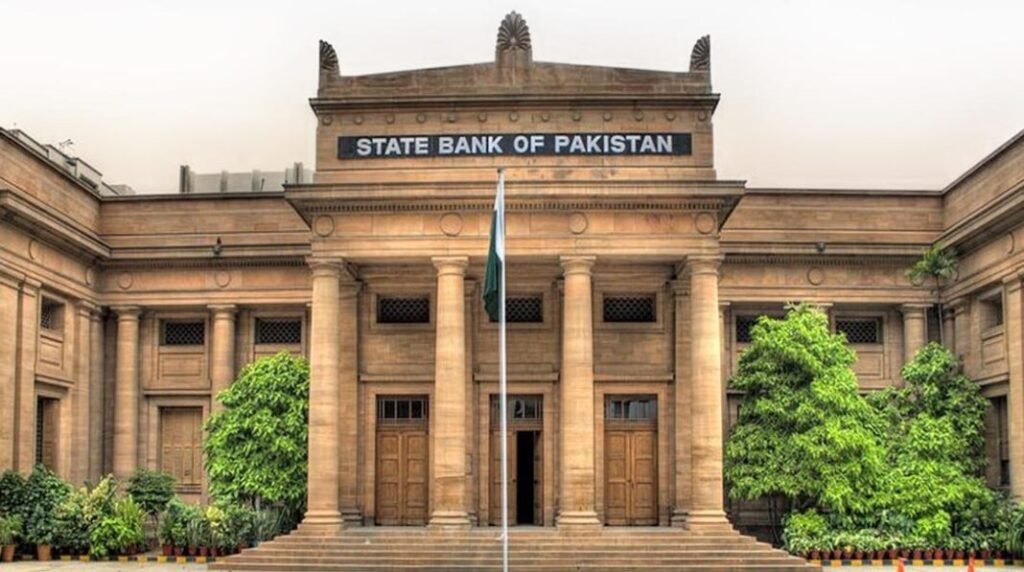
The State Bank of Pakistan (SBP) kept its policy rate unchanged at 11.5% on Monday, with seven of the 10 members of the Monetary Policy Committee (MPC) voting to maintain the existing monetary policy stance.
The decision comes as escalating tensions in the Middle East have increased risks to inflation, energy prices and external stability. While domestic economic indicators have broadly remained in line with expectations, the committee flagged growing uncertainty around the economic outlook.
Inflation Rises Sharply in August
The MPC noted that headline inflation increased significantly to 11.1% year-on-year in August, compared with 9.2% in July.
Despite the recent increase, the committee considered the existing monetary policy stance appropriate for bringing inflation towards the SBP’s medium-term target range of 5% to 7%.
The central bank expects inflation to gradually decline towards the upper end of the target range by June 2027. However, it warned that risks to the inflation outlook have increased considerably.
Key risks include volatility in global commodity prices, changes in electricity and gas tariffs, supply disruptions and unexpected movements in food prices. The MPC also highlighted worsening El Niño conditions as a potential source of additional food-price pressure.
Economic Recovery Gains Momentum
Economic activity slowed during the fourth quarter of FY26 because of conflict-related disruptions but began showing signs of recovery in the following period.
High-frequency indicators, including petroleum sales, private-sector credit, textile exports and business sentiment, pointed towards a gradual improvement in economic activity during July. Satellite-based indicators tracking nighttime lights and gas emissions also supported the recovery outlook.
Agricultural prospects have improved as well. The MPC noted increased acreage under rice and sugarcane, along with encouraging early reports of cotton arrivals.
The expected recovery in commodity-producing sectors is also likely to support activity in the services sector.
The SBP maintained its FY27 real GDP growth projection at 3.5% to 4.5%.
Foreign Exchange Reserves Cross $21 Billion
Pakistan’s return to international capital markets was highlighted as one of the major developments since the previous MPC meeting.
The country raised $3 billion through Eurobond issuance, while continued foreign exchange purchases by the SBP further strengthened the reserve position.
As a result, SBP foreign exchange reserves increased to $21.4 billion.
The MPC expects resilient workers’ remittances and stronger information and communication technology exports to help keep the current account deficit within 0% to 1% of GDP during FY27.
Planned financial inflows, combined with continued SBP foreign exchange purchases, are expected to meet external financing needs and support reserves. The central bank projects reserves to approach three months of import cover by the end of June 2027.
However, the external outlook remains exposed to elevated global commodity prices and supply constraints linked to developments in the Middle East.
Fiscal Consolidation Beats Budget Target
The MPC said fiscal consolidation during FY26 exceeded budgetary targets, helped by contained current expenditures and particularly lower interest payments.
Tax collection during the first two months of FY27 remained broadly aligned with FBR targets, although growth slowed compared with the previous year.
The SBP’s transfer of Rs1.9 trillion in profit to the government, compared with the budgeted Rs1.4 trillion, also provided additional support to the fiscal outlook.
Still, the committee stressed that achieving the tax revenue target will require sustained efforts given the uncertain domestic and global environment.
It called for faster fiscal reforms, particularly measures to broaden the tax base and reduce losses at public-sector enterprises.
Private-Sector Credit Growth Strengthens
Broad money growth slowed to 11.6% year-on-year as of August 28, down from 13.2% at the time of the previous MPC meeting.
The slowdown reflected lower contributions from both net domestic assets and net foreign assets of the banking system.
Private-sector credit, however, recorded stronger growth of 13.4% year-on-year. The increase was supported by lower net budgetary borrowing from the banking system and the broader recovery in economic activity.
Credit growth was broad-based across working capital, fixed investment and consumer financing.
Wholesale and retail trade, agriculture and sugar were among the major borrowing sectors.
The SBP expects private-sector credit growth to strengthen further as economic activity continues to recover.
Food and Energy Remain Major Inflation Risks
The MPC attributed much of the recent increase in inflation to food price pressures.
Wheat and allied products, along with perishable food items, were identified as major contributors to the rise in prices.
Energy inflation also remained elevated as the intensification of Middle East tensions pushed global energy prices higher. Rising fuel prices increased transport costs and contributed to core inflation reaching 8.7%.
Inflation expectations among consumers and businesses also increased in September, while confidence weakened.
The MPC noted that the recent change in the high-speed diesel (HSD) pricing mechanism resulted in a sharp reduction in HSD prices during August. This provided some relief and partially offset the impact of higher international prices on domestic inflation.
SBP Maintains Prudent Monetary Policy Stance
The central bank expects a real positive interest rate on a forward-looking basis to help keep demand-side inflationary pressures under control and limit second-round effects from food and energy price increases.
The MPC reiterated its commitment to price stability and said it would continue monitoring incoming economic data and developments in the Middle East.
The committee also stressed the importance of maintaining a prudent monetary and fiscal policy mix, strengthening economic buffers and implementing structural reforms on time.
According to the SBP, these measures will be critical to absorbing supply shocks, improving productivity and supporting sustainable economic growth while keeping inflation on a declining path.