
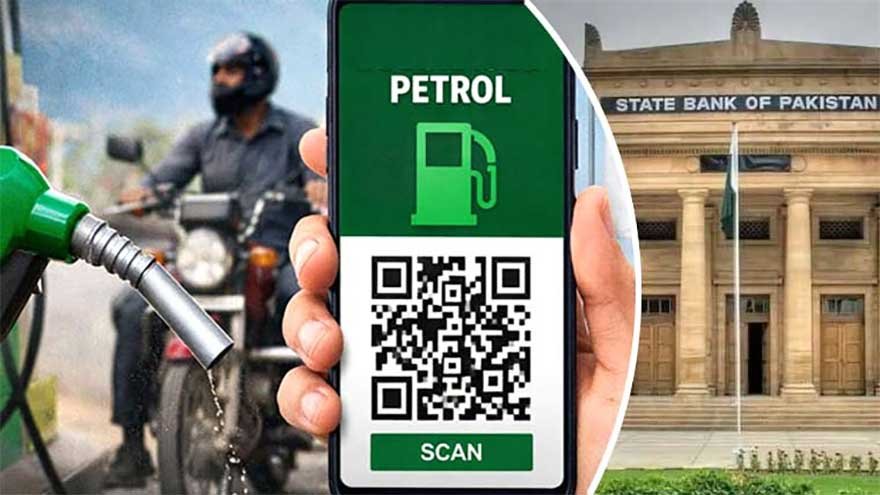
The SBP Fuel Card Payment Charges Cap has been extended until January 31, 2027, giving Pakistan’s banking and fuel retail sectors another six months to prepare for wider adoption of Raast QR-based digital payments. The decision reflects the State Bank of Pakistan’s continued efforts to reduce the cost of electronic transactions while encouraging fuel stations across the country to modernize their payment infrastructure.
The latest circular, issued to banks, microfinance banks, electronic money institutions, payment system operators and payment service providers, directs all regulated entities to continue implementing the capped pricing mechanism for payment cards issued in Pakistan.
While the move provides relief to consumers and fuel retailers by keeping transaction costs predictable, it also raises an important question: why does Pakistan still require repeated extensions for a digital payment initiative that has been under implementation for years?
SBP Fuel Card Payment Charges Cap Remains Unchanged
Under the extended policy, the SBP Fuel Card Payment Charges Cap will continue to apply to all card-present fuel purchases across Pakistan.
The central bank has maintained the Merchant Discount Rate (MDR) at a maximum of Rs1.00 per litre for fuel purchases. Similarly, the Interchange Reimbursement Fee (IRF) will remain capped at Rs0.20 per litre for transactions involving fuel and related petroleum products.
These limits apply to all payment cards issued within Pakistan and are intended to prevent excessive transaction costs from discouraging digital payments at petrol pumps.
By maintaining lower processing charges, the SBP aims to make electronic payments commercially viable for fuel station operators while providing customers with greater convenience.
Raast QR Expansion Remains the Main Objective
A key objective behind extending the SBP Fuel Card Payment Charges Cap is to accelerate the nationwide rollout of interoperable Raast QR-based payment acceptance at fuel stations.
The State Bank has instructed all regulated financial institutions to actively coordinate with fuel station merchants to ensure that Raast QR payment facilities become widely available during the extension period.
Raast has emerged as Pakistan’s flagship instant payment system, enabling secure and real-time digital transactions. Expanding its presence at fuel stations is expected to reduce reliance on cash, improve transaction transparency and strengthen financial inclusion.
However, widespread adoption depends not only on policy support but also on the willingness of fuel retailers to invest in digital infrastructure and staff training.
A Necessary Extension or a Sign of Slow Progress?
Although the extension provides continuity for businesses, it also highlights the slower-than-expected pace of Pakistan’s digital payment transformation.
The State Bank first introduced these incentives to encourage digital acceptance at fuel stations. Yet another extension suggests that the desired level of Raast QR deployment has not been achieved.
This raises concerns about implementation rather than policy design. Regulatory incentives can only succeed if banks, payment providers and fuel retailers actively invest in payment infrastructure, consumer awareness and operational readiness. Without stronger execution and measurable adoption targets, repeated policy extensions risk delaying the broader transition to a cashless economy.
For Pakistan to realize the full benefits of digital payments, stakeholders must move beyond compliance and focus on creating a seamless customer experience that encourages everyday use.
SBP to Review Policy in January 2027
The State Bank has confirmed that it will review the pricing framework on or around January 31, 2027, after assessing market response and the progress of Raast QR implementation.
The revised instructions have taken immediate effect, while all other provisions of the earlier policy remain unchanged.
The coming months will be critical in determining whether Pakistan’s fuel retail sector can finally achieve meaningful digital payment adoption or whether further extensions will become necessary.
The extension of the SBP Fuel Card Payment Charges Cap offers stability for banks, payment service providers and fuel retailers while reinforcing Pakistan’s digital payment agenda. Lower transaction costs continue to support card-based fuel purchases, but the real measure of success will be the pace of Raast QR adoption across the country.
If implementation remains slow despite continued regulatory support, policymakers may eventually need to address operational bottlenecks rather than relying solely on pricing incentives to drive digital transformation.