
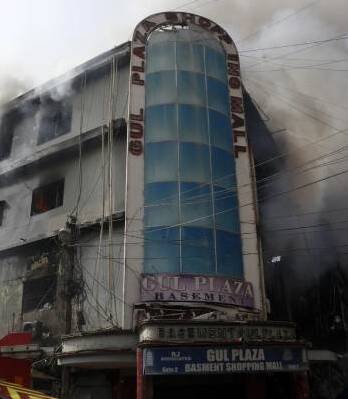
Karachi: As rescue teams continue sifting through the smoldering ruins of Gul Plaza on M.A. Jinnah Road, the death toll has climbed to at least 14–19 people, with over 60 still missing and dozens injured.
The massive fire, which erupted late Saturday night and raged for nearly 36 hours before being brought under control, has devastated a beloved multi-story shopping hub housing around 1,200 shops selling everything from garments and cosmetics to plastics and household goods.
Thick smoke trapped victims inside due to poor ventilation, blocked exits, and the rapid spread fueled by highly flammable stock. Officials suspect a faulty circuit breaker or electrical short circuit as the cause, with investigations ongoing amid reports of outdated wiring and inadequate safety measures.
This heartbreaking scene echoes one of Pakistan’s darkest industrial tragedies: the 2012 Baldia Town factory fire at Ali Enterprises. That inferno claimed 259–289 lives (mostly workers trapped by locked exits, barred windows, and absent firefighting equipment) and injured hundreds more.
The blaze, possibly sparked by a faulty generator or electrical fault, spread unchecked through garment and plastic materials in a building riddled with violations—unregistered workers, no fire drills, blocked escape routes, and zero sprinklers or alarms.
Investigations revealed a pattern of negligence: safety compliance was skipped to cut costs in a competitive export-driven sector, turning a potential minor incident into mass fatalities from smoke inhalation, burns, and stampedes.
In both cases, the mindset that fire safety or ever overall safety is a “financial burden” proved fatally wrong. Basic precautions—certified wiring checks, affordable ABC extinguishers (costing just a few thousand rupees), clear emergency exits, smoke detectors, ventilation improvements, and regular drills—were deemed too expensive or inconvenient.
Yet the true price has been staggering: irreplaceable lives, billions in economic losses for traders and families, destroyed livelihoods, and long-term trauma for Karachi’s commercial heart.
Gul Plaza’s collapse and Baldia’s locked doors highlight how short-term savings on safety lead to long-term ruin—human, financial, and communal.
Traders and experts now stress that safety is an investment, not an expense. Small steps like installing MCBs, maintaining extinguishers, ensuring unobstructed pathways, and securing insurance could prevent repeats.
Sindh authorities have announced compensation for victims’ families, but prevention demands stricter enforcement of building codes, mandatory audits, and a cultural shift among landlords, shop owners, and regulators.
As Karachi mourns Gul Plaza’s victims—including a brave firefighter—and searches for the missing, the message is clear: treating safety as optional isn’t thrift—it’s recklessness. Survival demands we prioritize lives over ledgers.
Never again should “too costly” become the excuse for preventable tragedy. Karachi’s markets deserve better; their people deserve safety first.