
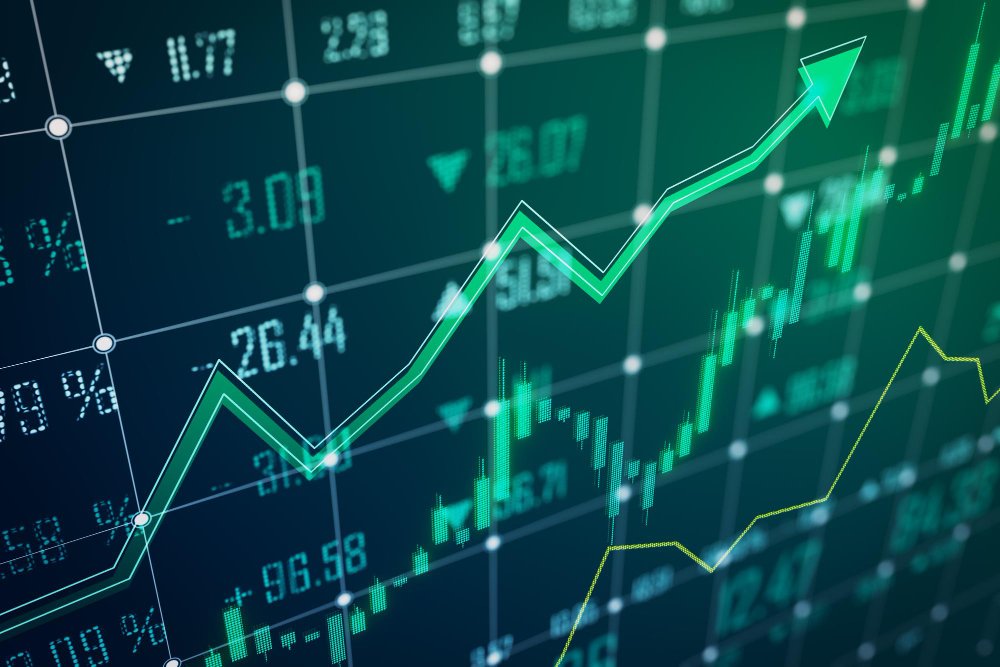
The Pakistan Stock Exchange (PSX) witnessed an unprecedented surge on January 26, 2026, as the benchmark KSE-100 index crossed the 191,000 level for the first time in history.
This milestone came ahead of the State Bank of Pakistan’s (SBP) Monetary Policy Committee (MPC) meeting, where analysts anticipate a policy rate cut of 50 to 100 basis points. At midday, the index hovered at 190,521.41, marking a gain of 1,354.59 points or 0.72%, driven by strong buying in key sectors.
Sector-Wise Performance and Key Drivers
Automobile assemblers, cement, fertilizer, oil and gas exploration companies, oil marketing companies (OMCs), power generation, and refineries led the charge.
Index-heavy stocks like ARL, HUBCO, MARI, OGDC, FFC, HBL, and MCB traded in positive territory, boosting overall sentiment. Lower secondary market yields and improving remittances contributed to the bullish momentum.
New oil discoveries of 9,500 barrels per day and defence deals exceeding $13 billion further reinforced investor confidence. Easing tensions between the US and Iran, along with strengthened defence ties with Saudi Arabia and Türkiye, added to the positive outlook.
Broader Economic Context and Global Influences
The previous week’s gains saw the KSE-100 close at a record 189,166.83 points, up 4,068 points or 2.2% week-on-week. This was supported by falling government bond yields and renewed foreign engagement.
However, economists warn that Pakistan may miss the IMF’s 3.2% GDP growth target for the fiscal year, projecting 2.5% to 3% amid weakening exports and investments. Globally, gold prices surged past $5,000 per ounce due to safe-haven demand amid dollar weakness and US-Iran sanctions.
The yen strengthened amid intervention speculation, impacting global markets with declines in Nikkei and S&P 500 futures. The SBP’s previous rate cut in December 2025 to 10.50% set the stage for further easing, with Governor Jameel Ahmad set to brief the media post-meeting. Despite intra-day volatility, the rally underscores Pakistan’s improving macroeconomic stability, though risks from geopolitical tensions remain.