
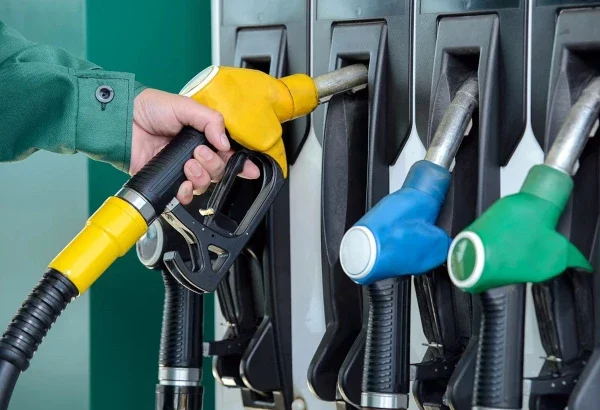
Petrol Prices Unchanged has once again become the biggest talking point in Pakistan after the federal government decided not to pass on the benefit of lower refinery prices to consumers. Instead of allowing motorists to enjoy cheaper fuel, the government increased the petroleum levy to offset the decline in international and refinery costs, keeping retail fuel prices unchanged.
The latest decision has sparked criticism from consumers and industry observers who believe the government has prioritized revenue collection and the interests of oil marketing companies over providing direct financial relief to millions of Pakistanis struggling with inflation.
Petrol Prices Unchanged Despite Falling Refinery Costs
According to a notification issued by the Petroleum Division, the government maintained petrol at Rs299.50 per litre while High-Speed Diesel (HSD) remained unchanged at Rs311.47 per litre.
However, official price buildup data released by Euro Oil (Pvt) Limited reveals that underlying fuel costs had actually declined before taxes and levies were applied.
For High-Speed Diesel, the refinery price dropped from Rs217.09 per litre to Rs210.52, a decrease of Rs6.57 per litre. Rather than passing this reduction on to consumers, the government increased the petroleum levy by exactly Rs6.57, from Rs72.97 to Rs79.54 per litre. The adjustment completely erased any potential reduction in retail prices.
A similar pattern emerged for petrol (PMG). The refinery price fell by Rs0.39 per litre, but the petroleum levy increased by the same amount, rising to Rs66.64 per litre. As a result, motorists saw no reduction at fuel stations despite lower underlying costs.
Government Uses Petroleum Levy to Neutralize Fuel Price Reduction
The latest pricing mechanism demonstrates how the petroleum levy has become a fiscal tool instead of a consumer protection mechanism.
While refinery prices declined, every rupee of savings was absorbed through higher taxation. Other pricing components remained unchanged, including:
• Climate Support Levy at Rs2.50 per litre
• IFEM charges of Rs2.40 per litre for diesel
• IFEM charges of Rs2.87 per litre for petrol
• Dealer margins
• Distributor margins
Because these components remained constant, the increase in petroleum levy became the only reason consumers were denied any reduction in fuel prices.
The government’s strategy effectively protected its tax collections while maintaining existing pump prices.
Oil Marketing Companies Secure Stability While Consumers Lose Expected Relief
The decision is being viewed by many market participants as a victory for oil marketing companies, which had reportedly opposed reductions in petroleum prices. Stable retail prices help preserve market certainty and avoid disruptions in inventory valuations and pricing mechanisms.
For ordinary Pakistanis, however, the outcome is disappointing. Lower fuel prices generally reduce transportation expenses, logistics costs and inflationary pressure across the economy. Instead, households and businesses continue paying the same high rates despite cheaper refinery prices.
The unchanged fuel prices also mean transport operators, manufacturers and agricultural businesses will continue facing elevated operating costs, limiting any immediate reduction in the prices of essential goods.
Petrol Prices Unchanged Raises Fresh Questions Over Government Priorities
The latest pricing decision raises broader questions about the balance between fiscal needs and public welfare.
The government has increasingly relied on the petroleum levy as a major source of revenue. While this approach strengthens government finances, critics argue that consumers are repeatedly denied the benefits of falling oil prices whenever international or refinery costs decline.
With inflation still weighing heavily on household budgets, many expected at least partial relief at fuel stations. Instead, the latest adjustment shows that lower refinery prices no longer automatically translate into cheaper petrol or diesel.
Unless the government changes its pricing strategy, future reductions in global or refinery fuel costs may continue to be absorbed through higher taxation rather than passed on to consumers.
The latest announcement confirms that Petrol Prices Unchanged was not the result of stable fuel costs but of deliberate fiscal policy. Falling refinery prices created room for cheaper fuel, yet higher petroleum levies completely offset those savings.
While the decision safeguards government revenue and maintains market stability for oil marketing companies, consumers remain without the relief many had anticipated. As fuel prices continue to influence inflation and the overall cost of living, the government’s pricing strategy is likely to remain under close public scrutiny.