
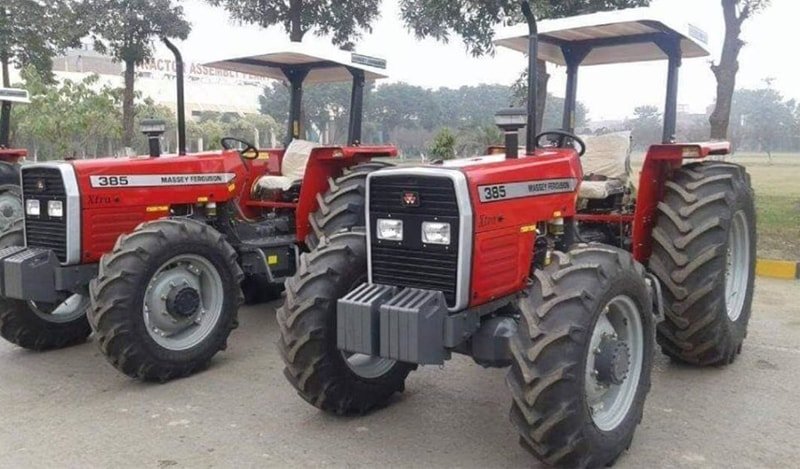
Pakistan’s tractor industry endured one of its most challenging years in nearly two decades during calendar year 2025, with sales plummeting to levels not seen since the early 2000s.Data compiled by Topline Securities from the Pakistan Automotive Manufacturers Association (PAMA) indicates that annual tractor sales reached only 24,724 units in 2025.
This represents a steep decline from 39,480 units in 2024 and significantly lower than peak years such as 66,060 units in 2017.The sharp downturn reflects severe distress in Pakistan’s agrarian sector, which remains the backbone of the economy, employing a large portion of the population and contributing substantially to GDP.
Underlying Causes of the Sales Collapse Weak farm economics were the primary driver behind the subdued demand. Farmers grappled with persistently low prices for major crops including wheat, rice, cotton, and sugarcane, often failing to cover production costs amid global commodity fluctuations and domestic market pressures. Input costs surged for fertilizers, pesticides, diesel, and other essentials, squeezing already thin profit margins.High inflation throughout much of 2025 eroded rural purchasing power, while limited access to affordable credit and high financing costs made large capital investments like tractors out of reach for small and medium-scale farmers.
Economic uncertainty, including currency volatility and policy inconsistencies, further discouraged purchases. Industry reports highlight that mechanization levels in Pakistan lag far behind regional and global averages, with low horsepower availability per cultivated acre hindering productivity gains and exacerbating the cycle of low incomes. Broader Industry and Economic Impact The tractor sector’s slump had ripple effects across the supply chain. Local manufacturers, including major players like Millat Tractors (Massey Ferguson) and Al-Ghazi Tractors (New Holland/Fiat), faced reduced production, idle capacity, and pressure on employment.
The industry supports thousands of direct jobs and an extensive network of vendors and dealers in rural areas. Delayed mechanization also threatened long-term agricultural output, food security, and export potential in a country where agriculture accounts for a significant share of economic activity. Earlier in 2025, reports noted sales in fiscal year 2024-25 hitting a 22-year low of around 29,192 units, underscoring a prolonged crisis that carried into the calendar year.
Signs of Hope and Projections for 2026 Analysts remain cautiously optimistic about a turnaround in 2026. Topline Securities projects tractor sales to rebound by 15–20%, driven by gradually improving farm economics. Expectations include stabilization or modest recovery in crop prices, continued easing of inflation, and potentially lower interest rates that could improve credit availability for farmers. Government initiatives—such as targeted subsidies for agricultural machinery, better rural financing schemes, and policies to support mechanization—could provide additional momentum. Recent trends in the broader auto sector, including stronger passenger vehicle and two-wheeler sales in late 2025 due to macroeconomic improvements, suggest a favorable environment may extend to tractors. However, sustained recovery will hinge on consistent policy support, resolution of input cost pressures, and broader rural development efforts.
The 2025 performance serves as a stark reminder of the vulnerabilities in Pakistan’s agriculture-dependent economy and the urgent need for structural reforms to boost farm profitability and mechanization.