
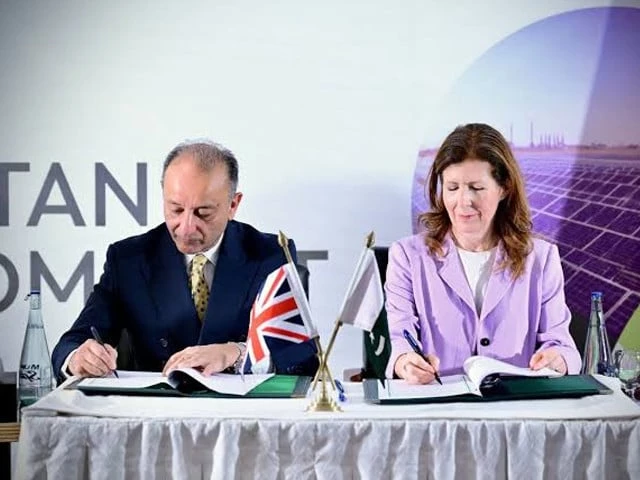
The Pakistan UK Green Compact has emerged as a major focal point in Pakistan’s climate and economic development agenda, with both countries intensifying efforts to turn environmental cooperation into practical opportunities for growth, innovation, and resilience.
The initiative came under renewed spotlight during a high-level meeting in Islamabad between Federal Minister for Climate Change and Environmental Coordination Dr. Musadik Malik and British High Commissioner Jane Marriott. At the center of discussions was the implementation of the £35 million bilateral climate cooperation framework and the future roadmap of the Green Compact.
The meeting signals growing momentum behind Pakistan’s efforts to attract international partnerships aimed at tackling climate challenges while creating new opportunities for businesses, entrepreneurs, and young innovators.
Pakistan UK Green Compact Focuses on Real Results
While climate agreements often remain confined to policy discussions, Dr. Musadik Malik emphasized that the Pakistan UK Green Compact must deliver measurable benefits for ordinary citizens.
According to officials, discussions focused on translating climate commitments into projects that can strengthen environmental protection, create jobs, improve resilience against disasters, and support sustainable economic growth.
The British High Commissioner presented the Green Compact Action Plan and highlighted priority areas where both countries can deepen collaboration in the coming years.
The emphasis on actionable outcomes reflects increasing pressure on governments worldwide to demonstrate that climate financing can generate tangible economic and social returns rather than simply producing policy declarations.
Green University Islamabad Could Become a Regional Knowledge Hub
One of the most significant developments discussed during the meeting was progress toward establishing a Green University in Islamabad.
Dr. Malik informed the British delegation that consultations are underway with international partners, including stakeholders from Italy and organizations connected to Arctic Circle initiatives.
The proposed university is expected to become a specialized center for climate research, environmental sciences, sustainability studies, and green innovation.
If successfully established, the institution could position Pakistan as a regional destination for climate-related education and research while producing the skilled workforce required for the country’s green transition.
Green Tech Hub at NUST Opens New Opportunities for Young Entrepreneurs
Another major area of discussion was the Green Tech Hub established at the National University of Sciences and Technology (NUST) in collaboration with the Ministry of Climate Change and Environmental Coordination.
The initiative aims to support young innovators developing environmentally friendly technologies and sustainable business solutions.
Rather than functioning solely as a research center, the hub is designed to connect innovation with commercialization, allowing entrepreneurs to transform ideas into market-ready products and services.
Government officials believe such initiatives could help create a new generation of green startups focused on renewable energy, sustainable agriculture, waste management, water conservation, and climate-smart technologies.
Dr. Malik stressed that empowering youth through entrepreneurship, research, and innovation remains essential for achieving long-term environmental and economic goals.
UK Expands Support for Climate and Youth Programmes in Pakistan
During the meeting, Jane Marriott outlined several United Kingdom-backed programmes currently operating in Pakistan.
These initiatives focus on youth entrepreneurship, climate resilience, sustainable development, and environmental innovation.
The UK’s continued support reflects growing international recognition of Pakistan’s vulnerability to climate-related disasters and the urgent need to strengthen adaptation measures.
Experts note that investments in green entrepreneurship can create a dual benefit by generating employment opportunities while simultaneously addressing environmental challenges.
Climate Disasters Push Early Warning Systems Higher on the Agenda
The discussion also highlighted one of Pakistan’s most pressing challenges: preparedness for climate-related disasters.
Both sides reviewed measures to strengthen early warning systems and improve national readiness for extreme weather events.
Pakistan remains among the countries most exposed to climate risks despite contributing only a small share of global greenhouse gas emissions. Floods, heatwaves, droughts, and other climate shocks continue to place significant pressure on communities and the economy.
Improving forecasting capabilities and disaster preparedness mechanisms is increasingly viewed as a critical investment rather than a policy option.
Why the Pakistan UK Green Compact Matters
The growing collaboration between Pakistan and the United Kingdom extends beyond environmental protection. The Pakistan UK Green Compact is rapidly evolving into a broader framework that links climate action with economic development, education, innovation, and entrepreneurship.
With £35 million allocated under the cooperation framework, the partnership has the potential to accelerate green investment, support emerging technologies, strengthen climate resilience, and create new opportunities for Pakistan’s youth.
As climate risks continue to intensify globally, the success of the Pakistan UK Green Compact may ultimately be measured not by policy announcements but by its ability to deliver real-world solutions that improve lives, protect communities, and drive sustainable economic growth.