
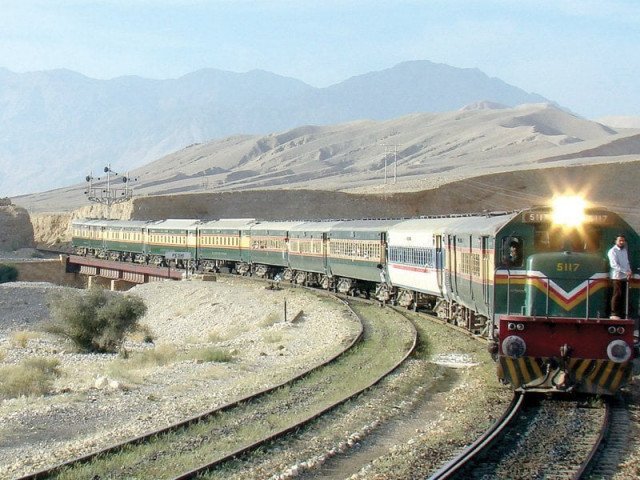
Pakistan Railways has declared a three-month emergency across the department to improve operational safety and restore public confidence in train travel following a series of accidents. The measures, introduced on the instructions of Railways Minister Hanif Abbasi, will remain in force until December 31.
Under the new directives, field officers will not be allowed to take leave during the emergency period. They will also be required to visit operational sites every Sunday to supervise train movements personally rather than remain in their offices.
Field Officers Face Stricter Monitoring Requirements
The emergency introduces tighter supervision and reporting requirements for railway officials. Officers travelling between cities for official duties must use trains, allowing them to experience passenger conditions firsthand and strengthen monitoring of railway operations.
Chief engineers from the civil and mechanical wings have been directed to submit daily reports to the ministry. The head of safety must also provide daily updates on operational risks and performance.
Abbasi said the measures were intended to ensure the safest possible travel in line with the prime minister’s vision.
The directives follow a rise in railway incidents that have resulted in fatalities, injuries and millions of rupees in damage to tracks and rolling stock.
Pakistan Railways Records More Than 55 Accidents
Pakistan Railways has recorded more than 55 accidents involving passenger and freight trains since January 1. Most incidents have occurred in the Sukkur, Karachi and Multan divisions, with recurring problems involving coal trains and ageing equipment.
Notable incidents include the derailment of the Rawal Express near Kala Gujran, several coal-train mishaps near Khanpur and Khairpur, and a major accident involving the Rahman Baba Express in the Multan division.
A shuttle train in Quetta was also damaged in an act of sabotage earlier this year.
The repeated incidents have raised concerns among passengers about railway safety. Many travellers say they continue to rely on trains because alternative transport options are either limited or too expensive for regular journeys.
Railways Minister Inspects Mughalpura Workshops
On October 17, Abbasi visited the Steel and Carriage Shops in Mughalpura, where he inspected the electric arc furnace and the spectro laboratory used to test components manufactured at the facility.
He instructed staff to maintain strict quality checks on all manufactured parts, highlighting the importance of component quality in railway operations.
The inspection forms part of the broader effort to strengthen maintenance standards and improve the reliability of railway equipment.
Can Tighter Supervision Improve Railway Safety?
The three-month emergency places greater responsibility on field officers, engineers and safety officials to identify operational risks and report problems promptly.
Daily reporting, mandatory site visits and closer monitoring are intended to improve accountability and help detect potential issues before they lead to accidents.
However, sustained improvements will also depend on addressing ageing equipment, maintenance standards and infrastructure weaknesses. The effectiveness of the emergency measures will become clearer as Pakistan Railways implements the directives over the coming weeks.