
KARACHI: Pakistan’s economy is gradually emerging from a period of macroeconomic turbulence, with improvements in key indicators creating cautious optimism for foreign direct investment (FDI) inflows, according to a senior official at the Overseas Investors Chamber of Commerce and Industry (OICCI).
However, high taxation, bureaucratic hurdles, and weak intellectual property protection continue to deter potential investors, requiring sustained reforms over the next 3-5 years.
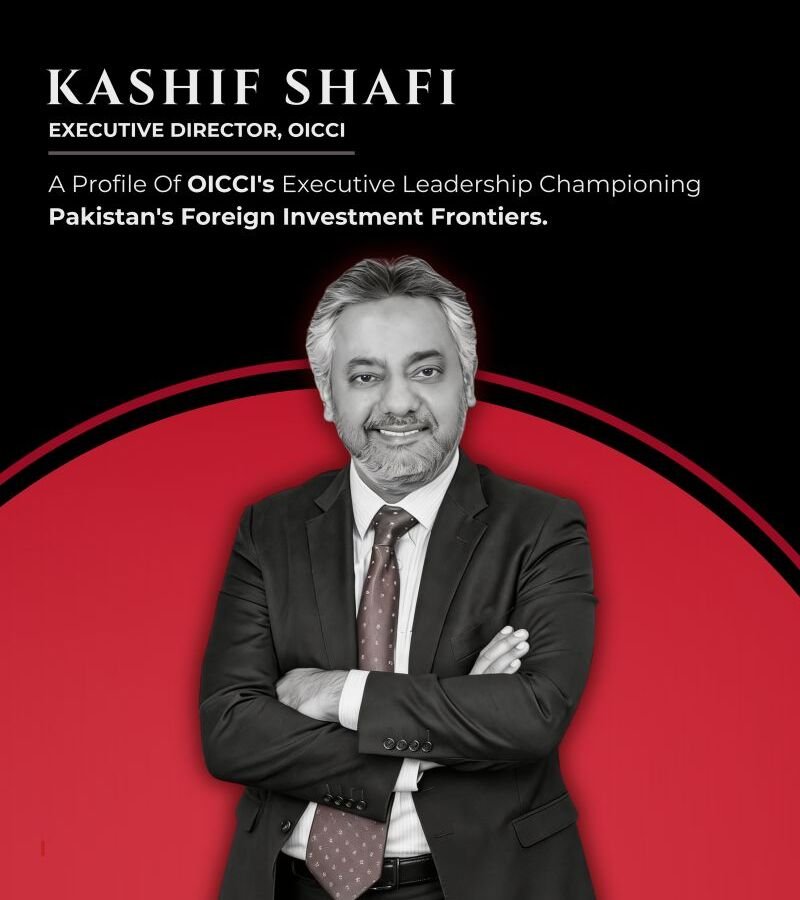
In a detailed interview, the Executive Director and CFO at OICCI, Kashif Shafi, highlighted how foreign exchange crises and significant currency devaluation in 2022-23 had effectively halved Pakistan’s market size in dollar terms. “This made the market appear smaller and created temporary challenges,” he noted.
The devaluation, combined with external shocks, led to subdued investor sentiment during that period.
“Yet, the country has made notable strides in recent years,” he said. Fiscal consolidation efforts have borne fruit, foreign exchange reserves have strengthened to around $17-21 billion levels in recent months, and Large-Scale Manufacturing (LSM) growth has rebounded sharply from a contraction of 6.5 percent to positive growth of around 6 percent.
Credit ratings have also seen upgrades, signaling improving macroeconomic stability.
“We are now emerging from that phase and moving towards stabilisation,” the official stated, emphasizing that Pakistan is now positioned to not only maintain but further enhance stability.
Foreign investors routinely benchmark Pakistan against regional peers. Key pain points include taxation, ease of doing business, and intellectual property rights. Pakistan’s effective corporate tax rate stands at approximately 46 percent when including various levies, significantly higher than the 20-30 percent range prevalent in the region.
This disparity places local and foreign businesses at a competitive disadvantage.
The tax-to-GDP ratio, hovering around 10.3 percent, lags behind regional averages closer to 20 percent. Investors crave predictability for medium- to long-term planning. “Foreign investors want a 4-5 year forecast,” Kashif Shafi explained. A clear medium- and long-term taxation roadmap is essential to build confidence.
Ease of doing business remains another critical area. While the government has undertaken initiatives, challenges persist. OICCI surveys reveal that 8 out of 10 foreign investors view tax refunds as a major hurdle, with delays impacting cash flows. Similarly, 6 out of 10 cite contract enforcement as problematic due to protracted court resolutions spanning years.
Intellectual property (IP) protection is equally concerning. The formal sector loses nearly 20 percent of sales to counterfeiting, resulting in billions in annual tax revenue losses for the government. These issues cannot be resolved overnight.
“These challenges cannot be solved in a year. This requires 2-3 years of planning and implementation” Kashif Shafi stressed. A 3-5 year predictable roadmap is vital for attracting manufacturing and fresh FDI.
Broader Benefits of FDI
FDI is not merely about capital inflows. It brings fresh ideas, advanced research, technology transfer, and know-how across sectors like pharmaceuticals, manufacturing, chemicals, technology, and artificial intelligence. Local workforces gain international exposure and skill upgrades through multinational corporations (MNCs).
“FDI does not only bring money, but also provides human development, knowledge transfer, access to advanced products, and the latest medicines” Kashif Shafi added. Even developed nations like Germany and China actively pursue FDI for these spillover benefits.
OICCI plays a pivotal role by offering factual, balanced information to prospective investors—highlighting both opportunities and ground realities. Many foreign companies have operated successfully in Pakistan for 50-60 years, with OICCI itself tracing roots back to 1860. Existing investors demonstrate confidence through reinvestment: over the past decade, re-investment by established foreign players has exceeded new FDI inflows.
This underscores the viability of the market for those familiar with its dynamics. Existing investors understand local nuances, generate profits, and choose to expand operations.
Road Ahead
Despite recent stabilization, net FDI figures remain modest. Data for FY26 shows inflows fluctuating, with May 2026 recording a sharp monthly rise to $214 million, though year-on-year trends reflect ongoing challenges. China continues as a major source, but broader diversification is needed.
Experts emphasize that policy consistency, tax reforms, faster dispute resolution, and stronger IP enforcement are prerequisites for unlocking Pakistan’s FDI potential. With a young population, strategic location, and growing domestic market, the opportunities are substantial if structural bottlenecks are addressed systematically.
As Pakistan navigates its reform journey, sustained dialogue between policymakers, OICCI, and investors will be crucial. The coming years will test the country’s ability to translate macroeconomic gains into tangible FDI growth and long-term economic resilience.