
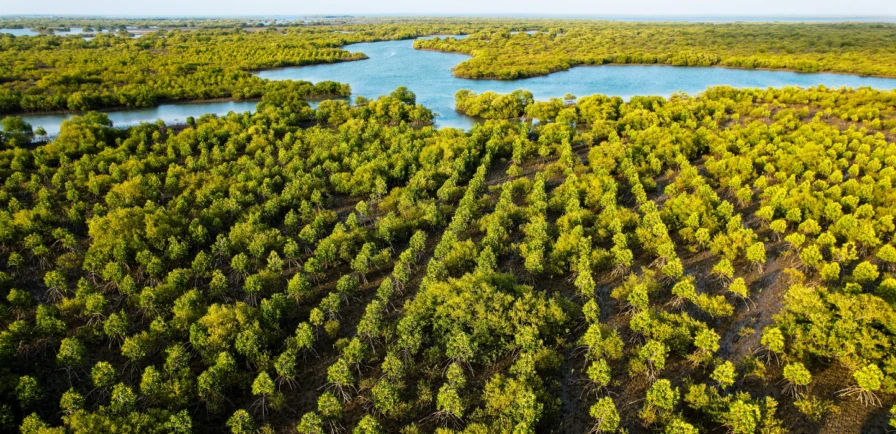
Pakistan’s coastal forests are no longer just an environmental asset. They are rapidly emerging as a powerful economic opportunity that could generate between $20 million and $50 million every year through international carbon markets. As the global demand for carbon credits continues to rise, Pakistan’s mangrove forests are attracting renewed attention for their ability to support climate action while creating long-term financial value.
Pakistan Mangrove Carbon Market Offers a New Revenue Stream
Speaking ahead of World Mangrove Day, Federal Minister for Maritime Affairs Muhammad Junaid Anwar Chaudhry highlighted the enormous commercial potential of Pakistan’s mangroves, describing them as a strategic national asset capable of driving sustainable economic growth while strengthening the country’s blue economy.
The Pakistan Mangrove Carbon Market presents an opportunity to diversify national revenue beyond traditional industries. Carbon credits generated from healthy mangrove ecosystems can be traded in international carbon markets, providing governments and investors with a new source of income while rewarding environmental conservation.
According to the minister, annual earnings could range from $20 million to $50 million, depending on global carbon credit prices and the volume of verified carbon credits produced. As businesses worldwide race to meet net-zero commitments, demand for high-quality nature-based carbon credits continues to expand, placing Pakistan in a favourable position.
This opportunity is particularly significant because Pakistan possesses the world’s largest arid-climate mangrove forest, primarily located in the Indus Delta of Sindh, with additional mangrove ecosystems spread across coastal areas of Balochistan.
Pakistan Could Rise Among the World’s Leading Mangrove Nations
Pakistan currently ranks among the top countries globally in terms of mangrove forest coverage. Continued restoration and conservation programmes could elevate the country even further, potentially placing it among the world’s top five mangrove-rich nations.
This improvement would not only strengthen Pakistan’s environmental standing but also increase its competitiveness in the rapidly growing international carbon credit market, where larger and healthier ecosystems translate into greater carbon sequestration potential and stronger investment prospects.
Mangroves Are More Than Forests
Mangrove forests provide economic value far beyond carbon trading. They serve as a natural defence system by protecting coastlines against erosion, flooding and storm surges, reducing infrastructure damage and safeguarding ports, coastal communities and marine ecosystems.
Their ecological importance directly supports Pakistan’s fisheries sector. Mangroves function as breeding and nursery grounds for fish, shrimp, crabs and numerous marine species that sustain commercial fishing and the expanding aquaculture industry.
The minister warned that continued degradation of these ecosystems could threaten food security, weaken coastal livelihoods and reduce future economic opportunities for thousands of fishing families who depend on healthy marine habitats.
Balochistan’s Mangroves Add Strategic Value
Although smaller in size, Balochistan’s approximately 4,058 hectares of mangrove forests also represent an important component of Pakistan’s climate strategy. These forests can contribute to national carbon credit programmes while supporting coastal resilience across the province.
One of the most remarkable advantages of mangroves is their extraordinary carbon storage capacity. Scientific studies consistently show that mangrove ecosystems can capture and store significantly more carbon than most terrestrial forests, making them among the most valuable natural climate solutions available today.
Restoration Efforts Are Showing Progress
Years of encroachment, pollution and declining freshwater flows from the Indus River have damaged Pakistan’s mangrove ecosystems. However, restoration initiatives are beginning to reverse that trend.
The Karachi Port Trust has reclaimed mangrove areas from illegal encroachments, launched extensive plantation campaigns along Mai Kolachi Road and surrounding coastal zones, and introduced regular coastal clean-up programmes to improve environmental conditions.
The organisation has also partnered with environmental activist Almas Kasmani as its ambassador for coastal mangrove restoration. After successfully restoring approximately 4,000 mangrove plants, she has set an ambitious goal of planting another 100,000 trees to accelerate ecosystem recovery.
Turning Environmental Protection into Economic Growth
The success of the Pakistan Mangrove Carbon Market will depend on stronger environmental enforcement, wider public awareness and greater collaboration between government institutions and private investors.
Expanding restoration projects, preventing illegal encroachments and developing internationally recognised carbon credit certification systems could transform Pakistan’s coastal forests into a sustainable source of foreign investment and climate finance. As global markets increasingly reward countries that preserve natural carbon sinks, Pakistan’s mangroves may become one of the nation’s most valuable green economic assets.
Key Takeaways
Pakistan’s mangrove forests are evolving from an overlooked environmental resource into a strategic economic opportunity. With the potential to generate up to $50 million annually through carbon markets while protecting coastlines, supporting fisheries and strengthening climate resilience, these forests could play a central role in the country’s future blue economy. Sustained restoration, effective governance and increased investment will determine whether Pakistan fully captures this emerging global opportunity.