
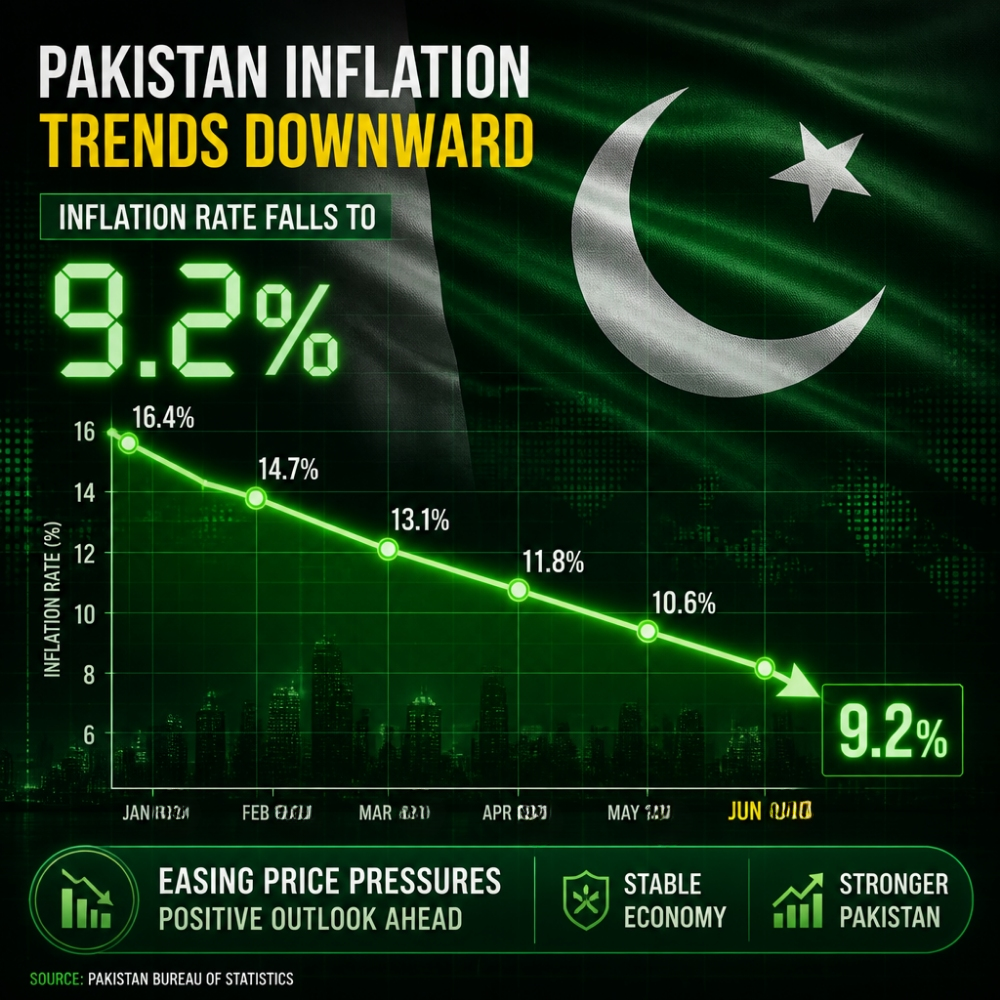
Pakistan’s headline inflation returned to single digits in July 2026, with the Consumer Price Index (CPI) easing to 9.2% year-on-year, according to data released by the Pakistan Bureau of Statistics (PBS). The latest reading marks a significant decline from 11.1% in June, although it remains higher than the 4.1% recorded in July 2025.
The slowdown broadly matched market expectations and the Finance Division’s forecast, reflecting favourable base effects despite continued pressure from energy and food prices.
Pakistan Inflation Returns to Single Digits
The July inflation reading confirms that Pakistan’s CPI has fallen below the double-digit mark after three consecutive months of elevated inflation.
On a month-on-month basis, the Consumer Price Index increased 1.2% in July. This followed a 0.3% decline in June and compared with a 2.9% monthly increase in July last year.
The Finance Division had earlier projected inflation to remain between 9% and 10% during July, citing rising international oil prices and domestic pricing adjustments.
Urban and Rural Inflation Both Decline
Inflation moderated across both urban and rural areas during July.
Urban CPI inflation stood at 8.7% year-on-year, down from 11.2% in June, though still above the 4.4% recorded in July 2025. On a monthly basis, urban prices rose 1.2%, reversing the 0.5% decline recorded in the previous month.
Meanwhile, rural inflation eased to 9.9% year-on-year, compared with 10.9% in June and 3.5% a year earlier. Rural prices also increased 1.2% month-on-month, after remaining unchanged in June.
SBP Maintains Policy Rate at 11.5%
The latest inflation figures come shortly after the State Bank of Pakistan (SBP) decided to keep its policy rate unchanged at 11.5% during its first Monetary Policy Committee meeting of the new fiscal year.
SBP Governor Jameel Ahmad had earlier indicated that inflation was expected to ease during July and projected it would gradually move toward the upper end of the central bank’s 5% to 7% target range by the end of the fiscal year.
The central bank continues to balance inflation risks against the need to support economic growth amid global uncertainty.
Analysts Say Base Effects Drove the Decline
Economists had widely expected inflation to return to single digits.
Ismail Iqbal Securities projected 9.3%, while JS Global forecast 9.1% for July inflation.
Analysts noted that the decline was driven primarily by favourable base effects rather than a broad-based easing in underlying inflationary pressures. They cautioned that higher energy prices, fuel costs and food inflation continue to pose risks to the inflation outlook over the coming months.
Inflation Outlook Remains Uncertain
While the return to single-digit inflation offers some relief for households and businesses, underlying price pressures have not disappeared.
Persistent increases in energy costs, global commodity prices and food inflation continue to influence Pakistan’s economic outlook. Rising international oil prices could also place renewed pressure on domestic inflation if geopolitical tensions persist.
The July data nevertheless represents an important milestone, suggesting inflationary momentum has slowed after several months of elevated readings. Whether this trend continues will largely depend on global energy markets, domestic policy decisions and the pace of economic recovery during the remainder of the fiscal year.