
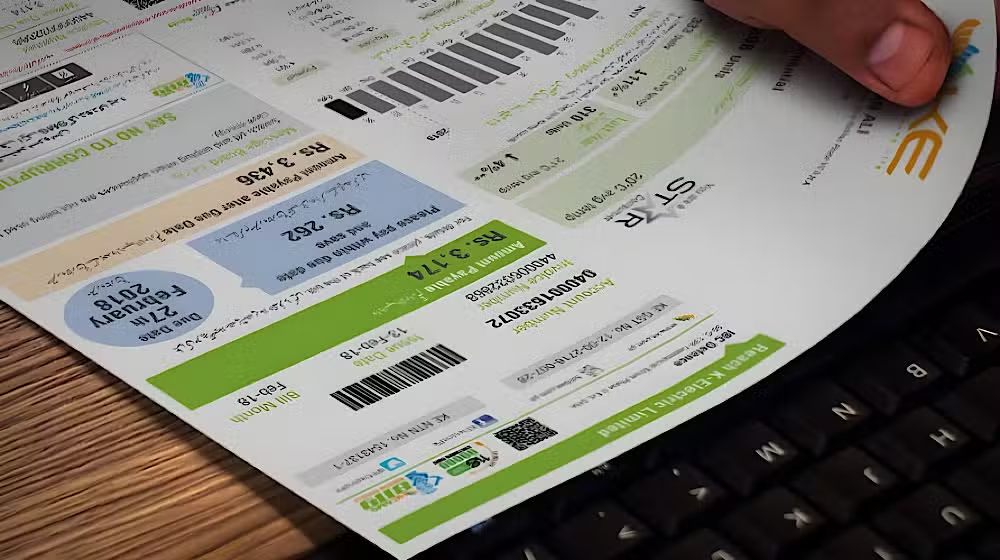
The federal government of Pakistan is preparing a significant overhaul of electricity and gas pricing, shifting from the current consumption-based slab system to an income-linked model, as reported on February 20, 2026.
This change aims to make subsidies more targeted and efficient amid ongoing energy sector reforms.
Shift from Usage to Income Criteria Under the existing system, tariffs depend on units consumed, with lower slabs receiving subsidies.
The proposed model would base subsidies and pricing primarily on household income levels rather than consumption volume.
Higher-income households would pay closer to actual energy costs, while lower-income groups continue receiving support.
Officials indicate this targets aid more effectively to deserving consumers and reduces inefficiencies in the power and gas sectors.
Tied to IMF Commitments and Broader Reforms The initiative aligns with Pakistan’s obligations under the IMF’s Extended Fund Facility (EFF), which requires structural improvements to address circular debt, cross-subsidies, and sector losses.
The IMF has stressed that tariff adjustments should protect lower- and middle-income families from undue burden.
Discussions involve integrating the new system with social protection databases or income verification mechanisms for accurate assessment.
No exact implementation timeline or detailed slabs (e.g., income quantiles Q1-Q4) have been finalized publicly, but groundwork is underway.
Public Reactions and Potential Challenges Online comments reflect skepticism and concern, with users questioning enforcement, potential incentives for income under-reporting, and calls to address root issues like mismanagement first.
Some view it as shifting burdens to compliant taxpayers while benefiting those evading systems.
The proposal follows recent tariff discussions, including fixed charges and industrial relief, highlighting ongoing efforts to balance fiscal sustainability with consumer protection in Pakistan’s energy pricing landscape.