
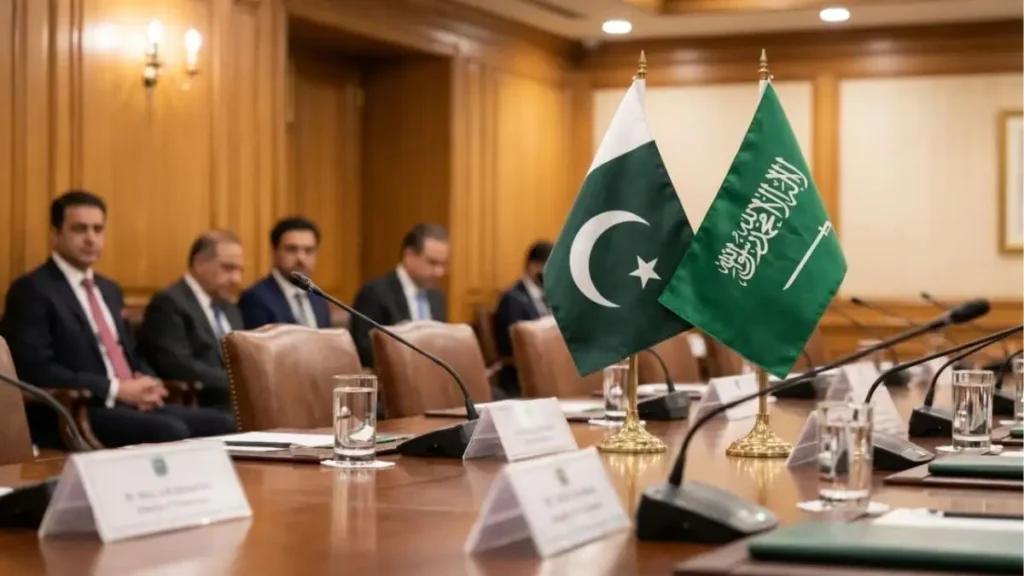
Pakistan has received another major financial lifeline after Saudi Arabia agreed to extend the repayment period of its 5 billion dollar loan by another three years. The development significantly reduces immediate pressure on the country’s external debt obligations and provides valuable breathing space for policymakers struggling to stabilise Pakistan’s fragile economy.
According to media reports citing the State Bank of Pakistan, the extension of the facility has eased short-term repayment concerns and strengthened the country’s foreign exchange position at a critical time. While the decision offers immediate financial relief, it also raises an important question that policymakers can no longer ignore: Is Pakistan genuinely improving its economic fundamentals, or is it becoming increasingly dependent on friendly nations to postpone difficult financial decisions?
Pakistan External Financing Relief Improves Foreign Exchange Stability
Saudi Arabia remains one of Pakistan’s strongest financial partners. The Kingdom currently holds around 8 billion dollars in deposits with Pakistan, demonstrating its continued confidence in maintaining economic cooperation despite Pakistan’s ongoing fiscal challenges.
The latest rollover of the 5 billion dollar deposit means Pakistan does not have to repay the amount immediately, allowing the government to focus on managing other external liabilities while preserving its foreign exchange reserves.
This support follows Riyadh’s earlier commitment of an additional 3 billion dollars in deposits announced in April, further strengthening Pakistan’s external financing position during a period of global economic uncertainty.
For investors and financial markets, such support reduces short-term default concerns and improves confidence in Pakistan’s ability to meet international payment obligations.
External Financing Needs Continue to Decline
Pakistan’s external financing requirements have fallen to approximately 21.5 billion dollars this year, reflecting a gradual improvement in the country’s financing outlook.
At the same time, the interest burden on foreign loans has declined by nearly half a billion dollars, providing additional fiscal space for the government. Lower interest payments can ease pressure on public finances and potentially allow greater allocation of resources toward economic development and infrastructure.
The country has also repaid approximately 2.2 billion dollars in external loans during July, demonstrating that Pakistan continues to meet its international debt commitments despite facing significant economic challenges.
These developments suggest that debt management has become more disciplined compared with previous years, although structural vulnerabilities remain.
Saudi Support Remains Critical for Pakistan External Financing Relief
Saudi Arabia’s financial assistance has become an essential pillar of Pakistan’s external financing strategy. The Kingdom’s repeated rollovers and deposits have helped stabilise the country’s balance of payments during periods of economic stress.
However, this dependence also exposes a deeper structural weakness within Pakistan’s economy.
Repeated reliance on friendly countries for loan extensions cannot replace sustainable economic reforms. Long-term financial stability will ultimately depend on expanding exports, attracting productive foreign direct investment, increasing tax revenues, and reducing reliance on imported energy and consumer goods.
While international partners continue to provide crucial support, economic resilience cannot be built solely through deferred repayments and external deposits.
A Welcome Relief But Not a Permanent Solution
The latest Saudi rollover undoubtedly provides Pakistan with valuable financial breathing space. It reduces immediate repayment pressure, strengthens investor confidence, and supports the country’s foreign exchange reserves during a sensitive economic period.
Nevertheless, the extension should be viewed as an opportunity rather than a permanent solution. Without accelerating structural reforms, improving industrial competitiveness, broadening the tax base, and increasing export earnings, Pakistan could face similar financing challenges in the future.
The government’s next challenge will be ensuring that this financial relief translates into sustainable economic growth rather than another temporary pause in an ongoing cycle of external borrowing.
Saudi Arabia’s decision to extend the 5 billion dollar loan repayment period for another three years marks another significant milestone in bilateral economic cooperation. Combined with existing deposits of 8 billion dollars and previous financial commitments, the Kingdom continues to play a crucial role in supporting Pakistan’s economic stability.
However, the true measure of success will not be the number of loan rollovers Pakistan secures, but whether this window of financial relief is used to implement reforms that reduce the country’s long-term dependence on external financial assistance.