
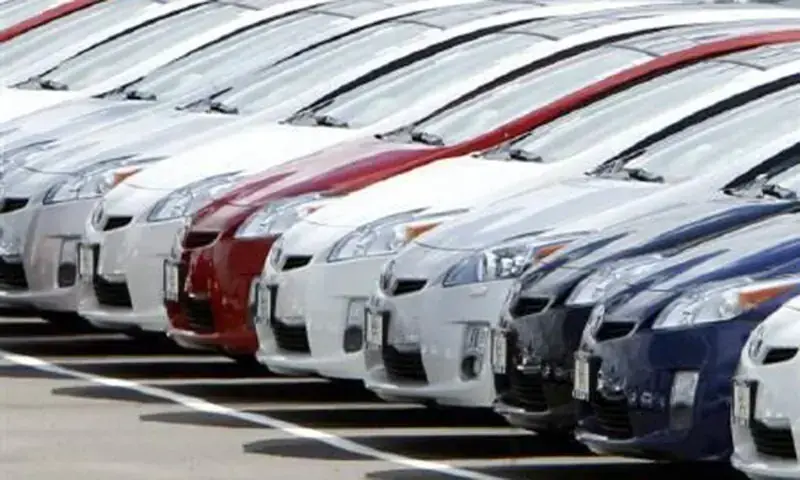
Pakistan car sales delivered a dramatic year on year jump in July 2026, with sales of cars, light commercial vehicles, vans and jeeps reaching 19,818 units, up 79.6 percent from 11,034 units recorded in July 2025, according to the latest data released by the Pakistan Automotive Manufacturers Association.
The headline figure points to a powerful recovery in Pakistan’s automobile market, but a closer look at the numbers tells a more complicated story. Total car sales fell 12.9 percent month on month from 22,741 units in June 2026, while the broader LCV, van and jeep segment suffered a steep monthly decline.
The contrasting figures suggest that Pakistan’s auto market is recovering, but the recovery is not evenly distributed across vehicle categories.
Pakistan Car Sales Growth Led by Passenger Vehicles
The biggest driver behind the July surge was passenger cars. Sales reached 17,216 units during the month, representing a remarkable 141.3 percent increase compared with 7,135 units in July 2025.
Passenger car sales also increased 12 percent compared with June 2026, when manufacturers sold 15,378 units. This makes passenger vehicles the strongest part of the domestic automobile market and indicates that consumer demand for conventional passenger cars has improved significantly over the past year.
The 1,300cc and above category accounted for 9,066 passenger cars sold in July. Toyota’s Corolla, Yaris and Corolla Cross led this segment with 4,283 units, followed by Honda’s Civic and City with 2,529 units. Suzuki Swift recorded 2,018 units, while Hyundai Elantra and Sonata posted 211 and 25 units respectively.
The below 1,000cc segment was the second largest category, recording 7,710 units. Suzuki Alto dominated this market with 7,217 units, while Suzuki Every contributed 493 units.
The 1,000cc segment remained extremely small, with only 392 units sold. Suzuki Cultus accounted for the entire category, while the discontinued Suzuki WagonR recorded zero sales.
Pakistan Car Sales Expose a Major Weakness in LCV and Jeep Demand
While passenger cars posted spectacular growth, the LCV, van and jeep segment tells a very different story.
Sales in this category dropped 33.3 percent year on year to 2,602 units from 3,899 units in July 2025. More importantly, sales collapsed 64.7 percent month on month from 7,363 units in June.
This sharp contraction deserves greater attention than the headline growth number. It suggests that demand for commercial and utility vehicles remains under considerable pressure, potentially reflecting weaker business activity, financing constraints or changes in fleet purchasing patterns.
Toyota Fortuner and IMVs led the category with 806 units, followed by Haval and Tank models sold by Sazgar with 663 units. JAC Pickup, distributed by Ghandhara, recorded 357 units, while Hyundai Porter posted 286 units.
Other notable sales included Hyundai Tucson at 171 units, Jetour at 133 units, Honda BR-V and HR-V at 111 units, Isuzu D-Max at 44 units, Hyundai Santa Fe at 17 units and Dewan Kia Shehzore at 14 units.
The newly introduced Suzuki Fronx did not record any sales in July.
Auto Production Also Accelerates
The production side of the industry showed improvement. Pakistan’s total vehicle production increased 54.8 percent year on year to 21,668 units in July 2026 from 13,998 units a year earlier.
Passenger car production rose 75.6 percent to 17,307 units from 9,856 units. Production of LCVs, vans and jeeps, however, increased only 5.3 percent year on year to 4,361 units.
On a monthly basis, total production increased 3.7 percent, while passenger car production rose 13.8 percent. LCV, van and jeep production declined 23.3 percent from June.
The production figures indicate that manufacturers are responding to stronger passenger car demand, although the uneven performance across segments remains a concern.
FY26 Car Sales Show a Broader Market Recovery
For the full financial year 2026, sales of cars, LCVs, vans and jeeps reached 206,436 units, compared with 148,042 units in FY25, representing growth of 39.4 percent.
The annual increase is significant because Pakistan’s automobile industry has faced prolonged pressure from high vehicle prices, expensive financing, currency volatility and economic uncertainty.
However, the July figures also demonstrate why simply describing the market as being in a full recovery could be premature. Passenger cars are driving the rebound, while commercial and utility vehicles are showing substantial weakness.
The critical question for the industry is whether this passenger car momentum can continue without a corresponding recovery in commercial vehicle demand.
Electric Vehicles Remain a Small Part of Pakistan’s Auto Market
Electric vehicle sales also showed improvement, although from a very low base. Dewan Honri-Ve sold 48 units in July 2026, compared with 24 units in July 2025.
The 100 percent year on year increase is encouraging for the electric vehicle segment, but the absolute sales volume remains too small to materially change Pakistan’s overall automobile market.
For now, conventional passenger vehicles continue to dominate domestic sales.
What the July Numbers Really Mean for Pakistan’s Auto Industry
Pakistan’s automobile market is clearly performing better than it was a year earlier, but the latest data should be read with caution.
The 79.6 percent year on year increase in Pakistan car sales is impressive, yet it is heavily concentrated in passenger vehicles. The 64.7 percent monthly collapse in LCVs, vans and jeeps exposes a significant weakness that the headline growth figure can easily conceal.
The industry therefore appears to be experiencing a selective recovery rather than a uniform boom. If purchasing power improves, vehicle financing becomes more accessible and economic activity strengthens, manufacturers could sustain the recovery. If those conditions fail to materialize, the sharp difference between passenger car demand and commercial vehicle demand could become an important warning signal for the automobile sector.
For investors, manufacturers and policymakers, the real story is not simply that Pakistan car sales surged in July. The more important question is whether this growth represents a durable revival of automobile demand or a concentrated rebound in selected passenger vehicle categories.
Final Takeaway
Pakistan’s July 2026 auto sales data presents a mixed picture. Passenger vehicle demand has recovered strongly, driving a 79.6 percent year-on-year increase in combined car, LCV, van and jeep sales. However, the sharp monthly decline in commercial and utility vehicles shows that the recovery remains uneven.
The coming months will determine whether the surge represents the beginning of a sustained automobile market recovery or a temporary improvement concentrated in passenger cars.