
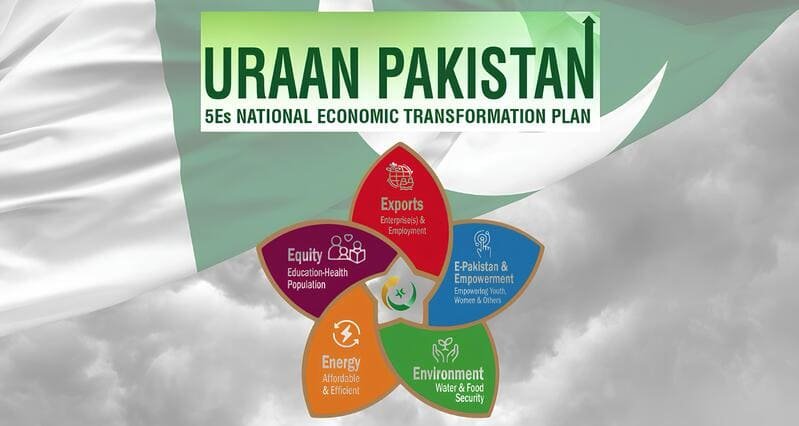
Pakistan’s automotive industry must shift its focus from primarily serving the domestic market to becoming a major source of export earnings, with the sector expected to make a significant contribution towards the country’s $63 billion export target under URAAN Pakistan, the Planning Commission said.
The call was made during a policy dialogue titled “Unlocking Pakistan’s High-Value Export Potential: Threats and Opportunities for the Automotive Industry”, which brought together government officials, private-sector representatives, academics and international development partners to discuss ways to strengthen Pakistan’s automotive exports.
The session was jointly chaired by Federal Minister for Planning, Development and Special Initiatives Professor Ahsan Iqbal, Federal Minister for Energy Sardar Awais Ahmad Khan Leghari and Special Assistant to the Prime Minister on Industries and Production Haroon Akhtar Khan.
The discussions focused on improving the competitiveness of Pakistan’s automotive industry and identifying measures that could help local manufacturers enter international markets.
Govt Calls for Export-Led Growth in Automotive Sector
Speaking at the dialogue, Ahsan Iqbal said export-led growth was the central pillar of URAAN Pakistan and should be treated as a national priority rather than simply an economic target.
He said Pakistan could no longer afford to keep its industries focused mainly on the domestic market. According to the minister, the country needs a fundamental change in its approach to industrial development, investment, infrastructure and economic policymaking if it wants to significantly increase exports.
The minister also highlighted the broader ambition of raising Pakistan’s exports to $100 billion, saying the country must develop a stronger and more diversified export base to achieve sustainable economic growth.
He stressed that Pakistan needed foreign exchange earnings rather than relying on borrowing and short-term economic measures.
“Pakistan needs dollars,” the minister said, arguing that a stronger export sector would be essential for generating sustainable foreign exchange and reducing dependence on external financing.
Automotive Industry Must Enter Global Markets
Ahsan Iqbal said Pakistan already has industrial clusters and productive capabilities that can serve as a foundation for export expansion.
However, he emphasised that these existing capacities need to be modernised to compete effectively in international markets.
The government’s focus, he said, should include improving industrial productivity, upgrading infrastructure, adopting modern technologies and establishing a policy environment that encourages investment in export-oriented manufacturing.
The minister expressed confidence that the new Auto Policy 2.0 would help transform the automotive industry and encourage greater integration with global markets.
The policy is expected to play an important role in creating conditions for manufacturers and component producers to improve competitiveness and explore overseas markets.
For Pakistan’s automotive industry, moving beyond domestic sales could create opportunities for manufacturers to benefit from economies of scale while strengthening the country’s manufacturing and engineering capabilities.
Private Sector Urged to Lead Export Drive
The planning minister called on manufacturers, exporters and investors to take a leading role in Pakistan’s export expansion strategy.
He said closer cooperation between the government and private sector was required to identify new international markets, remove regulatory and infrastructure-related bottlenecks and establish clear priorities for export-led industrial growth.
Ahsan Iqbal also urged chambers of commerce and industry to encourage businesses to participate in export missions and develop sector-specific strategies for accessing international markets.
He called on industry stakeholders to prepare five-year export plans that clearly identify the potential contribution of individual sectors and the government support required to achieve those targets.
Such plans, he said, could provide a more structured approach to increasing exports while allowing policymakers to identify specific constraints facing different industries.
Govt Seeks District-Level Export Strategy
The minister also called for the development of a comprehensive district-level export development plan covering different regions and sectors of the country.
The proposed approach would identify areas where existing industrial capacity can be transformed into globally competitive export clusters.
Such clusters could help concentrate investment, infrastructure, skilled labour and technology around industries with strong export potential.
For the automotive sector, participants discussed several areas that could determine its ability to compete internationally.
These included manufacturing costs, productivity, technological capability, infrastructure, investment, access to international markets and policy facilitation.
Improving these areas will be critical if Pakistan wants to move from producing vehicles and components primarily for domestic consumers towards establishing a sustainable presence in global automotive supply chains.
Automotive Exports Seen as Key to $63bn Target
The Planning Commission said the automotive industry has an important role to play in achieving the $63 billion export target under URAAN Pakistan.
The sector has an established manufacturing base and a network of component suppliers that could potentially be expanded to serve international markets.
However, increasing exports will require manufacturers to meet international standards, improve productivity, invest in technology and develop products that are competitive in terms of quality and cost.
The government’s policy dialogue is therefore aimed at identifying practical steps to unlock the sector’s export potential.
The session formed part of a wider consultative series organised by the Planning Commission to promote Pakistan’s high-value export sectors and industrial clusters.
The discussions are expected to contribute to policy recommendations aimed at improving Pakistan’s export competitiveness.
The government believes this transition can help generate foreign exchange, attract investment, modernise industrial capacity and support long-term economic growth.