
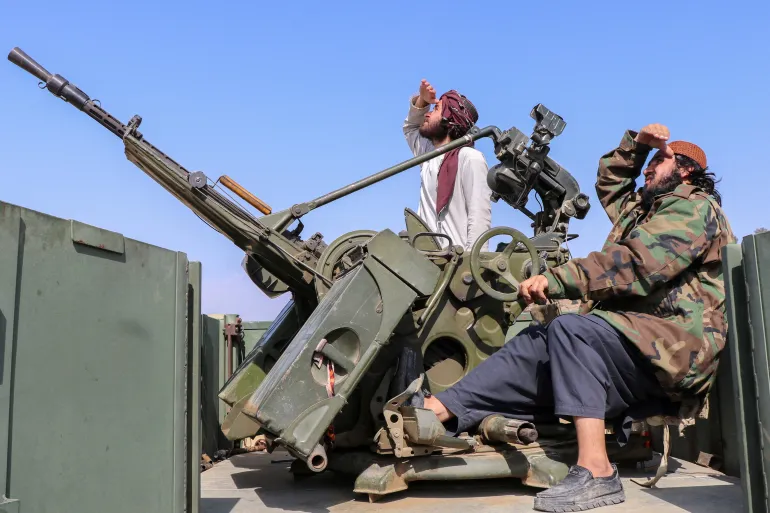
Pakistan Afghanistan Conflict 2026 has taken a dramatic and alarming turn, with Islamabad declaring it is now in “open war” with Afghanistan’s Taliban government. Reports of explosions in Kabul and cross-border strikes in Kandahar and Paktika signal a rapidly intensifying conflict that could reshape regional stability in South Asia.
The escalation comes amid ongoing clashes along the disputed Durand Line, pushing tensions between the two neighboring countries to their most volatile point in years.
Pakistan Afghanistan Conflict 2026: What Triggered the Escalation?
The current phase of the Pakistan Afghanistan Conflict 2026 was ignited after Taliban spokesperson Zabihullah Mujahid announced “large-scale offensive operations” against Pakistani forces along the border.
These operations were reportedly a response to earlier Pakistani air strikes targeting alleged militant hideouts inside Afghanistan. Islamabad, in turn, expanded its military operations, striking deeper into Afghan territory.
Pakistan’s Defence Minister Khawaja Asif framed the situation as a necessary response to growing threats, stating that diplomatic efforts had been exhausted and “decisive action” was now underway.
Global Reactions to Pakistan Afghanistan Conflict 2026
The international community has reacted with urgency as the Pakistan Afghanistan Conflict 2026 risks spiraling into a broader regional crisis.
United Nations Calls for Restraint
United Nations Secretary-General Antonio Guterres expressed deep concern over the surge in violence. Through spokesperson Stephane Dujarric, he urged both sides to adhere to international humanitarian law and prioritize civilian safety.
Iran Urges Dialogue During Ramadan
Iran’s Foreign Minister Abbas Araghchi emphasized diplomacy, calling for restraint in the spirit of Ramadan. Tehran has offered to facilitate dialogue between Kabul and Islamabad.
Russia Offers Mediatio
Russia has called for an immediate halt to cross-border attacks and expressed readiness to mediate if both parties agree.
India Condemns Pakistan’s Actions
India’s Foreign Ministry spokesperson Randhir Jaiswal strongly criticized Pakistan’s air strikes, describing them as an attempt to divert attention from internal challenges.
Turkiye Engages in Shuttle Diplomacy
Hakan Fidan has held discussions with regional stakeholders, including Qatar and Saudi Arabia, to assess pathways for de-escalation.
Qatar Pushes for Stability
Qatar’s Minister of State Mohammed bin Abdulaziz Al-Khulaifi engaged with Pakistan’s Ishaq Dar to explore diplomatic solutions aimed at restoring regional stability.
China Signals Concern
China has expressed deep concern over the escalation. Foreign Ministry spokesperson Mao Ning confirmed Beijing’s willingness to play a constructive role in easing tensions.
United Kingdom Calls for Dialogue
The UK’s Home Secretary Yvette Cooper urged both nations to avoid further civilian harm and return to mediated negotiations.
Pakistan Afghanistan Conflict 2026: Afghanistan’s Response
Former Afghan President Hamid Karzai struck a defiant tone, asserting that Afghanistan would defend its sovereignty and respond firmly to aggression.
Karzai also criticized Pakistan’s long-standing policies, urging Islamabad to adopt a path of “good neighbourliness” rather than confrontation.
Why Pakistan Afghanistan Conflict 2026 Matters for the Region
The Pakistan Afghanistan Conflict 2026 is not just a bilateral issue it carries significant implications for regional security, trade, and geopolitics.
South Asia is already grappling with economic uncertainty and political volatility. A prolonged conflict could disrupt trade corridors, intensify refugee flows, and increase the risk of proxy involvement by global powers.
The timing during Ramadan adds a deeper emotional and political dimension, making calls for restraint even more urgent.
Can Diplomacy Still Prevail?
Despite the sharp escalation, multiple countries including China, Iran, and Russia have stepped forward with offers to mediate. The involvement of regional and global stakeholders suggests that diplomatic channels remain open, albeit under immense pressure.
The key question now is whether Islamabad and Kabul will step back from the brink or continue down a path that could lead to a prolonged and destabilizing conflict.
Conclusion: A Defining Moment in Pakistan Afghanistan Conflict 2026
The declaration of “open war” marks a critical turning point in the Pakistan Afghanistan Conflict 2026. With global powers urging restraint and both sides signaling resolve, the coming days will be decisive.
Will diplomacy prevail or is the region on the edge of a deeper crisis?