
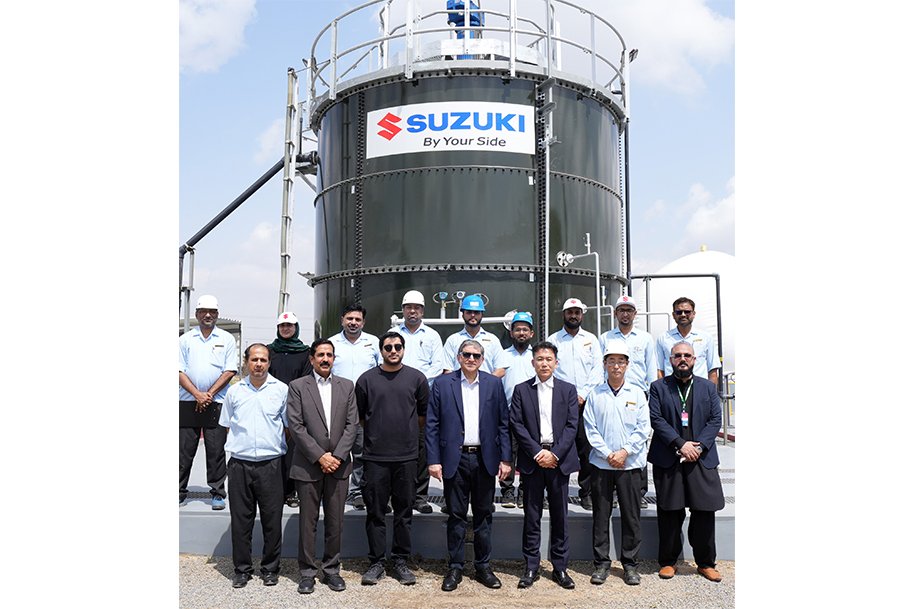
Pak Suzuki Motor Company Limited has launched a biogas plant and a solar power generation facility at its manufacturing plant in Karachi as part of its environmental sustainability and clean energy initiatives. The company confirmed that both projects have officially started operations.
The biogas plant has a production capacity of 100 cubic meters per day, while the solar power facility has an output capacity of 920 kilowatts. Pak Suzuki said the projects are part of its long term commitment to carbon neutrality and environmentally friendly manufacturing practices in Pakistan.
Biogas Plant to Produce Renewable Energy
According to the company, the biogas plant uses Napier grass along with food waste collected from company cafeterias to produce renewable energy. Officials stated that the project aims to reduce waste while supporting sustainable energy generation at the manufacturing facility.
Pak Suzuki said the clean energy projects reflect the company’s efforts to contribute to a greener and more sustainable future in Pakistan.
Managing Director Hiroshi Kawamura said the launch of the biogas plant and solar facility demonstrates the company’s commitment to integrating renewable energy into its operations.
He stated that Pak Suzuki would continue investing in environmentally friendly technologies and manufacturing systems that support Pakistan’s environmental priorities and global climate goals.
Facility Located at Karachi Manufacturing Plant
The biogas plant is located within the Pak Suzuki manufacturing facility in Karachi and covers an area of 360 square meters. The plant can generate 100 cubic meters of biogas daily by processing organic material and food waste.
Officials explained that Napier grass was selected because it is widely available in Pakistan and can serve as an efficient renewable energy source. The project also helps reduce organic waste generated at company cafeterias.
Meanwhile, the solar power generation system installed at the same facility has a production capacity of 920 kilowatts. According to the company, the system is expected to generate around 1,395,000 kilowatt hours of electricity annually.
Energy experts believe projects like these can help industries lower electricity costs while reducing dependence on fossil fuels and conventional power sources.
Renewable Energy Sector Expanding in Pakistan
Pakistan has witnessed rapid growth in renewable energy adoption in recent years as businesses and consumers look for alternatives to expensive electricity and fuel costs.
A recent study revealed that Pakistan imported more than 50 gigawatts of solar panels over the past five years. The estimated value of these imports reached nearly 18 billion dollars.
The study stated that the imported solar panel volume is equal to Pakistan’s entire national grid capacity, highlighting the country’s growing shift towards renewable energy solutions.
Industrial sectors across Pakistan are increasingly investing in solar energy systems to address rising electricity tariffs and power shortages. Experts say renewable energy projects also help companies meet international environmental standards and sustainability goals.
Industries Shift Towards Green Manufacturing
Environmental analysts noted that Pakistan remains highly vulnerable to climate change despite contributing a very small share to global carbon emissions. As a result, private sector investment in renewable energy is becoming increasingly important for reducing environmental risks and supporting sustainable economic growth.
Pak Suzuki officials said the company plans to continue introducing environmental initiatives tailored to local conditions in Pakistan. The company believes clean energy adoption can play an important role in building a sustainable industrial sector.
Industry observers described the project as a positive step for Pakistan’s automotive sector, which is gradually adopting greener technologies and cleaner manufacturing practices.
The launch of the biogas plant also reflects a growing trend among companies worldwide to convert organic waste into renewable energy. Experts say such projects can help reduce landfill waste, lower greenhouse gas emissions, and improve energy efficiency.
Pakistan’s renewable energy sector has expanded significantly over the last few years because of increasing fuel costs, electricity shortages, and rising awareness about climate related challenges.
Analysts believe that more industries may follow similar clean energy strategies as businesses try to reduce operational expenses and improve environmental performance.
The government has also encouraged renewable energy projects to reduce pressure on imported fuel and strengthen energy security. However, experts say more policy support and infrastructure improvements are still needed to accelerate the country’s transition towards cleaner energy sources.
Pak Suzuki stated that the successful operation of the biogas plant and solar power facility marks another milestone in the company’s efforts to support environmental sustainability while improving operational efficiency.